
Vibram vs crepe soles for everyday walking comfort
Advertisements
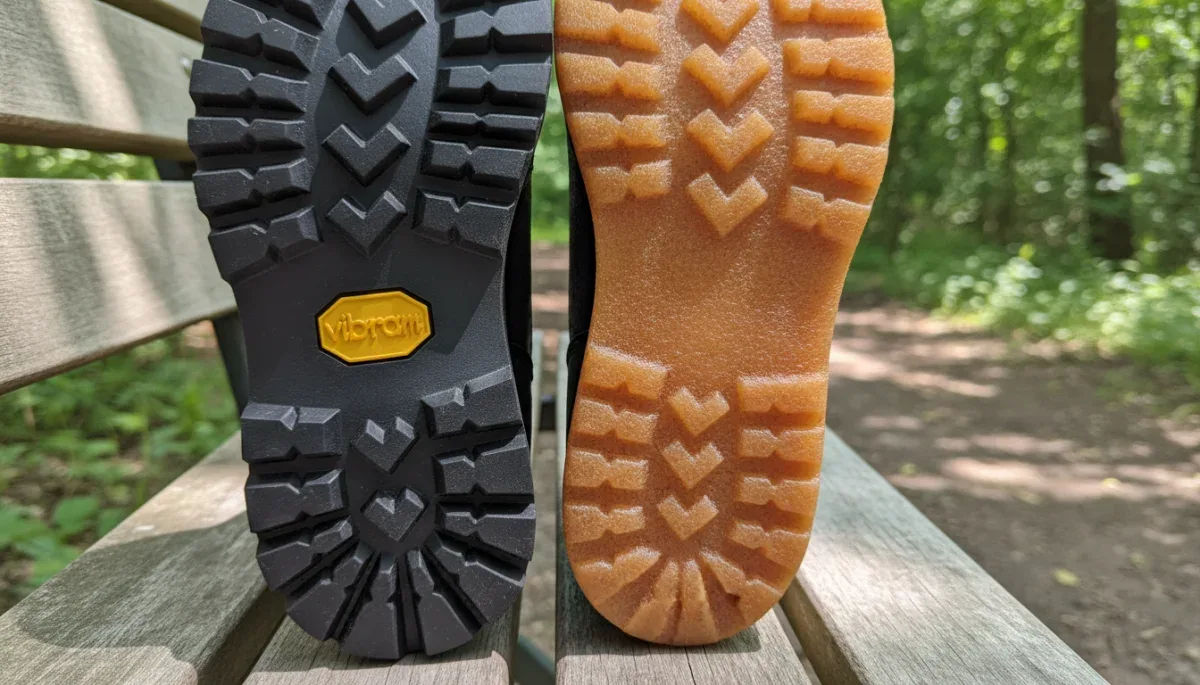
Vibram outsoles provide significantly better stability, weather resilience, and long-term joint comfort for everyday walking on concrete sidewalks, while natural crepe soles offer an immediate, pillow-like bounce suited primarily for dry, casual outings. The choice between these two bottom layers determines how your feet, knees, and lower back handle thousands of repetitive ground impacts each day.
This comparison helps daily commuters, casual boot wearers, and city walkers who need dependable all-day comfort but want to avoid premature footwear breakdown or painful slips on slick surfaces. The main compromise lies in texture and material behavior: crepe rubber gives an exceptionally soft step straight out of the box but degrades quickly under heat and wet conditions, whereas Vibram compounds require thoughtful selection to match your exact walking surface.
Understanding the core materials and construction
To evaluate comfort accurately, you must first understand the fundamental differences in how manufacturers produce these two soles. Natural crepe rubber comes directly from latex sap harvested from the Hevea brasiliensis rubber tree. Processors coagulate this liquid sap using organic acids, roll it repeatedly through heavy mechanical rollers into textured, crinkled sheets, and layer it to create thick shoe bottoms without adding synthetic curing agents. Because it skips standard chemical vulcanization, plantation crepe maintains an open, gummy cellular structure that flexes easily under minimal body weight.
Advertisements
In contrast, outsoles bearing the yellow Vibram octagon rely on vulcanized synthetic or blended rubber compounds engineered for specific functional tasks. Italian mountaineer Vitale Bramani established the company in 1937 after developing vulcanized rubber lugs capable of replacing traditional metal hobnails on alpine boots. Modern Vibram outsoles use high-pressure heat treatment with sulfur to create permanent molecular cross-links throughout the rubber polymer. This structural difference means Vibram soles behave as stable, chemically inert elastomers designed to retain their molded shape regardless of external temperatures, whereas untreated crepe remains an organic, heat-sensitive polymer.
Construction methods also alter how these materials sit beneath your foot. Shoe manufacturers typically secure crepe soles by cementing multiple thin sheets together or applying a textured crepe wrap around the perimeter of a shoe midsole. Vibram outsoles usually arrive as pre-molded units—either as full-length unit soles with integrated heel blocks or as thin outsoles cemented beneath lightweight ethylene-vinyl acetate, commonly known as EVA foam. This modular design allows shoemakers to fine-tune foot support by combining firm outer traction with flexible inner cushioning layers.
Shock absorption and underfoot impact on concrete
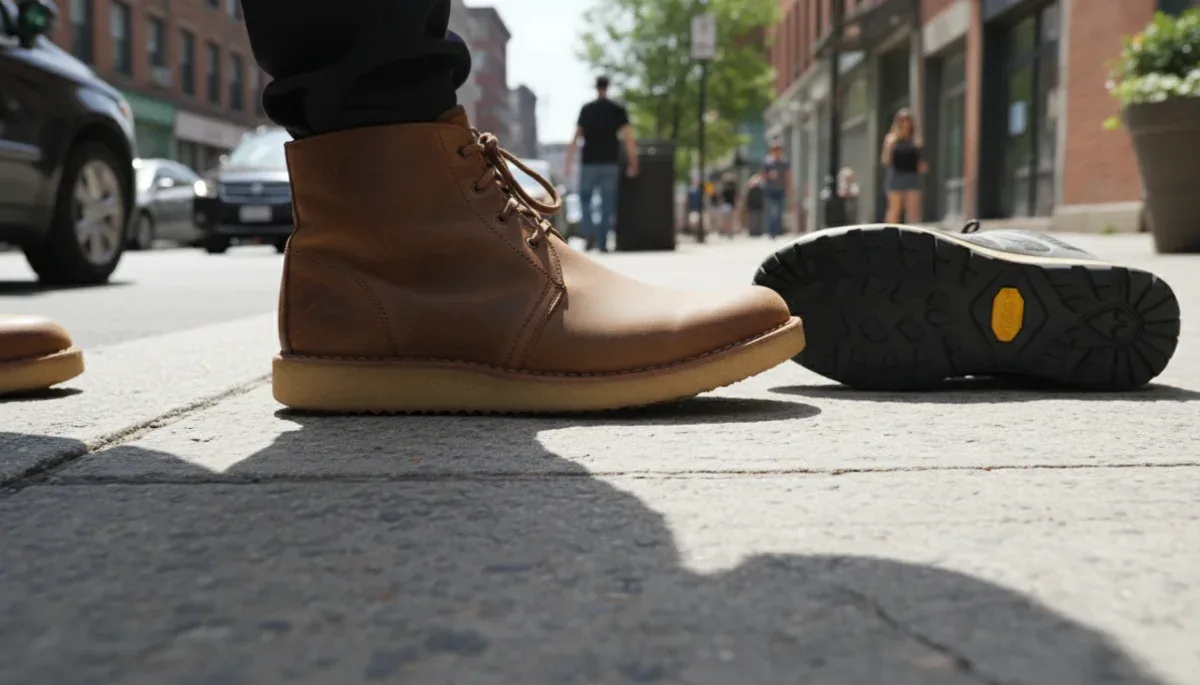
Walking across hard, unforgiving surfaces like poured concrete or asphalt delivers repetitive shock waves up the leg through your heel strike. Natural crepe absorbs these high-frequency vibrations exceptionally well during initial contact. Because the material retains natural elasticity and contains microscopic air pockets created during the sheet-rolling process, it yields instantly beneath your calcaneus, or heel bone. The sensation resembles walking on a dense, supportive gym mat, preventing sharp impacts from reverberating into your knees and lower spine during brief city strolls.
Advertisements
However, pure softness does not always translate to sustainable comfort over four or five continuous miles. As your foot compresses a soft crepe sole, your deep plantar muscles and tendons must fire continuously to correct small balance fluctuations caused by the unstable, yielding base. Over hours of continuous urban walking, this sustained muscular compensation often leads to foot arch fatigue, aching heels, and strain across the plantar fascia. Crepe also compresses unevenly along the outer edges of the heel over time, worsening any slight pronation or supination in your gait.
Vibram designs address shock dissipation differently by matching compound density to specific footwear categories. Lightweight urban compounds, such as Vibram Morflex, use microcellular blown rubber that weighs approximately one-third the weight of traditional rubber while providing structured impact dissipation. Rather than collapsing fully under heel load like unvulcanized crepe, a Morflex or Cristy outsole compresses to an engineered limit, dispersing force evenly across the metatarsal heads before springing back. This progressive resistance keeps your foot properly aligned throughout the gait cycle, reducing systemic fatigue when logging high daily step counts.
Traction across wet pavement and varied terrain
Walking confidence depends heavily on surface friction, especially when navigating city crosswalks, painted steel utility covers, polished marble transit floors, and wet morning sidewalks. Wet traction highlights the most significant practical limitation of natural crepe rubber soles. Because crepe rubber lacks molded drainage siping—the fine channels cut into rubber to pump water away—liquid forms a thin, continuous film between the sole and smooth ground surfaces, leading directly to hydroplaning.
Furthermore, the smooth or randomly stippled texture of untreated crepe offers very little bite against wet, polished stone or damp wooden boardwalks. Once water saturates the outer micro-pores of raw crepe, the material loses surface tackiness entirely. If you step from a rainy sidewalk into a tiled grocery store or subway station wearing wet crepe soles, you will experience sudden loss of grip that forces you to shorten your stride and tense your leg muscles to stay upright.
Vibram outsoles excel in varied wet environments because compound chemistry and tread geometry work together to pierce through standing moisture. Vibram produces proprietary wet-weather rubber formulations, such as Megagrip and CityPlus, which blend natural and synthetic rubbers to retain physical tackiness against cold, damp stone. These compounds feature multi-directional lugs, perimeter braking bars, and deep evacuation channels designed to push water out toward the sides of the shoe with each step.
Even non-aggressive Vibram casual soles, such as the low-profile Gumlite or classic 2060 sport sole, utilize molded cross-hatch sipes and angled heel cuts that break liquid surface tension. Whether you encounter wet leaves on an asphalt greenway, slushy concrete near a bus stop, or polished floor tiles in an office lobby, vulcanized Vibram rubber delivers predictable surface friction without sudden slips.
Weather tolerance, temperature changes, and durability
Temperature shifts alter natural crepe rubber more drastically than almost any other shoe soling material on the commercial market. Because plantation crepe lacks chemical vulcanization, its mechanical properties fluctuate alongside seasonal weather patterns. During hot summer months, when dark asphalt road surfaces can easily climb above 120 degrees Fahrenheit, crepe rubber absorbs thermal energy and softens dramatically, becoming gummy, sticky, and noticeably slow to rebound underfoot.
This heat-induced softening causes street grit, small gravel shards, discarded staples, and asphalt petroleum residue to press deeply into the sole itself. Once these foreign contaminants embed inside the tacky rubber, you cannot scrub them out, leaving the sole permanently discolored and abrasive against interior floors. Conversely, when winter temperatures drop below the freezing point of 32 degrees Fahrenheit, crepe undergoes cold crystallization. The once-supple rubber turns hard, rigid, and slick, providing little shock dissipation and almost zero grip on packed winter surfaces.
Vulcanized Vibram compounds remain functionally stable across extreme temperature variations. The sulfur-linked polymer chains inside a Vibram outsole prevent the rubber from melting, softening, or liquefying in direct summer heat. A Vibram Mont or TC4 compound retains its designated Shore A hardness rating whether you walk across sunbaked blacktop in July or frozen pavements in January, ensuring predictable ground contact year-round.
Abrasion resistance represents another clear distinction between these two soling methods. Uncured crepe rubber sloughs off microscopic layers with every abrasive push-off against rough aggregate concrete. Walkers who drag their heels even slightly will often grind through the rear outer corner of a crepe heel within six to nine months of consistent sidewalk wear. High-density Vibram rubber outlasts untreated crepe by several multiples, resisting abrasive wear across thousands of urban miles before requiring Cobbler attention.
Weight, flexibility, and daily walking fatigue
Carrying excess weight at the end of your lower limbs consumes more metabolic energy than carrying equivalent weight on your torso, a reality that makes sole mass a critical factor in overall walking comfort. Natural crepe rubber is a dense, heavy material. A standard desert boot built with a double-layered crepe sole often carries substantial downward heft that can pull uncomfortably on tired calf muscles during extended walking days.
Flexibility also influences whether your foot moves naturally from heel strike through midfoot stance to toe-off. Crepe soles bend easily along the sagittal plane, allowing unrestricted forefoot articulation. While this flexibility feels pleasant during casual standing, an outsole that bends too freely without internal shank support allows your longitudinal arch to collapse downward under repetitive loads, straining your foot musculature over long urban distances.
Everyday walking scenarios compared
- Daily urban transit commutes: Vibram outsoles offer superior puncture resistance against broken street glass and maintain firm grip on slick subway platform stairs.
- Standing behind a sales counter or desk: Crepe soles excel here because static standing benefits directly from thick, compliant rubber that relieves focused pressure points under the heel.
- Rainy day errands and grocery trips: Vibram prevents sudden falls when moving from wet exterior concrete directly onto smooth retail floor tiles.
- Long weekend city exploration: Blown Vibram EVA-rubber blends minimize leg swing fatigue while stabilizing your arch over several miles of hard pavement.
Care, cleaning, and long-term resoling options
Maintaining the visual appeal and physical integrity of shoe bottoms differs dramatically between crepe and vulcanized rubber. Crepe rubber possesses an open, slightly porous surface that absorbs grease, engine oil puddles, and street dust on contact. A new, golden-amber crepe sole inevitably turns dark charcoal gray or dull black along its perimeter within just a few days of urban wear, and no chemical cleaner or solvent can extract embedded grime from deep within the raw rubber matrix without degrading the rubber itself.
Vibram outsoles feature smooth, non-porous outer surfaces that resist chemical and fluid penetration. If you step in motor oil, muddy soil, or food debris, you can restore the sole quickly using warm water, common dish soap, and a stiff nylon utility brush without harming the underlying material. The vulcanized compound also stands up to harsh de-icing salts used on winter pavements, which can dry out and degrade raw organic crepe sheets over time.
When the tread inevitably wears down after thousands of steps, your resoling options depend on how the shoe upper connects to the sole base. Goodyear-welted and stitchdown shoes constructed with either material can be resoled repeatedly by professional shoe repair shops. However, sourcing authentic, high-grade plantation crepe sheets has become increasingly difficult for local cobblers, and handling messy liquid cementing agents requires specialized shop ventilation.
Replacing a worn bottom with a genuine Vibram sole is straightforward and widely supported across the United States. Nearly every professional cobbler stocks standard Vibram replacement profiles, including the heritage 430 mini-lug, the wedge-profile Cristy 4014, and various low-profile composite half-soles. This widespread accessibility makes Vibram the practical winner for walkers seeking to preserve expensive leather footwear across multiple seasons of steady use.
At a glance
| Sole attribute | What you should know |
|---|---|
| Wet traction | Vibram compounds channel water safely, whereas crepe slips easily on damp pavement. |
| Shock absorption | Crepe provides plush initial bounce; Vibram offers structured, fatigue-reducing support. |
| Weather stability | Crepe softens in summer heat and freezes stiff in winter; Vibram stays uniform. |
| Maintenance and resoling | Vibram cleans up easily with soap and offers widespread cobbler replacement options. |
Frequently asked questions
Can you treat natural crepe soles to make them less slippery in rain?
No, you cannot treat crepe soles to improve wet traction safely. Applying spray-on adhesives or water repellents will either destroy the raw organic latex or wash away immediately against abrasive pavement, leaving the smooth, non-siped rubber just as slippery on wet stones.
Why do crepe soles turn black so quickly after buying them?
Crepe turns black because raw, unvulcanized natural rubber acts like an adhesive magnet for street grime. Tiny fragments of asphalt dust, motor oil, and urban soot press directly into the soft latex pores as you walk, creating permanent discoloration that cannot be washed away.
Can a cobbler replace a worn crepe sole with a Vibram sole?
Yes, a cobbler can easily replace a worn crepe sole with a Vibram sole if your shoes use welted or stitchdown construction. The cobbler removes the old crepe sheets, cleans the leather midsole, and cements a durable Vibram rubber outsole in its place.
Which sole option is lighter for everyday commuter walking?
Vibram outsoles made from blown microcellular compounds like Morflex or lightweight EVA blends are significantly lighter than solid crepe. Dense, layered crepe rubber adds noticeable physical weight to your footwear, which can accelerate leg and calf fatigue during long commuter walks.
The bottom line
Vibram outsoles are the clear winner for everyday walking comfort, durability, and foul-weather stability on hard city surfaces, while natural crepe soles remain best suited for dry, casual wear and static standing. Before buying your next pair of shoes, check the specific Vibram compound code or sole texture to make sure you choose a lightweight, shock-absorbing design rather than a stiff, heavy mountaineering tread.
Written by
Lucas Bastos
Lucas Bastos writes about benefits for bestinyour.com. Each article explains how things work, compares published details such as prices, policies and program rules, and points readers to the official source before they decide.