
Full grain leather vs suede for everyday boot wear
Advertisements
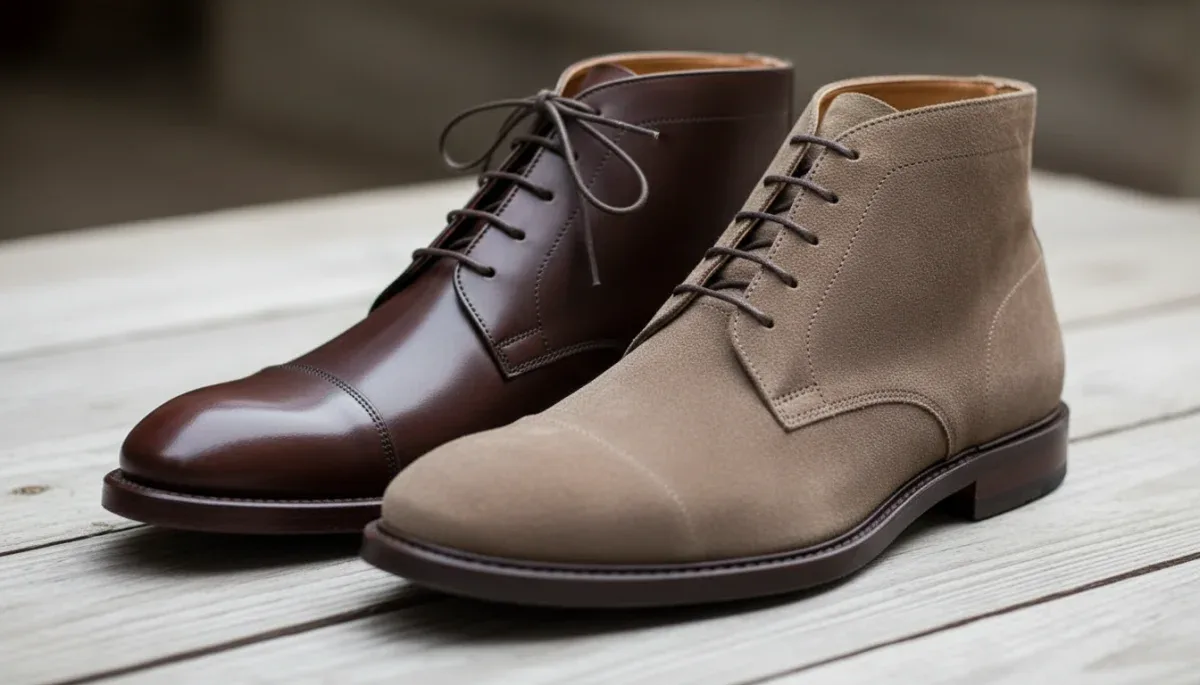
Full grain leather is the more resilient choice for everyday boot wear across changing weather conditions, while suede provides immediate out-of-the-box flexibility and a relaxed aesthetic for dry, predictable environments. Selecting between the two comes down to how much moisture you encounter, how often you want to clean your boots, and how you prefer your footwear to age.
This comparison helps daily commuters and boot buyers invest in the right upper material for their routine, though both options require appropriate cleaning tools and seasonal conditioning to prevent premature wear. Understanding how hide construction dictates daily performance will keep your boots comfortable and structurally sound for years.
Understanding hide construction and material density
Full grain leather represents the outermost layer of animal hide, retaining the original tight grain structure and natural surface texture. Because the grain remains intact without sanding or buffing, the fiber density is at its highest, providing substantial tensile strength and natural resistance to abrasion. This dense cellular arrangement prevents moisture and foreign particles from penetrating deep into the hide easily.
Advertisements
Suede, by contrast, is created from the underside of the hide or by splitting the hide and buffing the inner surface to create a raised, velvety nap. This process exposes open fibers, which makes the material lighter and softer but significantly more porous than unbroken grain. While modern reverse-suede or roughout options retain hide thickness, classic split suede lacks the dense exterior barrier found on full grain hides.
Key physical differences in boot materials
- Full grain surface: Smooth exterior with intact natural pores that repel dirt when properly conditioned.
- Suede surface: Raised fibrous nap that absorbs liquid quickly without a hydrophobic treatment.
- Hide thickness: Full grain typically retains full hide substance, while split suede can be thinner and more pliable.
Durability and everyday abrasion resistance
When worn daily on concrete sidewalks, public transit, and office settings, full grain leather handles physical contact with minimal structural degradation. Surface scuffs and minor scrapes can usually be buffed out using friction, a horsehair brush, and standard leather cream. Over months of steady wear, full grain develops a distinct patina, which refers to the subtle darkening and character the leather acquires through sunlight, body oils, and movement.
Suede handles surface scraping differently. Because it lacks a smooth finish, minor scuffs often blend into the existing nap without leaving visible scratches. However, heavy friction can crush or bald the fibers permanently, altering the visual texture in high-wear zones such as the toe box and heel counter. While suede does not crack in the way neglected smooth leather might, it shows friction wear faster when subjected to repeated contact with rough surfaces.
Advertisements
Weather performance and moisture management
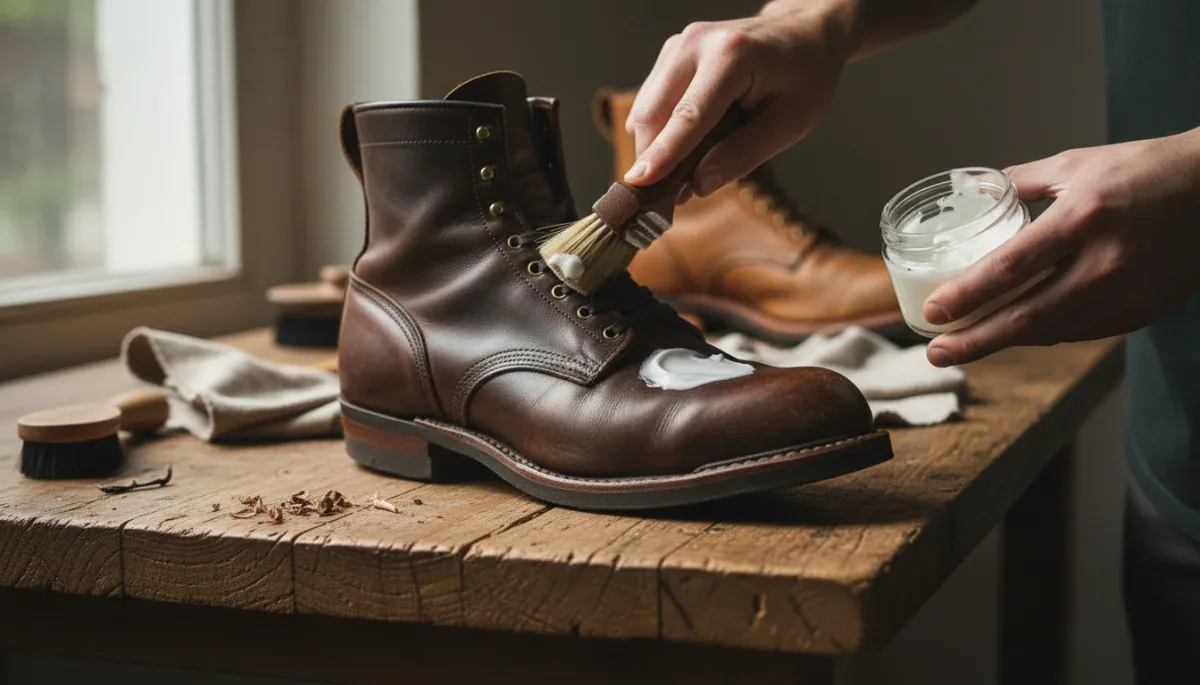
Precipitation is the primary differentiator in the daily performance of these two materials. Full grain leather possesses natural water resistance because the exterior epidermis layer repels droplets before they reach the interior fibers. Applying a wax- or oil-based conditioner creates an effective moisture barrier, making full grain boots suitable for steady rain, shallow puddles, and light winter slush.
Unprotected suede absorbs moisture rapidly due to its open-fiber structure. Water saturation leads to darkening, water rings, and stiffening of the nap once dry. Winter road salt poses a particular hazard to suede, binding to open fibers and causing discoloration that is difficult to extract without specialized cleaners. While dedicated fluoropolymer or silicone-based suede sprays offer water repellency, they require frequent reapplication during wet months to maintain protection.
Moisture defense requirements
- Full grain protection: Requires seasonal applications of beeswax, lanolin, or neatsfoot oil products.
- Suede protection: Requires regular coats of spray-on water repellent designed for napped leathers.
- Drying protocol: Both materials must air-dry slowly away from direct heat sources like radiators.
Break-in periods and daily walking comfort
Comfort during the first month of ownership varies considerably between full grain and suede uppers. Full grain boots often feel stiff initially, particularly around the ankle, instep, and heel counter. The dense fiber network requires consistent body heat and mechanical flex to mold to the contours of your foot, a process that can take anywhere from two to four weeks depending on hide thickness.
Suede boots generally offer immediate comfort with little to no break-in stiffness. Because the buffed fibers are flexible and relaxed, the upper bends naturally with your foot from the first wear. Suede also provides superior air permeability in warm weather, reducing heat and moisture buildup inside the boot during long hours of indoor or summer wear.
Maintenance routines and stain remediation
Maintaining full grain leather requires a straightforward cleaning and conditioning regimen every few months. Dirt wipes away with a damp cloth, and saddle soap can remove deeper soil. A quality shoe cream restores lost moisture, replenishes natural oils, and prevents creasing from turning into dry cracking along the vamp.
Suede maintenance requires dry cleaning methods rather than wet creams. A brass or synthetic bristle suede brush lifts flattened nap and removes embedded dust, while a suede eraser rubs out localized grease spots and dry stains. Liquid spills must be blotted immediately, as introducing liquid soaps or heavy oils will permanently mat the velvety surface.
At a glance
| Factor | What to know |
|---|---|
| Weather resistance | Full grain resists rain naturally; suede needs frequent water-repellent sprays. |
| Break-in period | Full grain requires time to soften; suede is flexible from the first wear. |
| Maintenance effort | Full grain uses creams and polish; suede requires dry brushing and erasers. |
| Long-term aging | Full grain forms a rich patina; suede softens but can bald in high-friction spots. |
Frequently asked questions
Can suede boots be worn in the rain?
Suede boots can handle light rain if treated beforehand with a water-repellent spray designed for napped leather. Without a protective coating, rain causes water spots and darkens the fibers. If soaked, suede must dry naturally at room temperature before brushing the nap upright.
Does full grain leather require more maintenance than suede?
Full grain leather requires periodic conditioning with creams or waxes, while suede requires more frequent preventive spraying and dry brushing. Full grain is more forgiving with wet stains, whereas suede requires careful stain removal to avoid damaging the nap texture.
Which leather type lasts longer for daily commuting?
Full grain leather generally lasts longer under heavy daily commuting conditions because the outer grain resists physical abrasions, moisture, and road salt. Suede can last for years with proper care, but it remains more vulnerable to chemical stains and friction balding.
Can you restore faded suede boots?
You can restore faded suede by cleaning the surface with a suede shampoo, allowing it to dry, and applying a specialized suede color renewer spray. Brushing the boot with a crepe brush afterward lifts the nap and distributes the pigment evenly.
The bottom line
Full grain leather remains the superior all-weather choice for daily boot wear due to its structural strength, water resistance, and ability to develop a protective patina over time. Suede serves as an excellent everyday alternative for dry climates or indoor-focused routines where immediate comfort and breathability are your primary concerns. Before selecting a pair, verify the upper material specifications and recommended waterproofing methods directly on the footwear manufacturer's product care page.
Written by
Lucas Bastos
Lucas Bastos writes about benefits for bestinyour.com. Each article explains how things work, compares published details such as prices, policies and program rules, and points readers to the official source before they decide.