
Goodyear welt vs Blake stitch and shoe durability
Advertisements
Goodyear welted shoes provide superior long-term durability and water resistance, whereas Blake stitched shoes offer greater initial flexibility and a slimmer profile. Choosing between these two methods comes down to balancing longevity and weather protection against initial comfort, weight, and sleek design aesthetics.
This comparison helps shoppers evaluate dress shoes and boots before investing in quality leather footwear. The primary trade-off involves how each method joins the upper leather, insole, and outsole together, which directly affects how easily a cobbler can repair the shoe over decades of regular wear.
How Goodyear welt construction works
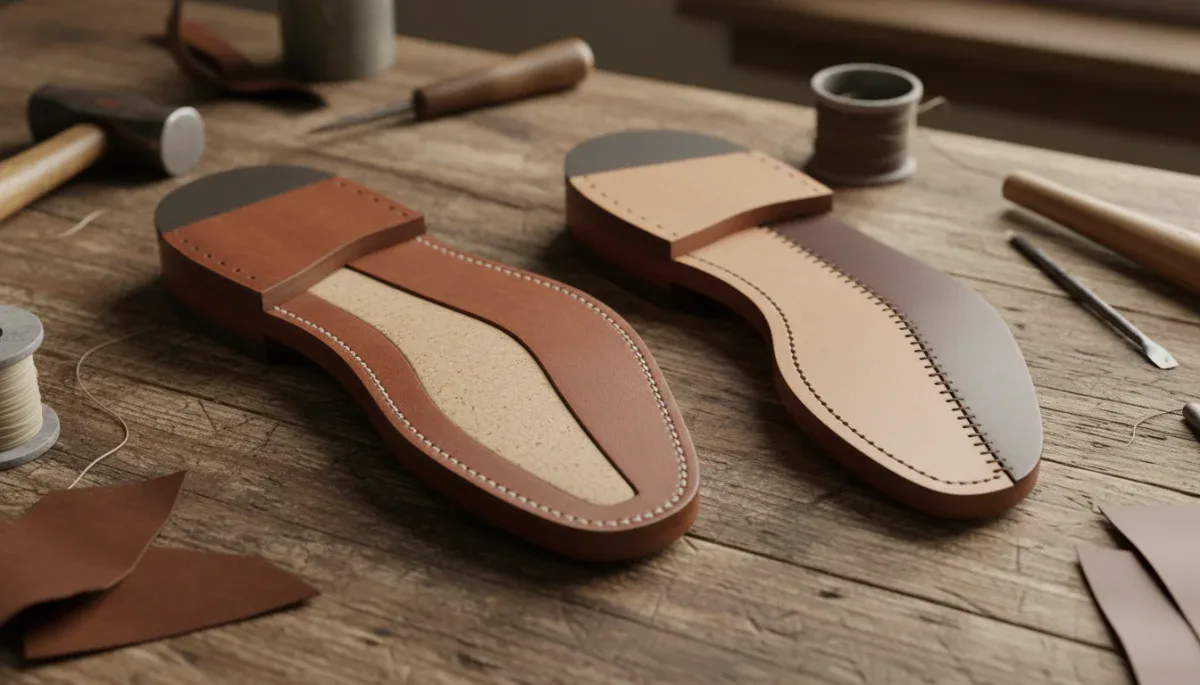
Goodyear welting is an automated evolution of hand-welting developed by Charles Goodyear Jr. in the late nineteenth century. In this construction method, a strip of leather called a welt runs around the perimeter of the shoe bottom. The shoemaker stitches this welt directly to both the upper leather and a rib carved or adhered onto the insole. This initial line of stitching is completely hidden from the exterior.
Advertisements
Next, the shoemaker attaches the outsole to the welt with a second, independent row of heavy thread. Because the outsole stitch never penetrates the insole where your foot rests, there is no direct channel for water to enter the shoe interior through the bottom stitches. The void between the insole and outsole is traditionally filled with a layer of granulated cork and binder, which gradually molds to the shape of the foot over time while adding a layer of thermal insulation.
Key structural components of Goodyear welt construction include:
- Leather welt: A sturdy perimeter strip that serves as the mechanical bridge between the upper and sole.
- Cork filler layer: A moldable composite bed that provides natural arch support and underfoot cushioning as it settles.
- Dual stitch lines: Separate internal and external seams that isolate the interior footbed from external road moisture.
How Blake stitch construction works
Blake stitching, invented by Lyman Reed Blake in the mid-nineteenth century, represents a more direct and simplified method of shoemaking. Rather than using an intermediary welt, a Blake-constructed shoe connects the upper leather, the insole, and the outsole in a single pass of stitching. The stitching machine drives a heavy thread directly through the interior insole, down through the upper material, and out through the bottom of the outsole.
Advertisements
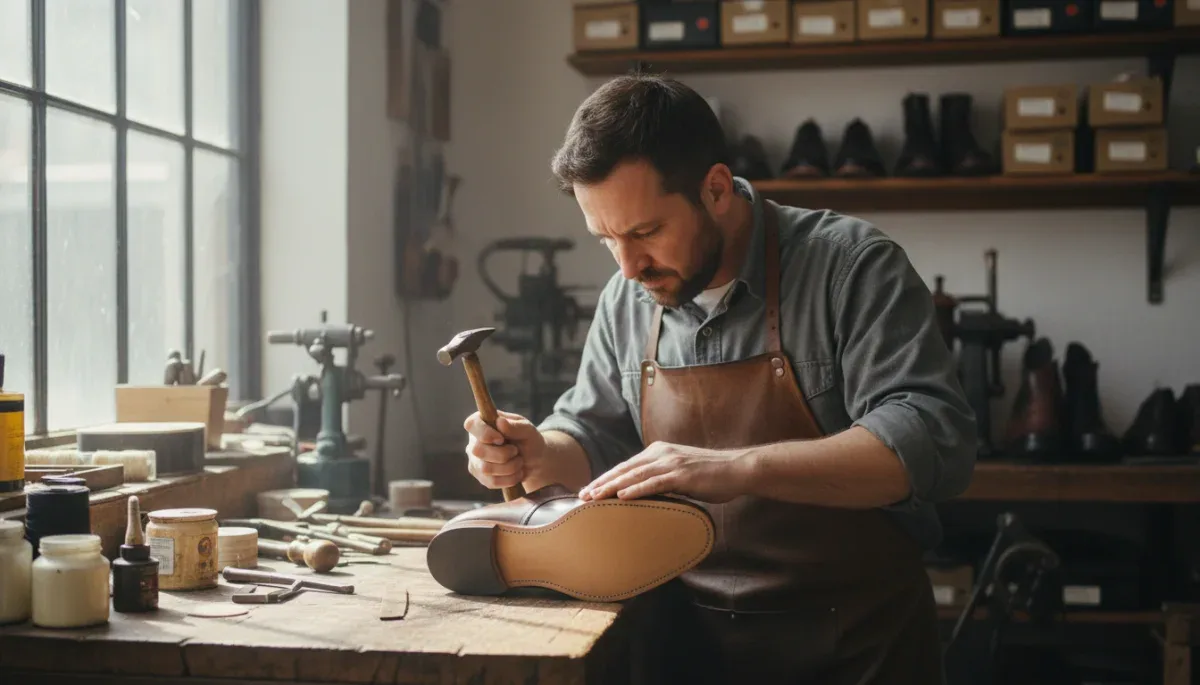
Because there is no external welt running along the outside edge of the sole, Blake stitched shoes feature a close-cut edge and an exceptionally slim, elegant profile. This technique is especially popular among Italian shoemakers who prioritize sleek silhouettes, lightweight design, and immediate sole flexibility right out of the box. However, because the stitch runs through the insole, the seam remains visible on the footbed inside the shoe unless covered by a full-length sock liner.
Essential characteristics of Blake construction include:
- Single through-stitch: Direct mechanical bond running through insole, upper, and outsole simultaneously.
- Narrow sole extension: Clean, trimmed sole edge without the wider lip required by a welt.
- Reduced layer stack: Minimal filler between components, resulting in lighter overall shoe weight.
Durability and water resistance compared
When assessing absolute durability, Goodyear welted footwear generally outperforms Blake stitched models in harsh outdoor conditions. The dual-seam construction of a welt creates a natural physical barrier that keeps water from seeping into the interior lining during wet weather. Water must penetrate the exterior welt stitch, soak through the mid-layers, and find a pathway past the interior rib before reaching the wearer's socks.
Blake stitched footwear has an inherent vulnerability to moisture. Because the single stitch path travels all the way from the ground into the insole, water can travel upward along the thread via capillary action when walking on wet pavement or through puddles. While applying waterproofing compounds to the sole edges helps reduce this effect, Blake construction remains better suited for dry office environments and formal indoor events rather than wet commutes or winter weather.
Practical differences in daily performance include:
- Moisture defense: Goodyear welts block rain and road slush far more effectively than single-pass through-stitches.
- Torsional stability: Goodyear soles provide firmer lateral support across uneven pavement.
- Break-in demands: Blake stitching yields to natural foot flex immediately, whereas welted soles require several days of wear.
Resoling potential and repair costs
The ability to replace worn outsoles multiple times is the hallmark of well-made leather shoes. Goodyear welted shoes excel in repairability because a cobbler can easily unpick and replace the outsole without disturbing the primary stitch holding the upper to the insole. This means the structural integrity and internal fit of the shoe remain intact through four or five complete resoling cycles over decades of use.
Resoling a Blake stitched shoe requires more specialized equipment. Because the stitch goes directly through the insole, removing the old sole can enlarge the original needle holes in the upper and insole board. A cobbler needs a specialized Blake stitching machine (often called a stitcher) to sew the new sole on from the inside out. Not every local neighborhood repair shop possesses this machinery, though reputable specialty cobblers handle Blake repairs routinely.
Cobbler considerations when planning shoe repairs:
- Machine availability: Most shoe repair shops can easily resole Goodyear welted pairs using standard outsole stitchers.
- Insole preservation: Welted shoes protect the delicate internal footbed during sole replacement.
- Lifespan expectancy: Both methods support resoling, but welted construction tolerates more structural rebuilds over time.
At a glance
| Feature | What to know |
|---|---|
| Water resistance | Goodyear welts resist moisture penetration, while Blake stitches can pull water from wet sidewalks. |
| Break-in comfort | Blake shoes flex immediately, whereas Goodyear welted shoes require time for the cork bed to mold. |
| Shoe silhouette | Blake stitching allows a sleek, narrow sole profile, while Goodyear welting creates a wider sole edge. |
| Resoling ease | Goodyear welts are simple for any standard cobbler to rebuild without weakening the upper. |
Frequently asked questions
Can Blake stitched shoes be resoled?
Yes, Blake stitched shoes can be resoled by a cobbler with a Blake stitch machine. The repair process is slightly more delicate than with welted shoes, as repeated stitching through the insole can eventually weaken the leather footbed over multiple rebuilds.
Why are Goodyear welted shoes generally more expensive?
Goodyear welted shoes require more manufacturing steps, additional components like the welt strip and cork filler, and heavier machinery. This complex assembly process takes more production time and material, raising the overall production cost compared to simpler Blake stitching.
Is Blake Rapid construction different from standard Blake stitching?
Yes, Blake Rapid adds an intermediate midsole between the insole and outsole. The insole attaches to the midsole via a standard Blake stitch, and the outsole attaches to the midsole via an external Rapid stitch, combining Blake flexibility with welt-like resoling ease.
Which construction method is better for everyday work shoes?
Goodyear welt construction is better for commuters facing rain, cold weather, or heavy walking on concrete. Blake construction is ideal for indoor office settings where lightweight comfort, immediate flexibility, and slim aesthetic lines take priority over wet-weather durability.
The bottom line
Goodyear welted construction offers the highest durability, weather protection, and resoling longevity for work boots and everyday dress shoes, while Blake stitch construction delivers unmatched elegance, lightweight flexibility, and instant comfort for formal wear. Before purchasing your next pair of quality shoes, inspect the stitching under the insole and along the outer sole edge to confirm the construction method matches your regional climate and daily walking routine.
Written by
Lucas Bastos
Lucas Bastos writes about benefits for bestinyour.com. Each article explains how things work, compares published details such as prices, policies and program rules, and points readers to the official source before they decide.