
Chypre vs Fougère Fragrances: How Classic Scents Differ
Advertisements
Chypre and fougère fragrances differ primarily through their foundational structural accords: chypres rely on a sharp contrast between sparkling citrus top notes and a warm, mossy, resinous base of oakmoss and labdanum, while fougères center on an aromatic harmony of lavender, coumarin, and geranium that creates a crisp, herbaceous, and barbershop-clean impression. These two fragrance families form the bedrock of Western perfumery, yet each speaks a distinct olfactory language suited to different preferences, environments, and skin chemistries.
Understanding these classic profiles helps shoppers evaluate complex designer and niche releases before buying, though modern reformulations prompted by international safety regulations mean today's bottles often replace heritage botanicals with sophisticated synthetic aroma molecules. By looking at how each family builds its pyramid from initial spray to drydown, you can quickly identify which scent family aligns with your personal style and seasonal wardrobe.
The architectural blueprint of chypre perfumes
The term chypre, which translates to the French name for the Mediterranean island of Cyprus, was popularized by perfumer François Coty with his release of Chypre in 1917. While historical records indicate citrus-and-moss blends were crafted in the region for centuries, Coty standardized the structural framework that defines the genre today. A true chypre does not simply smell earthy; it establishes a dramatic tension between high-frequency brightness and low-frequency depth.
Advertisements
The architecture of a classic chypre rests on a specific balance across three distinct evaporation stages:
- Top notes: Sparkling, bitter citrus led almost universally by Italian bergamot, sometimes accompanied by neroli or petitgrain to reinforce an astringent, dry opening.
- Heart notes: Opulent florals such as rose, jasmine, or ylang-ylang, and in leather-leaning variants, smoky isobutyl quinoline or styrax.
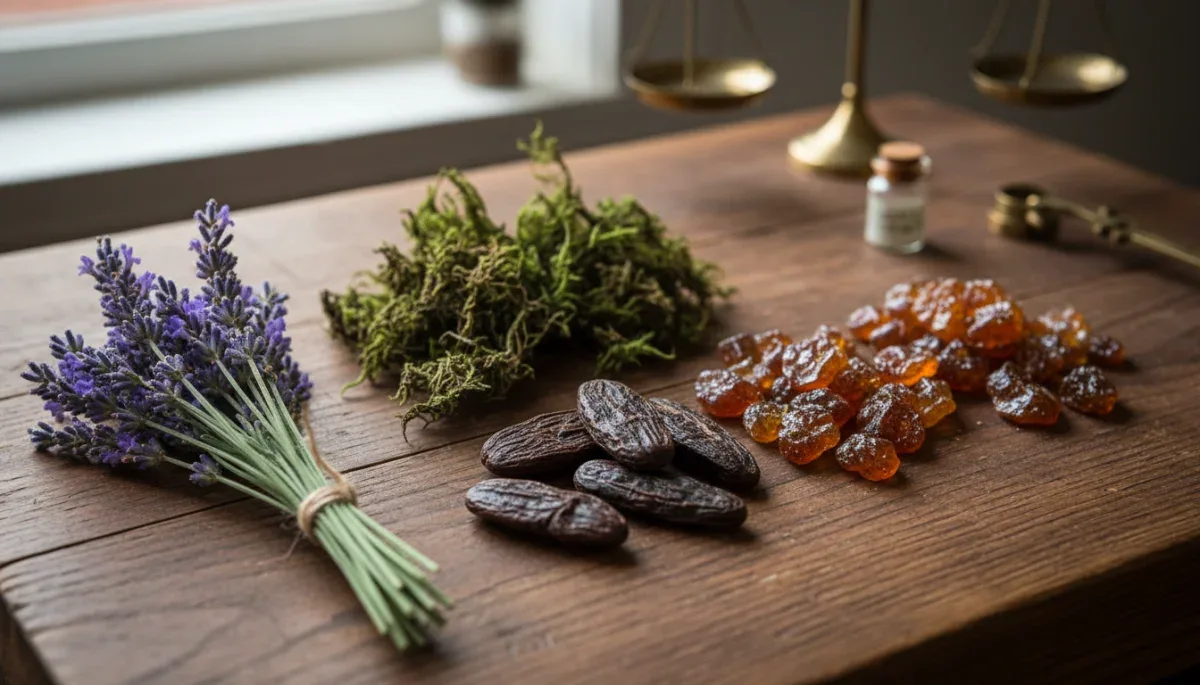
- Base notes: A dense, long-lasting trinity of oakmoss (Evernia prunastri), labdanum (a sticky resin derived from the rockrose bush), and dark, earthy patchouli.
This deliberate clash creates a cool, aristocratic, and slightly detached character. Rather than settling into cozy gourmand sweetness or sheer floral soapiness, a chypre remains intellectual, textured, and moody throughout its lifespan on the skin.
The aromatic structure of fougère compositions
Fougère, meaning fern in French, began with the release of Fougère Royale by Paul Parquet for the house of Houbigant in 1882. Ferns in nature possess virtually no scent of their own; Parquet famously remarked that if God had given ferns a fragrance, they would smell like his creation. To build this green, woodland fantasy, Parquet introduced synthetic coumarin, an isolate derived from tonka beans that evokes sweet, warm, freshly mown hay.
Advertisements
The traditional fougère accord relies on a precise quartet of aromatic elements:
- Lavender: Provides a brisk, medicinal, and herbal opening that cools the skin immediately upon application.
- Geranium: Acts as a bridge in the heart, offering a minty, rosy, slightly metallic floral texture that prevents the blend from becoming too sweet.
- Coumarin: Forms the sweet, powdery, hay-like core that balances the sharp botanical edges of the top notes.
- Oakmoss: Supplies an earthy, damp forest-floor base that grounds the aromatic herbs and extends their longevity.
Because these notes closely resemble the scent of traditional shaving soaps, talcum powders, and grooming tonics, the fougère family quickly evolved into the archetypal masculine scent profile of the twentieth century, although its early iterations were worn equally across genders.
Key differences in scent evolution and wear
Comparing chypre vs fougère fragrances reveals stark differences in how each accord behaves throughout the day. Chypres are built around vertical contrast. The transition from sunny bergamot down into damp patchouli and leathery labdanum can feel brooding and dark. On skin, a chypre projects an aura of tailored formality, making it common in formal evening wear, brisk autumn weather, and boardrooms where a crisp, commanding presence is desired.
In contrast, fougères emphasize horizontal continuity and aromatic freshness. The lavender and geranium create a luminous, uplifted bubble that slowly softens into clean coumarin and moss. Where chypres are dry, angular, and shadowy, fougères are breezy, brisk, and reassuringly clean. A fougère behaves like a freshly pressed white dress shirt, adapting effortlessly to casual daytime use, high-heat summer settings, and professional daytime environments where understated hygiene is the primary goal.
How modern regulations reshaped both categories
Both scent families faced major creative disruptions over the last two decades due to standards published by the International Fragrance Association (IFRA). IFRA sets safety codes based on dermatological evaluations from the Research Institute for Fragrance Materials (RIFM). Natural oakmoss extracts contain atranol and chloroatranol, two compounds identified as potent skin sensitizers, leading to severe restrictions on the percentage of natural moss permitted in finished commercial perfumes.
In response, modern perfumers adapted each family using innovative chemistry:
- Modern chypres: Fragrance houses frequently replace natural oakmoss with clear synthetic patchouli, Evernyl (a lab-synthesized moss analogue), or ambroxan. This shift birthed the pink chypre or fruitchouli subgenre, popular in department stores, which pairs sparkling berries and rose with clean, stripped-down patchouli rather than bitter lichen.
- Modern fougères: Contemporary perfumers often replace deep, mossy drydowns with ambery-woody molecules, lavender-derived linalool fractions, and crystalline musks. This modern aromatic category yields streamlined scents that emphasize sportiness and shower-fresh radiance over dense woodland greenery.
Choosing between chypre and fougère for your collection
Deciding which family to purchase depends heavily on your wardrobe habits and how you want your fragrance to function. If your scent wardrobe leans toward rich leathers, bitter botanicals, crisp autumn tailoring, or dramatic vintage aesthetics, a traditional chypre or leather chypre offers complexity that few other categories can match. Chypres demand confidence; their bitterness avoids the crowd-pleasing sugar found in many contemporary releases.
If you prefer effortless daily versatility, grooming-focused freshness, and invigorating herbal tones, a classic or barbershop fougère is often the safer, more functional investment. Fougères rarely offend in crowded indoor spaces because their clean lavender-and-tonka heart reads as personal hygiene rather than heavy perfumery. Testing both families across multiple days is the best way to discover whether your skin amplifies the earthy bitterness of a chypre or the powdery herbal sweetness of a fougère.
At a glance
| Factor | What to know |
|---|---|
| Core structure | Chypres balance citrus against oakmoss and labdanum, while fougères blend lavender, geranium, and coumarin. |
| Sensory impression | Chypres smell dry, bitter, and sophisticated; fougères smell brisk, herbal, and barbershop-clean. |
| Historical milestone | Houbigant introduced Fougère Royale in 1882, while Coty established the modern chypre template in 1917. |
| Primary wear context | Fougères excel in casual daytime and professional settings, whereas chypres shine in cooler weather and formal occasions. |
Frequently asked questions
Are chypre and fougère fragrances strictly gendered?
No, both families began as unisex creations and remain completely wearable by anyone. While mid-century marketing channeled fougères into men's grooming lines and marketed floral chypres to women, modern niche perfumery routinely releases both structures for all genders.
Can a fragrance be both a chypre and a fougère?
Yes, hybrid categories exist, most notably the aromatic chypre. These crossover blends integrate the lavender and herbal brightness of a fougère into the contrasting citrus, patchouli, and labdanum framework of a classic chypre structure.
Why do vintage versions of these perfumes smell stronger?
Older bottles often contained higher concentrations of unrestricted natural oakmoss and animalic fixatives like civet or castoreum. Current versions rely on modern synthetic isolates and low-atranol moss extracts designed to satisfy international safety guidelines.
How should I test these fragrances in a store?
Apply each fragrance directly to clean skin and wait at least two hours before judging. Because both families rely on slow-evaporating base resins and mosses, testing them only on paper blotters hides their true drydown character.
The bottom line
Chypre and fougère fragrances represent two distinct philosophies of classic perfumery: chypre offers an intellectual, moody contrast between bright citrus and shadowy, mossy earth, while fougère delivers a crisp, reliable harmony of lavender, geranium, and clean, hay-like coumarin. Neither style requires a formal wardrobe to appreciate, but their unique profiles interact differently with body heat and climate. Before buying a full bottle, sample both on your skin throughout an entire day to see which drydown best complements your personal style.
Written by
Mariana Viana
Mariana Viana writes about makeup, perfumes and shoes for bestinyour.com. Each article explains how things work, compares published details such as prices, policies and program rules, and points readers to the official source before they decide.