
Gourmand vs Oriental Fragrance Notes and How to Tell
Advertisements
Gourmand fragrances center on edible, dessert-like culinary notes, whereas oriental fragrances, increasingly categorized by modern retailers as amber fragrances, rely on warm resins, balsams, precious woods, and dry spices. Knowing the boundary between the two helps shoppers evaluate perfume note pyramids accurately and avoid purchasing a scent that turns out either too sugary or too powdery on the skin.
This comparative breakdown helps perfume buyers identify how sweet notes, resins, and synthetic aromachemicals interact on different skin types throughout a standard wear cycle. The primary catch is that modern perfumery frequently blends these two profiles into hybrid compositions, meaning you must track the base notes over several hours to determine which scent family ultimately dominates.
The core architecture of gourmand fragrance profiles
Gourmand scents exist as an olfactory recreation of confectionery items, baked goods, and confectioner treats. The genre gained commercial recognition following the 1992 launch of Angel by Thierry Mugler, an iconic composition that introduced the synthetic aroma compound ethyl maltol to mainstream perfumery. Ethyl maltol produces an unambiguous cotton candy, toasted sugar, and caramel sensation that shifts standard floral or patchouli structures into the realm of edible indulgence.
Advertisements
To identify a gourmand perfume, inspect the manufacturer's listed notes for references to real-world foods and beverages. While older perfume families derive their names from botany or geographical trade routes, gourmand descriptions read like high-end pastry recipes. These perfumes deliberately stimulate the gustatory system, causing the brain to associate what the nose smells with the taste of rich treats.
Common indicators of a true gourmand
- Synthetic maltol and ethyl maltol recreating caramel, spun sugar, and burnt molasses.
- Direct culinary accords such as cocoa powder, dark chocolate, praline, and roasted hazelnut.
- Breakfast and beverage notes, including steamed milk, espresso, honey, and dark rum.
- Fruit-pie facets such as glazed red berries, candied apple, and toasted coconut flakes.
Because gourmand compositions feature prominent sweet notes, their top notes often present an immediate surge of sugar or butter. However, quality blending balances these ingredients against darker base elements, such as earthy patchouli or clean synthetic musks, preventing the perfume from smelling like raw food syrup after twenty minutes of wear.
The historical and modern identity of oriental fragrances
The term oriental has historically designated one of the oldest foundational families in classical perfumery, dating back to milestone releases like Guerlain Shalimar in 1925. In recent years, fragrance organizations including The Fragrance Foundation and industry classifications developed by fragrance historian Michael Edwards have largely adopted the term amber to replace oriental, addressing outdated terminology while more accurately reflecting the physical ingredients inside the bottle.
Advertisements
Unlike gourmand creations, amber perfumes are built around deep, non-edible warmth. Their scent profile evokes historical incense markets, ancient temple unguents, seasoned spice racks, and raw tree saps. Rather than triggering an appetite for dessert, an amber accord creates an enveloping, golden, and often dry aura that radiates heat from the pulse points over twelve to eighteen hours.
Hallmark ingredients of the classical amber profile
- Plant gums and exudates such as labdanum, benzoin, opoponax, frankincense, and myrrh.
- Dry, non-culinary spices including ground cardamom, clove bud, whole nutmeg, and cinnamon bark.
- Earthy fixed resins that lend a balsamic, powder-soft, or medicinal edge to the drydown.
- Animalic or synthetic warm basenotes like ambergris accords, castoreum substitutes, and dark musk.
When you encounter an amber fragrance, notice that any sweetness feels resinous and heavy rather than sugary or edible. A balsamic sweetness comes from tree sap, carrying faint undertones of smoke, cured leather, pine bark, or antique books, rather than powdered confectioner sugar.
Where the families overlap: vanilla and tonka bean
The primary source of confusion between gourmand vs oriental fragrance notes is their shared reliance on vanilla and tonka bean. Both families treat natural vanilla extract, synthesized vanillin, and coumarin as foundational pillars, but they steer these raw materials in fundamentally opposing directions through careful pairing.
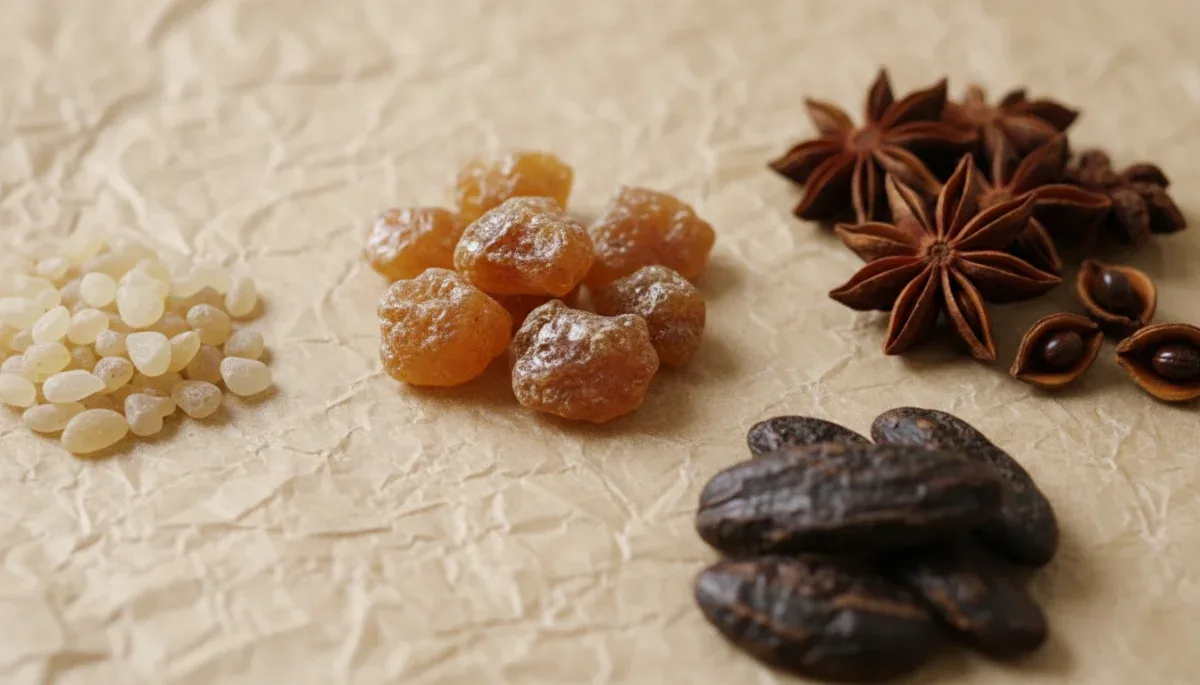
In a gourmand composition, vanillin is paired with ethyl maltol, cream accords, and fruit lactones to resemble vanilla ice cream, custard, or sugar cookies. The perfumer isolates the sweet, comforting dimensions of the bean, deliberately buffering down any natural woody bitterness to maintain a soft, dessert-like finish that remains easy to wear casually.
In contrast, an amber scent combines vanilla with labdanum, smoky incense, and dark patchouli. This treatment references the traditional amber accord, an olfactory concept that does not actually derive from fossilized jewelry amber, but rather from a balance of labdanum resin and rich vanilla. In this setting, the vanilla behaves as a softening agent for rugged resins rather than an invitation to eat dessert.
Tonka bean introduces a similar cross-category challenge. Containing high percentages of natural coumarin, tonka bean can project an aroma of fresh hay, bitter almond, and sweet tobacco leaf. In a gourmand structure, tonka is frequently blended to smell like marzipan or almond pastry, while in an amber context, its dried-hay qualities complement dry spices and aged sandalwood.
How to identify notes on testing strips and skin
Identifying whether a fragrance leans gourmand or amber requires patient evaluation over several hours, rather than relying solely on the initial blast from an atomizer. Alcohol evaporation in the opening minutes often exposes high-impact top notes that can mislead even experienced shoppers about the true nature of the formula.
When applying a fragrance to a paper blotter card, wait at least three minutes before taking your first evaluation. Note your immediate impressions: does the initial sweetness remind you of edible goods, or does it deliver a resinous, herbal, or spiced sensation? A culinary hit of cocoa, whipped cream, or caramel signals an intentional gourmand trajectory.
Skin chemistry alters this progression considerably. Human skin produces natural sebum, heat, and moisture, which accelerate the evaporation of delicate volatile molecules while warming up heavier base resins. To properly evaluate the perfume, spray a single burst onto an unscented forearm and monitor how it evolves across three critical stages:
- The opening fifteen minutes, where light aldehydes, bright citruses, or sugary top notes project strongest.
- The intermediate two-hour mark, where floral middle notes recede and reveal whether culinary butter notes or dry resins are anchoring the formula.
- The four-to-eight-hour drydown, where the true base accord sits close to the skin as either edible vanilla musk or dry, balsamic amber.
If you detect a sticky, syrupy residue in the scent trail after four hours, the composition is predominantly gourmand. If the lingering aura turns dusty, smoky, powdery, or reminiscent of unburned incense, the fragrance belongs firmly in the amber family.
Seasonal wear, projection, and occasion guidelines
Both gourmand and amber perfumes contain heavy molecular weights, meaning they project further in cold conditions and persist longer on fabric than light citrus colognes. However, their atmospheric behaviors differ when exposed to indoor climate control, outdoor humidity, and body temperature fluctuations.
Gourmand scents offer exceptional warmth during the late autumn and winter months. The olfactory association between sweet baked treats and holiday baking creates a cozy, approachable environment. However, intense gourmand notes can become cloying or nauseating in humid summer heat, as sweat amplifies lactonic and sugar accords into overly thick vapors that overwhelm nearby people in enclosed offices.
Amber fragrances share the same cold-weather strength but carry a more formal, contemplative profile. Because their backbone relies on dry resins and woods, they project an air of polish suited for evening events, business dinners, and crisp transitional weather in early spring. Certain dry amber blends that avoid heavy sweetness can even transition comfortably into summer evenings when applied with a light hand to lower pulse points.
At a glance
| Factor | What to know |
|---|---|
| Primary character | Gourmands smell like edible foods, while ambers smell of resinous sap and spices. |
| Key aromachemical | Gourmands depend heavily on ethyl maltol, whereas ambers rely on labdanum and vanillin. |
| Drydown sensation | Gourmands settle into warm sugar or cream, while ambers dry into powdery incense and wood. |
| Heat tolerance | Both excel in winter, but intense gourmands turn cloying faster under direct summer humidity. |
Frequently asked questions
Can a perfume be both gourmand and oriental?
Yes, many modern perfumes belong to the hybrid amber-gourmand subcategory. These compositions balance classical bases of labdanum, frankincense, or sandalwood with modern culinary accents like praline, roasted coffee, or salted caramel. The result delivers the sophistication of an amber fragrance alongside the playful, cozy sweetness typical of confectionery accords.
Why does my vanilla perfume smell like incense?
Your fragrance likely pairs vanilla with natural resins like benzoin, labdanum, or myrrh. When perfumers balance vanilla with plant gums, the resinous facets cut through the sweetness, generating a smoky, balsamic aroma reminiscent of incense sticks rather than kitchen baking extract or dessert frosting.
Are gourmand perfumes considered less sophisticated than amber scents?
No, formulation quality dictates sophistication rather than the scent family itself. While inexpensive body sprays often employ single-note synthetic sugar accords, fine fragrance houses routinely blend gourmand notes with bitter woods, earthy patchouli, and clean florals to create intricate, highly complex compositions that rival historic luxury perfumes.
Which family lasts longer on the skin?
Amber fragrances generally offer superior longevity due to the heavy molecular weights of natural resins and fixative balsams. While sweet gourmand aromachemicals like ethyl maltol persist for many hours, base resins like labdanum and benzoin bind more tenaciously to skin lipids, frequently lasting over twelve hours.
The bottom line
Telling the difference between gourmand and amber perfumes comes down to isolating culinary sweetness from resinous warmth. Gourmands recreate desserts through sugars, roasted nuts, and dairy lactones, while amber fragrances project incense, tree sap, and dry spices. Before you purchase a full bottle, test the liquid directly on your bare arm for at least four hours to confirm whether the final drydown matches your personal style.
Written by
Mariana Viana
Mariana Viana writes about makeup, perfumes and shoes for bestinyour.com. Each article explains how things work, compares published details such as prices, policies and program rules, and points readers to the official source before they decide.