
How to test fragrance samples before buying a bottle
Advertisements
Testing fragrance samples properly requires evaluating a scent on clean skin across an entire day rather than judging it immediately from a bottle or paper strip. Taking the time to observe how a formulation evolves through its initial opening, heart, and base notes ensures that you invest in bottles you will genuinely wear rather than scents that only impress for five minutes.
This methodical approach helps shoppers avoid buyer remorse and expensive shelf clutter, though the catch is that it demands patience, repeated wears across different temperatures, and resisting the urge to make an impulse purchase at the department store counter.
Why paper blotters only tell half the story
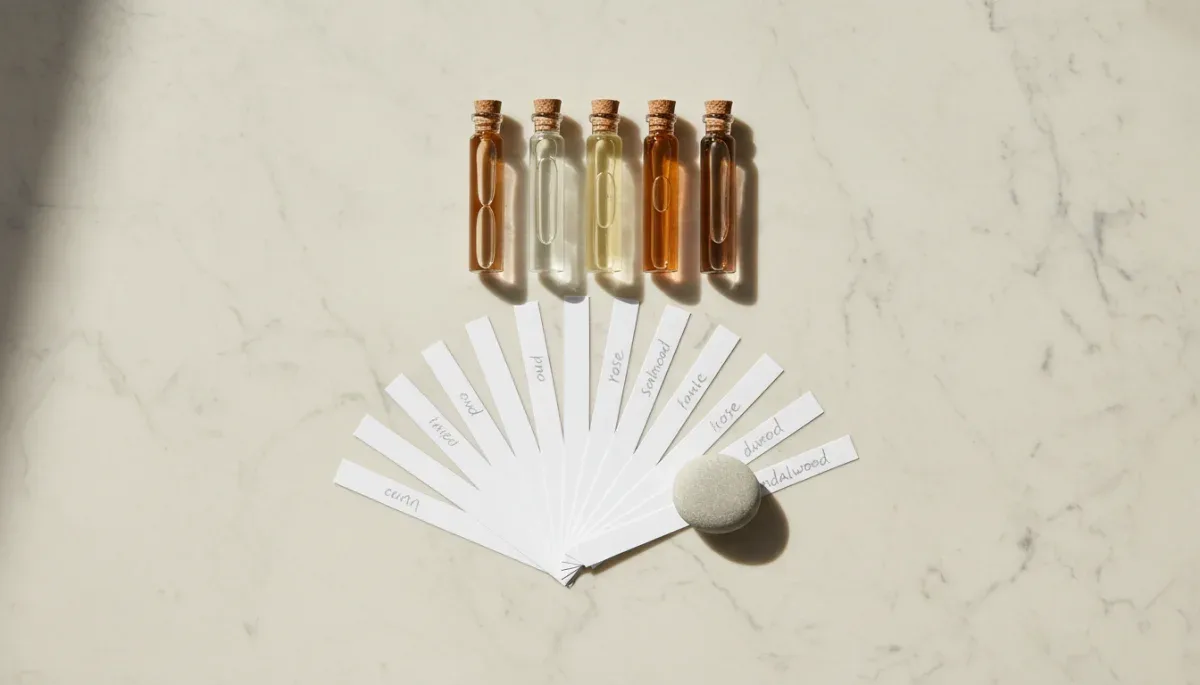
When you visit a beauty counter or open a discovery set at home, your natural instinct is often to spray the liquid directly onto a paper blotter card. Blotter cards, known in the fragrance industry as mouillettes, serve an important initial purpose: they allow you to assess the basic scent profile without committing the liquid to your skin. On paper, alcohol evaporates rapidly, giving you an immediate preview of the top notes and an idea of whether the scent family appeals to your preferences.
Advertisements
However, paper is completely inert and porous in a way human tissue is not. Paper does not generate heat, maintain a lipid barrier, produce sweat, or possess a specific pH level. Because a fragrance relies on heat to diffuse its aromatic compounds into the air, a scent sitting on a cold piece of cardstock will unfold at an artificially slow rate. Certain heavy molecules like resins, musks, and animalic notes may cling stubbornly to paper fibers without ever projecting the way they would off a warm wrist.
Relying exclusively on a paper card often produces two misleading outcomes. A fragrance might smell bright, sparkling, and balanced on paper, only to turn sour, overly sweet, or sharp once it interacts with the warmth and oils of your body. Conversely, a composition that feels heavy, muddy, or uninspiring on paper may blossom into an airy, complex trail when warmed by your pulse points. Blotters should be treated strictly as a screening tool to eliminate fragrances you immediately dislike before you proceed to skin evaluation.
The three stages of fragrance development on skin
Every traditional perfume is composed of volatile ingredients with varying molecular weights that evaporate at different rates over several hours. To properly test fragrance samples, you must track the formulation through each phase of its life cycle rather than making a purchase decision during the opening blast. Perfumers deliberately structure these phases into an olfactory pyramid composed of top, heart, and base notes.
Advertisements
The traditional fragrance phases
- Top notes: The opening impressions, typically consisting of light citrus, herbs, or light fruits, which last between ten and thirty minutes.
- Heart notes: The core theme of the composition, composed of floral, spice, or green notes, which emerge after thirty minutes and linger for two to four hours.
- Base notes: The heavy, fixative materials such as woods, vanilla, amber, and musk that anchor the fragrance and remain detectable from four hours up to twelve hours or more.
The top notes are designed by marketing teams and perfumers to make a sparkling first impression. Because retail sales frequently happen within moments of a customer spraying a bottle, commercial scents are sometimes front-loaded with bright, pleasing top notes that vanish quickly, leaving behind a thin or generic foundation. By wearing a sample for several hours, you reveal the true heart and base materials that make up ninety percent of your actual wearing experience.
Noticeable shifts between these phases can surprise you. A scent that opens with a tart, refreshing burst of bergamot might transition into a dark, smoky birch tar or an intensely sweet amber within ninety minutes. If you bought the bottle based purely on the crisp opening, you might find the lingering base notes cloying or unpleasant during an ordinary workday. Always track a sample through its entire drydown until it becomes a faint skin scent before deciding to buy.
How to apply and wear a sample for accurate results
Application technique plays a substantial role in how an aromatic composition behaves. When preparing to test fragrance samples on your body, start with clean, unperfumed skin. Shower using an unscented body wash, and avoid applying heavily scented lotions, body oils, or body washes to the areas where you plan to spray. A common testing mistake is applying a delicate fragrance over a rich coconut or shea butter moisturizer that distorts the delicate balance of the perfume notes.
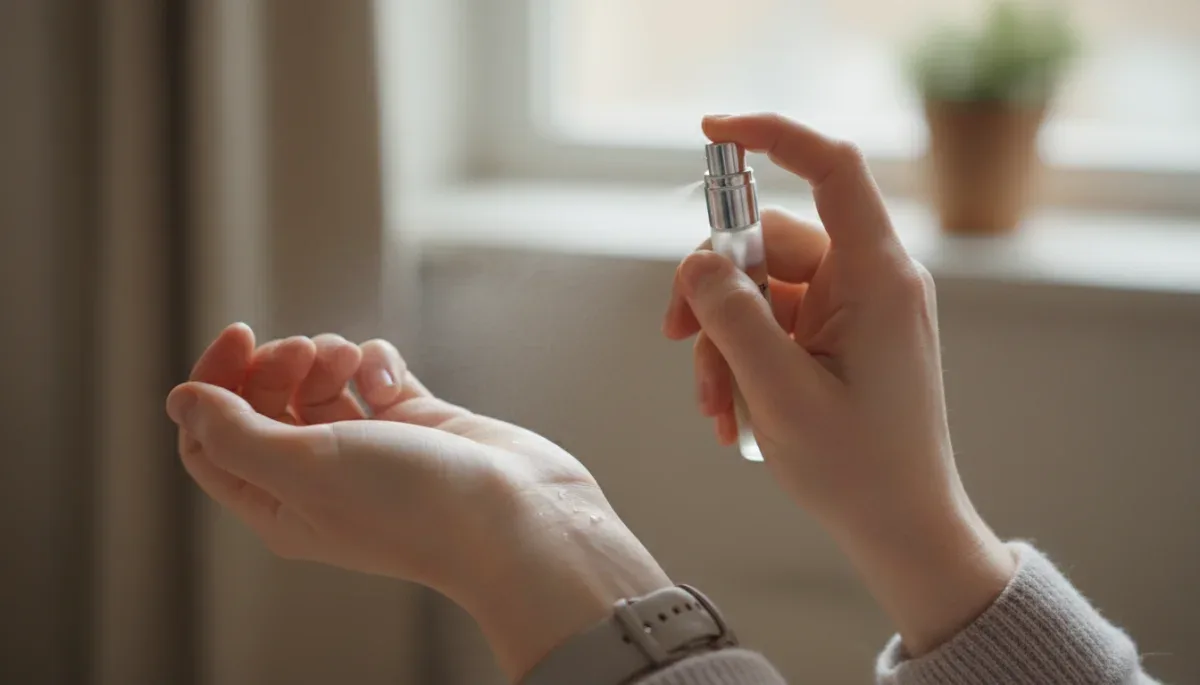
The inside of your forearm or the top of your wrist serves as the most practical testing ground. While wearing perfume behind your ears or on your neck is customary for daily wear, placing a test sample close to your nose can overwhelm your senses quickly, making objective evaluation difficult. Applying the sample to your forearm allows you to bring your arm closer to inspect subtle details or keep it at resting distance to measure the scent cloud, known as sillage, as you move throughout your day.
Spray or dab the liquid gently onto the skin, and allow it to air-dry naturally. Never rub your wrists together. The old habit of rubbing wrists creates friction that generates heat and physically breaks down lighter top molecules prematurely, crushing the natural sequence of evaporation. Instead, let the liquid settle onto your skin and observe how the scent projects within the first minute, after twenty minutes, at the two-hour mark, and at the end of the day.
Managing olfactory fatigue during your evaluation
Olfactory fatigue, commonly called nose blindness, is an evolutionary sensory adaptation where your nervous system stops registering continuous smells to remain receptive to new, potentially dangerous environmental changes. When you inhale a strong fragrance repeatedly, your olfactory receptors become saturated, causing you to perceive the perfume as weak or completely gone even when others around you smell it clearly.
To prevent olfactory fatigue from ruining your evaluation, limit yourself to testing no more than two fragrances per day: one on each arm. Testing five or six scents simultaneously overwhelms your brain and confuses your evaluation, as the volatile molecules mingle in the ambient air around you. If you attempt to smell multiple heavy perfumes in rapid succession, your ability to detect nuanced heart notes and subtle base materials drops significantly.
When you feel your sense of smell becoming dull or overwhelmed, step away from the scented area into fresh outdoor air. While department store counters frequently offer small jars of coffee beans to clear your nose, inhaling coffee simply introduces another complex aroma to an already fatigued sensory system. Research published by sensory researchers indicates that breathing in your own unscented skin, such as burying your nose in the clean crook of an unscented cotton sleeve, or drinking a glass of plain room-temperature water is far more effective for resetting your olfactory palate.
Where to source authentic perfume samples
Before purchasing expensive retail bottles, acquiring genuine samples is essential. Fortunately, multiple legitimate channels exist for U.S. consumers to obtain travel-friendly quantities without committing to retail prices that often exceed several hundred dollars per bottle.
Common sources for fragrance samples
- Department store counters: Retailers like Nordstrom and Bloomingdale's often prepare complimentary custom sample vials upon request when you discuss scents with their sales staff.
- Official brand discovery sets: Many niche and designer houses sell boxed discovery sets containing several small atomizers, often including a voucher redeemable toward a full-sized bottle.
- Beauty specialty retailers: Sephora and Ulta Beauty offer curated sampler kits through their official stores, frequently paired with promotional certificates for full bottles.
- Reputable decant services: Dedicated decanting companies purchase authentic master bottles and divide them into sterile, sealed glass vials ranging from one to ten milliliters.
When purchasing from third-party decanters or online sample sellers, ensure the retailer has an established reputation to avoid watered-down or counterfeit products. Always opt for spray atomizers rather than splash vials or dabber bottles whenever possible. Splash vials apply perfume in a dense, concentrated drop that limits air contact, whereas an atomizer disperses a fine mist across a wider surface area, mimicking the exact diffusion mechanism of a standard commercial bottle.
Keep in mind that sample atomizers sometimes deliver a smaller droplet volume per press than the broad, pressurized sprayers found on luxury bottles. Consequently, two small sprays from a sample vial might equal roughly one generous spray from a full retail unit. Factor this difference into your assessment when evaluating performance, projection, and overall longevity throughout your testing sessions.
Creating a testing routine over multiple days
A single day of testing rarely provides enough information to justify buying a full bottle. Ambient temperature, indoor humidity, seasonal shifts, hormonal fluctuations, and personal stress levels can dramatically alter your body temperature and skin chemistry, transforming how a perfume smells and performs. A scent that feels refreshing in brisk autumn weather may become suffocating in humid summer heat.
Wear your sample across three distinct days and varying environments. Wear it once while relaxing at home in a controlled climate to understand its purest character without outside distractions. Wear it a second time during an active day or at work to see how it reacts to physical movement, increased body warmth, and different fabrics. Finally, wear it during an evening out or a social setting to evaluate how it performs in public spaces and whether it matches your lifestyle and personal aesthetic.
During this testing period, pay close attention to your emotional and physical comfort. Does the fragrance trigger a headache or sinus irritation after several hours of continuous exposure? Do you find yourself pleasantly catching wafts of the drydown as you walk, or does the aroma feel intrusive and tiresome? A fragrance should feel like an effortless extension of your presence. If you feel compelled to scrub the scent off before the day ends, you have successfully saved yourself the price of an unused bottle.
At a glance
| Testing factor | What to know |
|---|---|
| Application site | Use the inner forearm rather than the neck to avoid rapid nose blindness. |
| Evaluation time | Track the scent for at least six to eight hours through the final drydown. |
| Testing limit | Evaluate no more than two fragrances at once to preserve sensory clarity. |
| Reset method | Breathe clean air or unscented cotton rather than inhaling coffee beans. |
Frequently asked questions
Why does a perfume smell different on me than on a friend?
Every person has a unique skin composition influenced by natural skin oil levels, surface hydration, diet, and skin surface pH. These natural variables alter how aromatic oils dissolve, bond, and evaporate off the body, causing the same perfume to project differently from person to person.
How long should I wait before deciding to buy a bottle?
Wear the sample for at least three separate days over a two-week period. This waiting period exposes the formulation to different weather conditions, daily activities, and moods, confirming whether the scent remains appealing across real-world situations before you spend money on a full container.
Are splash dabber vials as good as spray samples?
Spray samples are significantly better because they aerate the liquid and disperse it evenly across your skin. Dabber bottles pool the liquid in one concentrated spot with less oxygen exposure, which suppresses the projection of top notes and distorts how the composition diffuses into the room.
How should I store my perfume bottles during testing?
Keep your samples in an upright position inside a cool, dark drawer or cabinet away from direct sunlight, excess heat, and bathroom steam. Environmental heat and UV radiation degrade fragile fragrance compounds, while temperature spikes can cause small sample vials to evaporate or leak.
The bottom line
Sampling perfumes before investing in a full bottle is the single most reliable way to build a personal fragrance collection you genuinely love. By testing on clean skin, observing the complete progression from top to base notes, and giving each formulation multiple trial wears, you eliminate guesswork and avoid expensive shelf ornaments. Before you purchase any full-sized bottle, confirm that you have worn the sample through a full eight-hour day without experiencing olfactory fatigue, irritation, or regret.
Written by
Mariana Viana
Mariana Viana writes about makeup, perfumes and shoes for bestinyour.com. Each article explains how things work, compares published details such as prices, policies and program rules, and points readers to the official source before they decide.