
Rubber vs leather soles for dress shoes in wet weather
Advertisements
Rubber soles are significantly better than leather soles for dress shoes in wet weather because rubber creates reliable friction on slick pavement and prevents water from soaking into the shoe construction. Leather soles become soft, spongy, and prone to rapid abrasion when wet, while also turning hazardous on smooth indoor surfaces like marble, tile, and metal subway grates.
This comparison helps commuters, office workers, and event attendees maintain both their physical safety and their footwear investment during rainy seasons, though choosing rubber sometimes requires accepting a slightly thicker profile or adding aftermarket rubber guards to preserve formal proportions.
How water alters the structure of leather outsoles
Traditional dress shoes feature outsoles made from vegetable-tanned leather, a material selected for its breathability, moldability, and slim aesthetic profile. Under dry conditions, compacted vegetable-tanned leather offers firm support and molds gradually to the contours of your foot. However, leather is inherently porous skin. When exposed to puddles, slush, or continuous rain, the fibers absorb ambient moisture through capillary action. This water absorption causes the tightly packed collagen fibers within the sole to swell, loosen, and soften within minutes of contact.
Advertisements
Once saturated, a leather sole loses its natural structural density. Every step taken on abrasive concrete, grit, or asphalt acts like wet sandpaper against the weakened material. Road grit embeds directly into the softened leather, grinding away the layers of the sole up to three times faster than under dry conditions. Furthermore, continuous dampness can compromise the internal stitching of Goodyear-welted or Blake-stitched shoes. Water migrating upward past the outsole reaches the interior cork filler and cotton gemming, creating an environment ripe for mold, mildew, and leather delamination.
Drying saturated leather poses another distinct challenge for shoe owners. If you dry soaked dress shoes near direct heat sources such as radiators, heating vents, or fireplaces, the leather fibers contract unevenly, dry out prematurely, and become brittle. This leads to deep cracking along the flex point of the ball of the foot, rendering the sole unwearable and forcing an early trip to a repair shop.
The mechanics of traction on slick urban surfaces
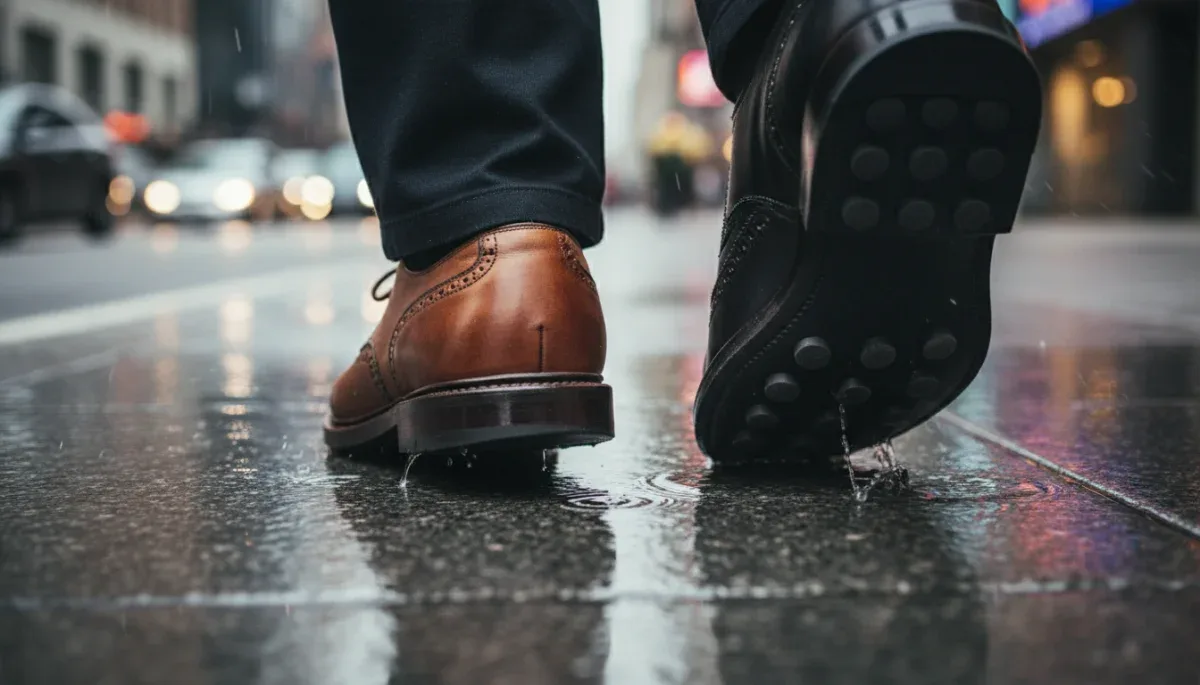
The primary hazard of walking in wet conditions is the sudden loss of friction between your footwear and the ground. A dry leather sole provides moderate grip on sidewalk concrete because microscopic surface irregularities interlock. When water covers smooth stone, painted crosswalk lines, polished lobby tile, or metal construction plates, it creates a thin liquid barrier known as hydroplaning film. Because smooth leather has no tread patterns or siping channels to disperse this liquid, your foot glides across the moisture without resistance.
Advertisements
Rubber outsoles prevent slipping through material flexibility and tread geometry. Vulcanized rubber compounds remain pliable at lower temperatures, allowing the sole material to conform to pavement irregularities even through a layer of moisture. High-quality rubber compounds feature a higher coefficient of friction against wet stone and glazed ceramic, biting into slick surfaces rather than sliding across them.
Key tread designs for professional footwear
- Studded rubber soles: Commonly known under the Dainite brand name, these outsoles feature recessed circular studs that provide directional grip without showing visible lugs from the side profile.
- Ribbed commando half-soles: These feature low-profile horizontal channels designed specifically to push standing water away from the center of the foot.
- Micro-textured composite soles: Completely flat from a distance, these feature fine cross-hatch stippling across the forefoot to ensure grip on wet marble and polished floorboards.
Comparing durability, resoling, and lifetime maintenance
Durability in wet climates depends heavily on how well a sole handles repeated exposure to water, road salt, and chemical de-icers. Road salt dissolves in surface water and penetrates deep into porous leather outsoles. As the water evaporates, salt crystals reform inside the leather matrix, expanding and bursting delicate fibers from within. This creates distinct white crust marks along the welt and leaves the leather permanently stiff, brittle, and susceptible to breaking along the flex lines.
Rubber soles are largely chemically inert against typical municipal de-icing salts and urban runoff. A vulcanized rubber outsole acts as an impenetrable shield for the bottom of the shoe, keeping water away from the delicate insole and midsole stitching. When dirt and salt accumulate on rubber, they wash off easily with a damp rag without requiring specialized leather conditioning treatments or saddle soaps.
When it comes to shoe repair, resoling economics vary between materials. Traditional full leather resoles require removing the entire bottom stitch line and rebuilding the shoe base, which requires skilled benchwork and specialized machinery. A quality rubber outsole typically lasts substantially longer before wearing down to the welt line. Many modern dress shoes utilize thin rubber half-soles that cobblers can peel off and replace without disturbing the underlying welt or internal cork cavity, significantly reducing lifetime maintenance costs.
Traditional dress codes and aesthetic considerations
For centuries, sartorial etiquette considered the full leather sole the only acceptable option for formal black-tie attire, morning dress, and conservative business wear. The primary aesthetic virtue of a leather sole is its ultra-slim edge profile. A single leather sole measures between four and five millimeters in thickness, allowing the shoe to maintain a chiseled, refined silhouette that transitions seamlessly from the upper into the heel stack. Heavy rubber soles from outdoor work boots disrupt these clean lines, making formal trousers drape awkwardly over the instep.
Modern shoe manufacturing has largely solved this aesthetic dilemma through discreet low-profile rubber compounds. Premium shoemakers now offer studded rubber soles, slim composite dress soles, and leather soles with inset rubber islands. When viewed from above or directly from the side, a studded rubber sole like a Dainite sole maintains a clean, dark, edge-finished profile that looks nearly indistinguishable from a standard leather welt.
Unless you are attending an event with strict, traditional dress guidelines, such as a formal courtroom proceeding or a strict black-tie gala, modern low-profile rubber soles are widely accepted across corporate boardrooms, creative offices, and social gatherings. They offer an ideal balance between classic tailoring standards and daily weather reality.
Protective compromises: topy, overshoes, and hybrid soles
If you already own dress shoes with smooth leather soles and do not wish to commission an expensive full resole, several practical protective options allow you to navigate wet days without ruining your shoes.
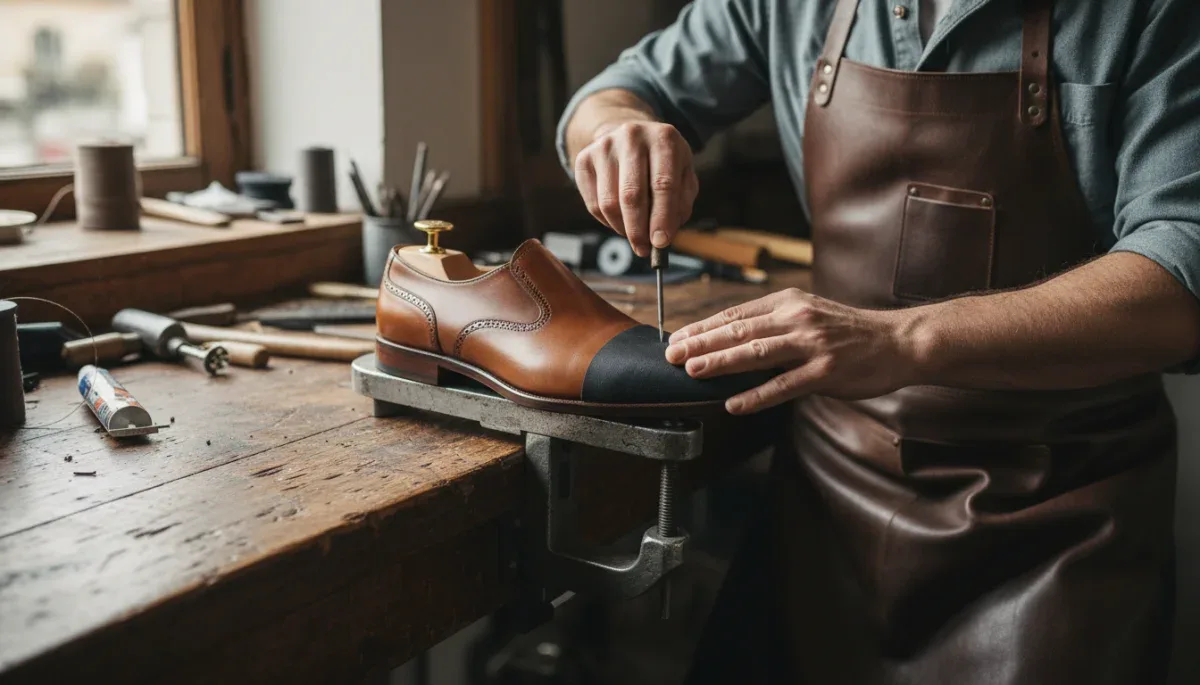
The most common aftermarket modification is adding a thin rubber half-sole, frequently referred to by the trade name Topy or simply as a protective rubber overlay. A cobbler skives down a millimeter of the outer leather forefoot, applies industrial contact adhesive, and presses a thin layer of textured vulcanized rubber over the ball of the foot. This method preserves the formal leather waist and heel stack of the shoe while providing complete water impermeability and traction under the high-wear forefoot zone.
Common ways to adapt existing dress shoes
- Rubber half-soles (Topy): A thin, glued rubber layer added to the forefoot by a professional cobbler to protect against rain and premature thinning.
- Classic rubber overshoes (galoshes): Stretchable rubber boots slipped directly over your formal shoes during transit, protecting both the upper leather and the outsole completely.
- Combination island soles: Factory-made soles featuring a central inset of rubber surrounded by finished leather edges, blending traditional craft with modern grip.
- Full Dainite conversion: Replacing the entire bottom assembly with vulcanized studded rubber during a standard Goodyear-welt recrafting service.
Emergency steps if your leather soles get soaked
If you are caught in an unexpected downpour while wearing leather-soled shoes, immediate care determines whether the footwear survives undamaged. Saturated leather requires controlled, natural evaporation to ensure the sole does not curl, rot, or crack.
Begin by wiping down the exterior welts, uppers, and bottom soles with a dry microfibre towel to remove standing water, road grime, and dissolved salt. Avoid leaving dirt on wet leather, as surface particles become embedded as the material dries. Once wiped, insert unvarnished cedar shoe trees into the shoes. Raw cedar wicks interior moisture through the footbed while maintaining the original tension and shape of the leather upper, preventing the toe box from curling upward.
Next, rest the shoes on their sides on an untreated wooden floor, a slatted shoe rack, or a dry towel. Resting shoes on their sides allows air to circulate freely beneath the wet outsoles. If you leave wet shoes sitting flat on their soles, moisture remains trapped between the outsole and the floor, rotting the leather and breeding odor-causing bacteria. Allow the shoes to dry naturally at room temperature for at least forty-eight hours before wearing them again or applying leather conditioners.
At a glance
| Factor | What to know |
|---|---|
| Wet traction | Rubber provides reliable friction, while wet leather slips easily on hard surfaces. |
| Water resistance | Rubber completely blocks water absorption, whereas leather absorbs water and softens quickly. |
| Formal aesthetics | Leather offers the slimmest edge profile, though modern dress rubber remains very discreet. |
| Abrasion resistance | Rubber resists grit and road salt, while damp leather wears out quickly on wet pavement. |
Frequently asked questions
Can I wear leather soles in the rain occasionally?
You can wear leather soles in light rain occasionally, but you should avoid walking through standing puddles or over slick tile. Wet pavement rapidly abrades the softened leather fibers, and water can reach interior stitching. Always allow wet shoes to dry on their sides for forty-eight hours.
Are Dainite rubber soles as formal as leather?
Dainite rubber soles are acceptable for nearly all modern business and formal settings. Because their studded tread sits recessed within the perimeter, the edge profile appears slim and clean from the side, looking almost identical to a standard double-leather sole when viewed while standing.
Does adding a rubber topy ruin a Goodyear welt?
Adding a rubber topy does not ruin a Goodyear welt when installed by a competent cobbler. The cobbler applies the thin rubber layer solely over the existing outsole without piercing or cutting into the structural welt stitches, leaving the shoe fully capable of future standard resoles.
How long should leather shoes rest after getting wet?
Leather shoes should rest for at least forty-eight hours at room temperature after getting soaked. Keep raw cedar shoe trees inside to preserve shape and absorb internal humidity, and lay the shoes on their sides so air circulates fully across the damp outsoles.
The bottom line
Rubber outsoles are the superior, practical choice for commuting and walking outdoors in wet weather, shielding your footwear investment from road salt, water damage, and dangerous slips. While traditional leather soles hold historical authority for strictly formal events, modern low-profile rubber designs provide comparable elegance without the fragility. Before walking out into seasonal rain, check your shoes for existing sole wear or consider having a cobbler fit protective rubber half-soles to safeguard your leather bottoms.
Written by
Lucas Bastos
Lucas Bastos writes about benefits for bestinyour.com. Each article explains how things work, compares published details such as prices, policies and program rules, and points readers to the official source before they decide.