
Gourmand vs Oriental Fragrances: Key Differences
Advertisements
Gourmand fragrances center on edible, confectionery notes like spun sugar, dark chocolate, and roasted coffee beans, whereas oriental perfumes—frequently designated as amber fragrances across contemporary retail standards—draw their structure from deep resins, incense, aromatic woods, and warm spices. Both families belong to the broader category of warm, persistent perfumery, yet they establish completely different moods through the specific chemical accords they use to achieve comfort and depth.
Understanding these differences helps shoppers who enjoy rich perfumes select bottles suited to their workplace, social settings, and climate preferences, though the distinction requires careful attention because modern perfumers frequently blend culinary sweetness directly into resinous bases. Learning how each profile performs on skin allows you to read ingredient pyramids accurately and avoid purchasing fragrances that turn cloying or overly heavy over an extended wear period.
Defining the core structure of gourmand and amber perfumes
The gourmand family is a relatively modern development within fine fragrance history, tracing its commercial foundation back to the early 1990s with the release of perfumes that introduced synthetic ethyl maltol to mimic spun sugar and candy floss. Rather than relying on traditional floral or herbal accords, a true gourmand perfume aims to evoke an explicit culinary sensation. When smelling a gourmand scent, your brain immediately connects the olfactory cues to edible confections such as praline, almond paste, burnt caramel, milk froth, or bourbon vanilla. These fragrances lean heavily on high-impact synthetic molecules that recreate the aroma of freshly baked goods and confectionery displays.
Advertisements
Oriental fragrances represent one of the oldest formal categories in perfumery, historically defined by balsamic materials originating from ancient trade routes across the Middle East, India, and East Asia. In 2021, The Fragrance Foundation and major global fragrance houses began formally shifting away from the term oriental in favor of amber, which more precisely describes the core accord of the family: a classic pairing of vanilla, labdanum, and benzoin. Amber perfumes prioritize warmth, spiritual association, and animalic or balsamic richness over confectionery sweetness. While an amber perfume may feature sweet facets, its sweetness comes wrapped in dry woods, smoky resins, and pungent spices rather than culinary pastry notes.
The primary architectural difference between the two families lies in how sweet accords are balanced. In a gourmand construction, the sweetness serves as the central theme and dominant focal point from the heart through the base notes. In an amber perfume, sweetness is purely functional, acting as a smoothing agent to soften the bitter edge of dry frankincense, medicinal myrrh, sharp clove, or powdery orris root.
Key ingredients that separate edible accords from resinous bases
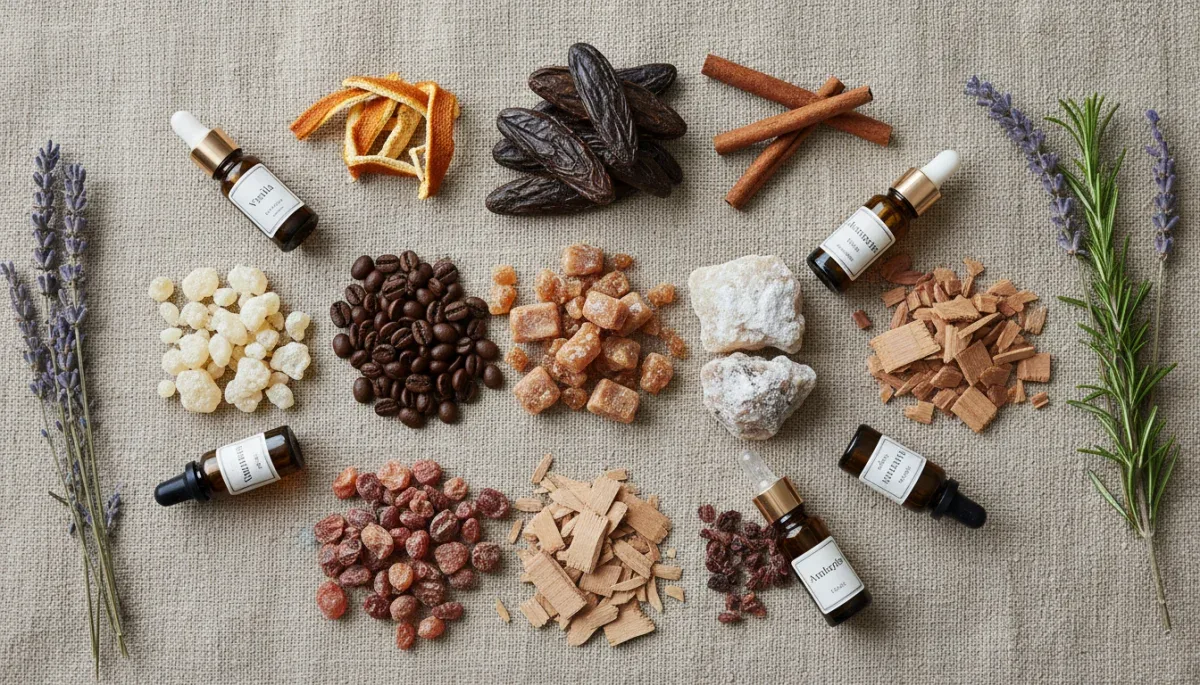
Identifying whether a fragrance leans gourmand or amber requires an examination of the specific raw materials and synthetic compounds that create the scent profile. Natural perfumery rarely yields purely edible scents on its own, which is why gourmand compositions rely extensively on precise organic chemistry to capture transient kitchen aromas. In contrast, amber structures make extensive use of tree saps, crystallized natural resins, and bark distillations that have been harvested and processed for centuries.
Advertisements
Gourmand perfumes emphasize warm, dessert-like aromachemicals that stimulate the palate. These materials produce a rounded, soft texture that mimics baked carbohydrates, toasted nuts, and dairy products. While natural vanilla absolute contains hundreds of aromatic compounds that lend it a woody, smoky depth, gourmand formulas often supplement it with crystallized vanillin and maltol to push the scent directly toward confectionery bakery counter territory.
Signature gourmand notes
- Ethyl maltol: A synthetic aroma chemical that smells intensely of toasted sugar, cotton candy, and caramelized jam.
- Lactones: Chemical compounds that provide creamy, velvety qualities reminiscent of steamed milk, coconut cream, or whipped butter.
- Cocoa absolute: A natural solvent extraction of cacao seeds providing authentic dark chocolate bitterness and roasted warmth.
- Roasted tonka bean: A botanical seed high in natural coumarin, creating impressions of almond, marzipan, and freshly cut hay.
Amber and oriental compositions rely on materials that feel grounded, spiritual, and meditative. Rather than tasting sweet, these resins smell medicinal, mineral, and dry when first burned or extracted. Perfumers soften them with spices that provide aromatic heat rather than bakery sweetness, using ginger, cardamom, and black pepper to introduce vitality to the top of the formula.
Signature amber and oriental notes
- Labdanum: A sticky brown resin harvested from rockrose shrubs that provides a leathery, honeyed, deeply balsamic foundation.
- Benzoin: A balsamic resin from Styrax trees carrying a rich, balsamic vanilla character accompanied by a distinct medicinal tint.
- Frankincense and myrrh: Ancient tree resins that introduce cool, pine-like smoke, lemon peel nuances, and stony mineral undertones.
- Opoponax: Often called sweet myrrh, this resin delivers a warm, herbaceous, velvety warmth with faint hints of dry forest floor.
How both fragrance families evolve from top notes to drydown
The wearing experience of any fragrance is shaped by evaporation rates, known as volatility. Gourmand vs oriental fragrances handle the progression from the opening blast down to the lingering base scent in distinct ways. Because gourmand compositions prioritize instant indulgence, their top notes often feature sweet fruit syrups, almond liqueur, or zesty spices intended to announce the culinary motif the moment the perfume leaves the atomizer.
As a gourmand fragrance settles into the skin over the first hour, the lighter volatile notes dissipate to reveal the heart. This is where buttery lactones, cocoa powder, and roasted nut accords build body. The danger zone for many gourmand perfumes occurs in the transition to the base. Because synthetic sugar molecules have very low volatility, they can remain stuck on fabric or skin for twelve hours or more without shifting. A well-constructed gourmand balances this with dry woods like cedar or clean musks to keep the scent from feeling suffocating or sticky after hours of continuous wear.
Amber perfumes, by contrast, tend to follow a more dramatic evolution. The opening of a classical amber perfume is often stark, medicinal, and challenging. Bright bergamot, sharp coriander, or fiery cinnamon bark frequently dominate the first fifteen minutes, masking the dense resins waiting underneath. This deliberate structural choice ensures the perfume feels balanced and airy when first applied rather than overwhelmingly heavy.
During the middle stages and final drydown, an amber perfume warms thoroughly against body heat. The balsamic resins soften and blend with skin chemistry, creating a radiant halo that smells golden, dusty, and slightly animalic. Where a gourmand drydown smells distinctively edible, an amber drydown smells like warm skin, sun-baked earth, antique wooden furniture, and temple incense. The longevity of both families is among the highest in perfumery, but the amber fragrance typically changes character more significantly across its lifespan than a linear gourmand.
Occasions, seasonality, and environmental projection
Both fragrance profiles are naturally suited to cold autumn and winter months, as low ambient temperatures reduce fragrance evaporation, allowing heavy base notes to project gently rather than evaporating in an overwhelming burst. However, the cultural contexts surrounding food scents versus resinous scents create very different social experiences depending on where you wear them.
Gourmand scents function exceptionally well in casual, festive, and intimate indoor settings. The familiarity of vanilla, chocolate, and caramel tends to produce an immediate sense of approachability and comfort. People around you easily identify the source of the scent because food aromas are universally recognizable. However, wearing a high-projection gourmand in an enclosed office environment or on an airplane can trigger nausea or sensory fatigue in people sensitive to sweet odors. The density of ethyl maltol and lactones can easily dominate small rooms if applied with a heavy hand.
Amber perfumes, on the other hand, carry a more formal, mysterious, and sophisticated tone. Their lack of overt culinary references makes them an outstanding match for evening galas, formal dinners, theater outings, and professional engagements where an approachable bakery scent might feel out of place. Because amber accords project through heat and dry woodiness, they interact beautifully with wool coats, cashmere scarves, and formal outerwear.
In warm spring or summer weather, both profiles require extreme restraint. High humidity and heat amplify the sweet, sticky facets of gourmand perfumes, which can quickly turn sour or cloying on sweaty skin. Amber fragrances can sometimes transition into summer evenings if they feature dry, aromatic top notes like incense, cedar, and citrus, but heavy, vanillic amber fragrances should generally be reserved for crisp air.
How modern perfumers blend gourmand and amber styles
Contemporary perfumery rarely confines itself to rigid historical categories. In recent years, independent niche houses and commercial designer brands alike have created hybrid fragrances that deliberately combine the confectionery pleasure of gourmands with the structural dignity of amber accords. This emerging hybrid profile is often described by fragrance critics as the ambery gourmand or woody gourmand.
In these hybrid creations, perfumers take a traditional amber spine—labdanum, patchouli, and benzoin—and weave modern culinary accents through the heart. You might encounter an authentic bitter espresso note suspended over smoky birch tar and opoponax resin, or a base of salty caramel grounded by damp earthy oakmoss and dry Virginia cedarwood. This technique prevents the sweet elements from smelling juvenile while preventing the heavy historical resins from feeling dusty or dated.
These cross-category perfumes offer the perfect compromise for shoppers who find traditional oriental compositions too dry or medicinal, yet simultaneously find pure gourmands too sugary for everyday personal wear. By anchoring edible notes to sophisticated resinous foundations, these perfumes achieve impressive complexity and longevity without smelling entirely like a dessert.
Practical steps for testing warm perfumes in stores
Testing gourmand vs oriental fragrances in a retail environment requires a deliberate approach because heavy base materials quickly saturate your olfactory receptors, leading to sensory fatigue after sampling just three or four bottles. Walking into a department store and spraying sweet or resinous scents directly onto your arms without preparation will leave you unable to assess the fragrance's true character.
Start by testing fragrances exclusively on paper blotter strips. Spray the blotter from six inches away, wave it gently through the air for ten seconds to let the initial alcohol carrier evaporate, and smell it from two inches away. Do not press the paper against your nose, as this transfers concentrated fragrance oil directly to your skin, disrupting your ability to evaluate subsequent scents. Group your blotters into gourmand candidates and amber candidates, and write the name of the perfume directly onto the cardboard strip.
Rules for testing on skin
- Limit your skin tests: Choose a maximum of two favorite contenders from your paper blotter testing, applying one to your left wrist and the other to your right wrist.
- Avoid friction: Never rub your wrists together after spraying. Rubbing generates heat that breaks down delicate top-note molecules and distorts the transition to the heart.
- Observe the four-hour mark: Heavy base notes take several hours to fully reveal themselves on skin. Evaluate how the fragrance smells after thirty minutes, two hours, and four hours before making a purchasing decision.
- Test in fresh air: Step outside the store environment into fresh outdoor air to assess the sillage and projection without interference from background retail fragrances.
At a glance
| Factor | What to know |
|---|---|
| Primary note profile | Gourmands feature edible culinary notes, while ambers feature tree resins, dry woods, and balsamic blends. |
| Underlying sweetness | Gourmands offer high confectionery sweetness, whereas amber sweetness functions as a subtle balancing agent. |
| Mood and atmosphere | Gourmands project casual approachability and comfort, while ambers convey formal elegance, depth, and mystery. |
| Best wearing climate | Both excel in cold fall and winter weather, requiring very light application during warm or humid months. |
Frequently asked questions
Why is the term amber replacing oriental in perfume classifications?
Major fragrance organizations and retail brands adopted amber to provide a culturally neutral, technically accurate description of the family. The accord relies specifically on labdanum, benzoin, and vanilla, making amber a direct descriptor of the materials used.
Are gourmand fragrances always sweeter than oriental perfumes?
Yes, gourmand perfumes are virtually always sweeter because their compositions rely on synthetic sugar, caramel, and pastry accords. Amber perfumes can contain vanilla, but that sweetness is balanced by bitter resins, aromatic spices, and dry woody notes.
Can you wear gourmand or oriental fragrances to the office?
You can wear both if you apply them lightly, using one spray under clothing. Ambers with dry woody facets are generally more office-appropriate, as heavy bakery or sugar notes can feel overwhelming to coworkers in small enclosed spaces.
Which fragrance family lasts longer on the skin?
Both families offer exceptional longevity because resins, woods, and ethyl maltol have very low evaporation rates. High-quality amber and gourmand eau de parfum concentrations routinely last eight to twelve hours or longer on hydrated skin.
The bottom line
Gourmand perfumes give you the cozy, mouthwatering pleasure of a bakery or cafe counter, while amber fragrances wrap you in the timeless, meditative luxury of golden resins, dry spices, and historic woods. Neither profile is universally superior, and your choice depends entirely on whether you want your personal scent to feel playfully edible or sophisticatedly resinous. Before you invest in a full bottle, test the perfume directly on your skin and wait at least four hours to ensure the base drydown matches your lifestyle.
Written by
Mariana Viana
Mariana Viana writes about makeup, perfumes and shoes for bestinyour.com. Each article explains how things work, compares published details such as prices, policies and program rules, and points readers to the official source before they decide.