
How to choose between wool and cashmere for sweaters
Advertisements
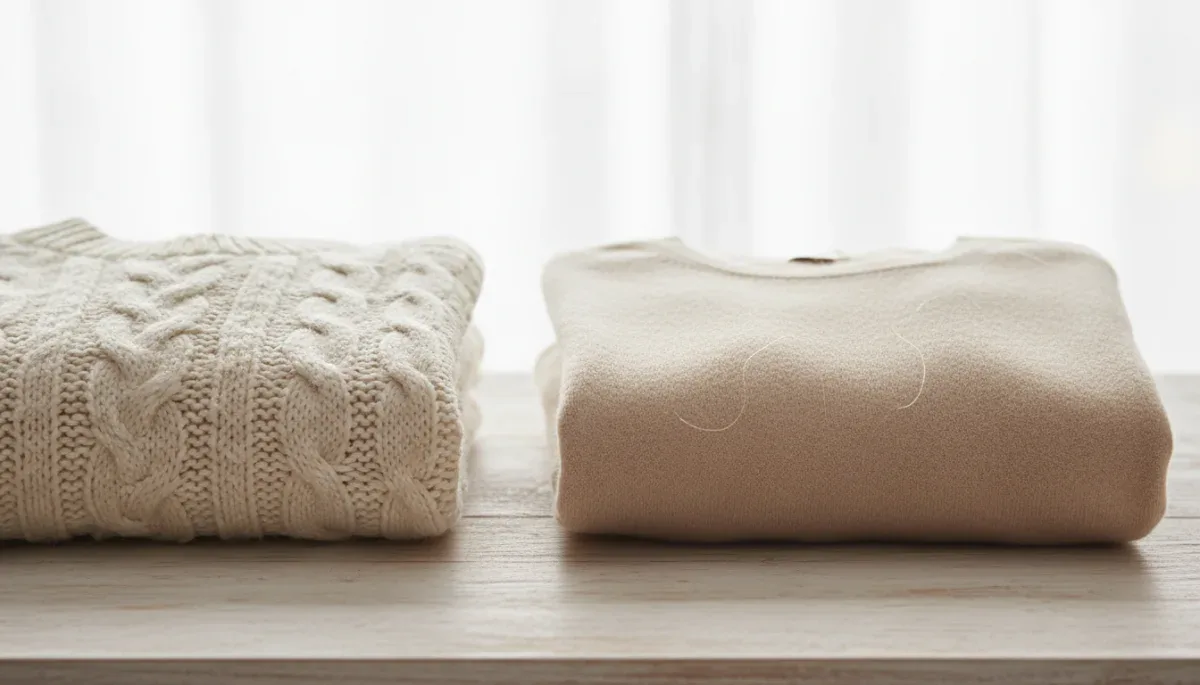
Choosing between wool vs cashmere sweaters depends on whether you prioritize long-term durability and structural weight or ultra-soft, lightweight insulation. Wool provides resilient warmth at a variety of accessible price points, while cashmere delivers superior softness next to the skin without adding bulk to your winter layering system.
This comparison helps shoppers build a practical cold-weather wardrobe based on fiber performance, sensitive skin needs, and realistic garment care routines. The main trade-off centers on longevity versus immediate luxury, as delicate cashmere requires gentler handling and regular defuzzing compared to standard sheep wool knits.
Understanding fiber origins and natural properties
Both wool and cashmere are natural animal fibers, but their biological origins create distinct physical characteristics. Standard wool comes from the fleece of sheep, including specialized breeds such as Merino or Shetland. Sheep produce fibers with a distinct outer scale structure and natural crimp, which allows the yarn to interlock firmly, bounce back into shape, and trap insulating pockets of still air.
Advertisements
Cashmere originates exclusively from the soft undercoat of cashmere goats, primarily raised in regions with harsh seasonal temperature swings such as Mongolia and northern China. These goats produce a coarse outer guard hair and an extraordinarily fine, downy undercoat to survive extreme winter conditions. Harvesting involves combing or shearing this undercoat during the spring molting season, yielding only a few ounces of usable fiber per animal each year.
Key fiber differences
- Fiber diameter: Cashmere fibers typically measure under nineteen microns, making them significantly finer than conventional sheep wool.
- Surface scales: Cashmere has smoother, flatter cuticle scales than wool, resulting in a noticeably softer texture.
- Natural crimp: Wool contains a tighter physical crimp that gives yarns structural memory and elasticity.
- Yarn density: Wool yarns can be spun into dense, heavy gauges, whereas cashmere is usually spun into lighter yarns.
Comparing warmth and thermal insulation
When evaluating warmth, fiber thickness and air entrapment determine how effectively a garment shields you from cold drafts. Wool provides substantial thermal protection through its physical density and loft. Heavy-gauge wool sweaters, such as traditional Aran cable knits or boiled wool cardigans, physically block wind and retain body heat exceptionally well in freezing, blustery climates.
Cashmere offers a significantly higher warmth-to-weight ratio than standard sheep wool. Because cashmere fibers are extraordinarily fine, spinners can pack thousands of microscopic air chambers into a lightweight fabric. A thin two-ply cashmere crewneck often delivers the same thermal barrier as a much thicker sheep wool jumper, allowing for effortless layering under tailored blazers or winter coats without restricting physical mobility.
Advertisements
Both fibers share natural moisture-wicking and thermoregulation abilities. Wool and cashmere can absorb moisture vapor away from your skin without feeling damp to the touch, preventing the chilled, clammy sensation often caused by synthetic acrylic knits when moving between heated indoor spaces and freezing outdoor environments.
Assessing softness and comfort on sensitive skin
Comfort against bare skin is often the deciding factor for knitwear shoppers. The sensation of itchiness or scratchiness in knitwear is determined by fiber diameter. Coarser fibers with a thickness greater than thirty microns resist bending when pressed against the skin, triggering nerve endings that cause tactile irritation.
Cashmere fibers rarely cause prickliness because their micro-fine diameter allows them to bend effortlessly against the skin. High-grade cashmere feels silky and cloud-like from the first wear, making it an ideal choice for turtlenecks, scarves, and base layers that sit directly against the neck, wrists, and collarbone without requiring an undershirt.
Standard sheep wool varies widely across the softness spectrum. Coarser heritage wools can feel stiff and abrasive against bare skin, necessitating a collared shirt or cotton base layer underneath. However, extra-fine Merino wool is an exception among sheep fleeces; it shares a micron count close to cashmere and provides a smooth, itch-free feel at a generally lower cost.
Durability, pilling resistance, and daily wear
For daily, heavy-duty winter wear, sheep wool is structurally superior. Wool fibers possess high tensile strength, excellent natural elasticity, and structural resilience. A well-constructed wool sweater maintains its silhouette, resists elbow stretching, and withstands friction from backpack straps, seatbelts, and heavy outer coats with minimal structural degradation over years of use.
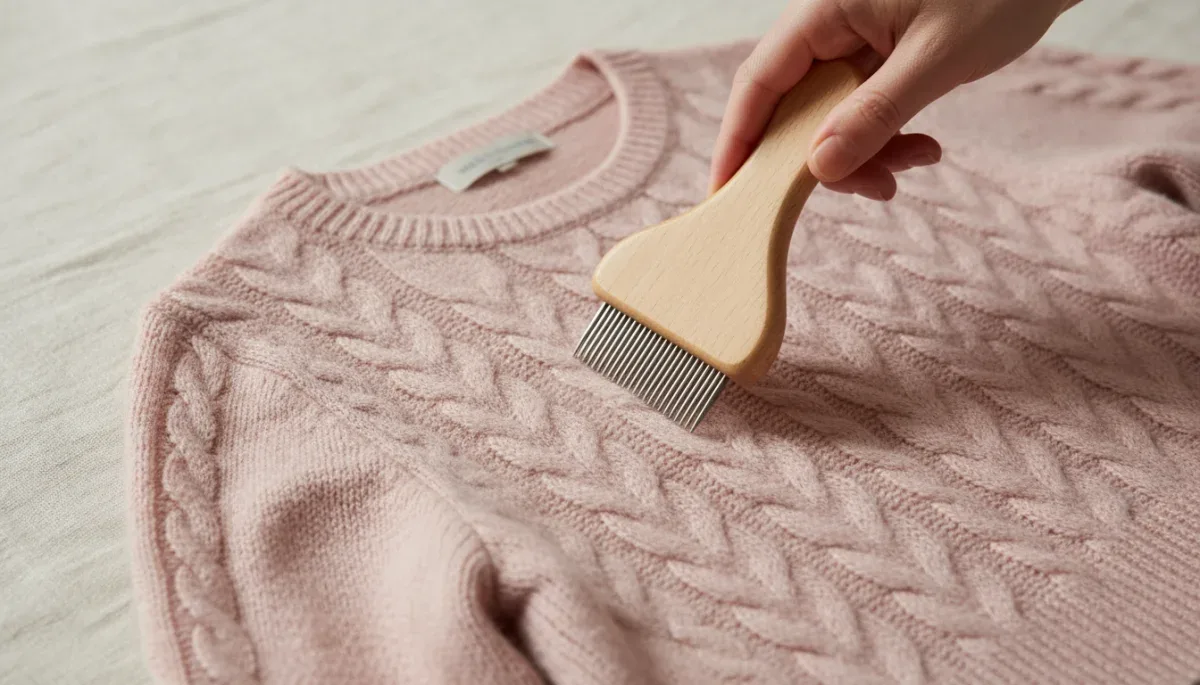
Cashmere is an inherently delicate luxury fiber that requires mindful wear. Because the short down fibers sit loosely within fine yarns, surface friction causes them to tangle and form small fuzzy clusters known as pills. High-friction areas, such as the underarms, sides, and cuffs, inevitably develop pilling after several wearings.
Preventing wear and tear
- Rotation: Avoid wearing cashmere sweaters on consecutive days to allow natural fiber elasticity to recover.
- Friction management: Minimize direct contact with rough outerwear linings, coarse canvas bags, and textured leather belts.
- Depilling tools: Use a manual sweater comb or motorized fabric shaver regularly to remove surface fuzz safely.
- Proper storage: Fold all knitwear flat rather than hanging to prevent shoulder bumps and vertical fabric distortion.
Care routines and maintenance requirements
Neither wool nor cashmere requires washing after every wear due to their natural antimicrobial and odor-resistant properties. Airing out your knitwear on a flat surface between uses is often enough to refresh the fabric. However, when cleaning becomes necessary, both fibers demand careful handling to prevent shrinkage, felting, and fiber breakage.
Wool is relatively forgiving during hand washing. Submerging wool knits in lukewarm or cool water with a pH-neutral wool detergent preserves the natural lanolin oils in the fleece. Some modern wool blends and specially treated Merino knits even feature machine-washable gentle cycles, though flat drying away from direct sunlight remains mandatory to protect the garment's shape.
Cashmere demands meticulous hand washing or professional dry cleaning. Agitation in warm water causes the delicate cuticle scales on cashmere fibers to lock together permanently, causing irreversible shrinkage and a stiff, cardboard-like texture. Always press excess water out using a clean rolled towel rather than wringing the fabric, and dry the piece completely flat on a breathable drying rack.
Price points and long-term wardrobe investment
Budget considerations play a major role in choosing between these two winter staples. Standard sheep wool is readily available in abundance, making high-quality pure wool sweaters obtainable at modest price points. Wool delivers strong return on investment because a durable, well-made sweater can easily last for decades of rugged seasonal use.
Cashmere commands premium pricing due to strict agricultural limitations and labor-intensive harvesting methods. Inexpensive, fast-fashion cashmere options frequently use shorter, weaker fibers that pill excessively and thin out after minimal wear. Investing in high-grade two-ply or four-ply cashmere from reputable knitwear producers requires a larger upfront budget, but it rewards you with unmatched softness and timeless elegance.
At a glance
| Factor | What to know |
|---|---|
| Warmth level | Both insulate well; cashmere offers higher warmth per ounce while wool provides dense barrier protection. |
| Skin comfort | Cashmere is exceptionally soft and itch-free; wool comfort depends heavily on sheep breed and fiber micron grade. |
| Garment durability | Wool withstands heavy daily wear and abrasion; cashmere is delicate and prone to friction pilling. |
| Upfront cost | Wool provides dependable quality at modest prices; long-lasting cashmere requires a higher financial investment. |
Frequently asked questions
Which fiber is warmer, wool or cashmere?
Cashmere provides roughly three times more thermal insulation than standard sheep wool of equivalent fabric weight. Its microscopic fibers trap heat efficiently without adding bulk. However, a thick, heavy-gauge wool sweater will block cold winter winds better than an ultra-thin, single-ply cashmere top.
Can I wear wool if I have sensitive skin?
You can wear wool if you choose extra-fine Merino wool with low micron ratings. Traditional rustic wools often cause prickling and itching against bare skin. If your skin is sensitive, look for verified Merino garments or plan to wear a soft cotton undershirt underneath.
How often should you wash wool and cashmere sweaters?
You should wash wool and cashmere sweaters only after every three to five wears, unless visibly stained. Both fibers naturally resist odor-causing bacteria. Simply airing out your sweaters flat overnight between wears keeps them fresh while preventing unnecessary wash-related fiber wear.
Why do inexpensive cashmere sweaters pill so quickly?
Inexpensive cashmere garments typically rely on shorter fiber lengths and single-ply yarns to reduce production costs. Short fibers break free easily from the yarn twist under normal friction, creating dense surface fuzz and heavy pilling much faster than long-staple, multi-ply yarns.
The bottom line
Choose wool if you need durable, structured knitwear that handles daily commutes, outdoor activity, and rough outer layers at an accessible price. Select cashmere when you want lightweight warmth, cloud-soft comfort against bare skin, and refined layering pieces for office or formal settings. Before making a final purchase, check the garment care label and yarn ply to ensure the knit suits your willingness to perform delicate hand-washing maintenance.
Written by
Maria Eduarda
Maria Eduarda writes about benefits, clothes and shoes for bestinyour.com. Each article explains how things work, compares published details such as prices, policies and program rules, and points readers to the official source before they decide.