
How to wash merino wool sweaters without shrinkage
Advertisements
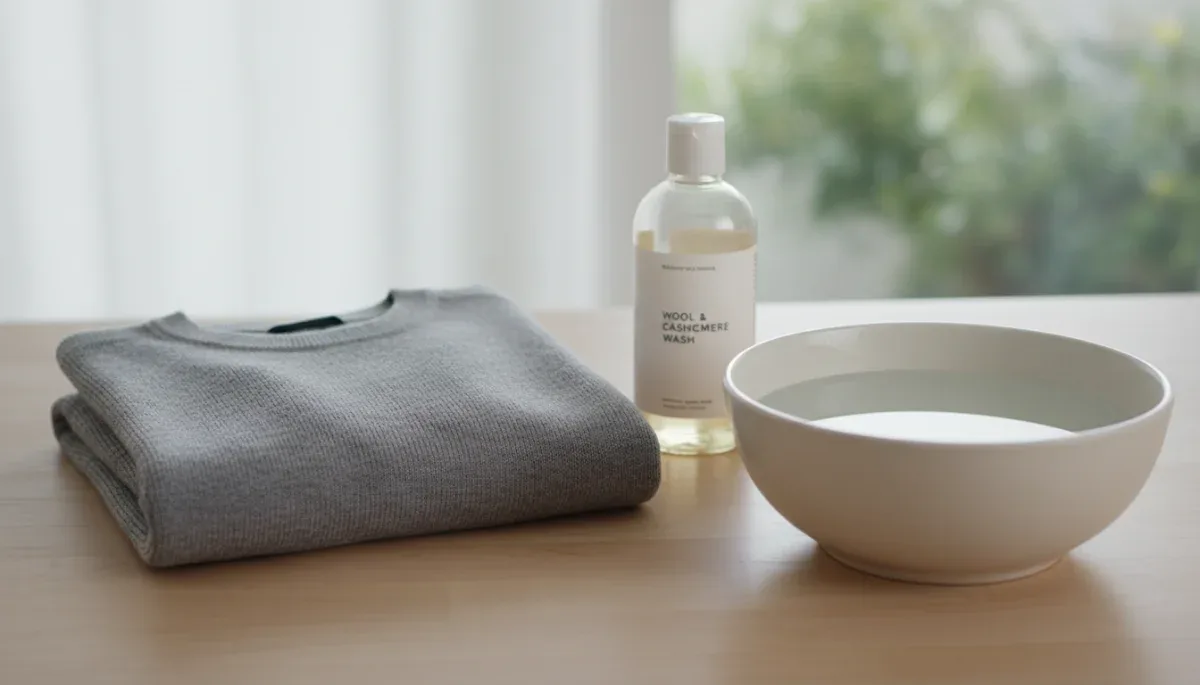
To wash merino wool sweaters without causing shrinkage, submerge the knitwear in cold water with a gentle wool detergent, avoid twisting the fabric, and dry it completely flat on a horizontal surface.
This method protects fine animal fibers from irreversible compacting and keeps your wardrobe pieces fitting properly for years, though it does require setting aside fifteen minutes of hands-on attention rather than relying on automatic dryer settings.
Why merino wool fibers shrink during washing
Shrinkage in wool garments is rarely a matter of individual threads shortening. Wool consists of natural protein fibers covered in microscopic, overlapping scales similar to shingles on a roof. When raw wool is exposed to water, these scales swell and flare open. If you introduce mechanical agitation or high heat while the fibers are wet, the raised scales rub against one another and interlock like ratchets, drawing the yarn tighter and tighter together.
Advertisements
This irreversible process is known as felting. Once wool fibers interlock fully, no amount of pulling or conditioning can return them to their original configuration. Merino wool is prized because its individual fibers are exceptionally fine, usually measuring under twenty-four microns in diameter, which makes the material remarkably soft against the skin. However, those delicate fibers remain vulnerable to friction and thermal shock, meaning sudden shifts between hot wash water and cool rinse water can cause instant tightening of the knit.
Choosing the right detergent for wool fibers
Standard household laundry detergents contain harsh surfactants, brightening agents, and biological enzymes designed to break down stubborn stains. While protease enzymes work well on plant fibers like cotton or synthetics like polyester, they break down protein-based soils by digesting biological material. Because sheep wool is composed entirely of keratin protein, enzyme-heavy detergents actively degrade the structural integrity of the wool yarn over time.
A proper wool wash features a neutral pH level and omits optical brighteners, bleaching agents, and protease enzymes. Many specialized formulas contain trace amounts of lanolin, the natural waxy lipid produced by sheep that lubricates wool fibers and maintains their natural water-repellent properties. Liquid formulas dissolve far more evenly in cold water than dry powders, preventing residue from becoming trapped between closely knit stitches.
Advertisements
Ingredients to avoid on wool garments
- Protease enzymes: These active biological agents consume protein structures and weaken natural wool fibers with every wash.
- Chlorine bleach: Strong chemical oxidizers dissolve animal fibers rapidly, causing yellowing, brittleness, and structural holes.
- Fabric softeners: Conventional liquid softeners coat wool fibers in a synthetic silicone layer that ruins their natural breathability and moisture-wicking ability.
Step-by-step hand washing method
Hand washing remains the safest approach when you need to wash merino wool sweaters without putting excess stress on seams and yarns. Begin by thoroughly cleaning a wash basin or deep sink to eliminate any traces of facial cleansers, bleach, or scouring powder that could harm delicate textiles. Fill the basin with cool or lukewarm water, keeping the temperature below eighty-five degrees Fahrenheit.
Add a measured teaspoon of specialized wool wash to the running water and disperse it thoroughly with your hand before introducing the garment. Submerge the sweater gently, pressing it down into the soapy water so that the liquid penetrates the core of the knit. Let the sweater soak undisturbed for ten to fifteen minutes to loosen oils and surface dust without subjecting the fabric to abrasive friction.
Drain the soapy water while supporting the sweater from underneath with both hands to prevent the heavy, waterlogged fabric from stretching downward. Refill the basin with clean, cold water of the same temperature to rinse out the suds. Gently press the garment against the side of the basin to flush out the soap, repeating the rinse step with fresh water if any lather remains visible.
Using a washing machine safely
Many modern merino garments are treated to withstand gentle mechanical washing, often labeled as total easy care or machine-washable wool. Even with treated wool, machine washing requires strict adherence to gentle parameters to avoid accidental felting. A front-loading washing machine or a high-efficiency top-loader without a central agitator post is required, as traditional agitator vanes pull and twist knitwear violently.
Always turn the sweater inside out before washing to protect the smooth outer face from rubbing against the drum, which causes unsightly surface pilling. Place the garment inside a zippered mesh laundry wash bag to prevent the sleeves from wrapping around other items in the load. Set the machine to its dedicated wool cycle or delicate cycle, ensuring the water temperature reads cold throughout the entire process.
Spin cycle speed is critical when machine washing wool. High-speed spinning presses wet wool against the perforated drum walls with immense centrifugal force, distorting seams and locking stretched fibers into unnatural shapes. Set your machine to a low-speed spin, ideally between four hundred and six hundred revolutions per minute, to extract excess moisture without subjecting the garment to extreme tension.
Removing excess water without stretching
The moment a wet wool sweater is lifted from water, it becomes heavy and structurally fragile. Never wring, twist, or squeeze a wool sweater like a cotton towel, as twisting exerts uneven torque on wet yarn that deforms the neckline, wrists, and side seams permanently.
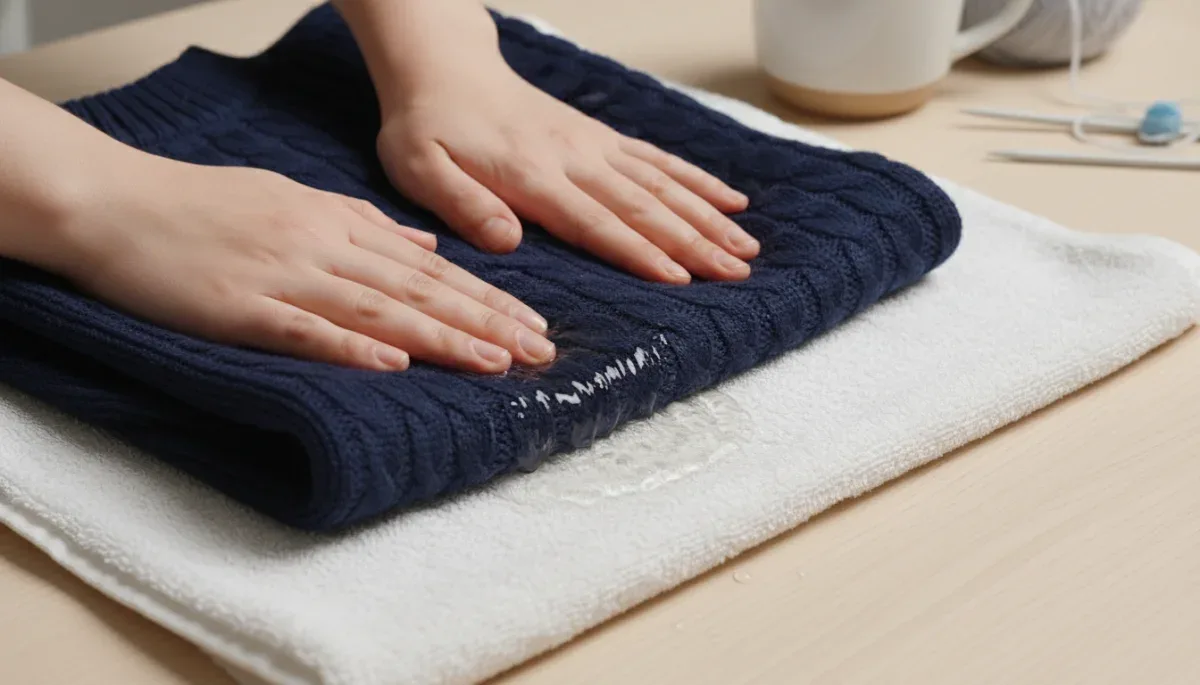
Instead, gently gather the wet sweater into a loose ball and press it firmly against the bottom or side of the empty sink with the palms of your hands to expel the initial volume of liquid. Once the dripping slows, lay a large, clean, colorfast bath towel flat across a table or countertop. Position the sweater on the lower half of the towel, smoothing out major wrinkles with your hands.
Fold the top half of the towel over the sweater, or roll the towel and sweater together from one end to create a tight cylinder. Walk your hands or press your forearms firmly along the length of the rolled towel. The absorbent terrycloth draws out a massive amount of residual water from the wool fibers without exposing the garment to friction, leaving the knitwear damp rather than dripping wet.
Blocking and air drying for long-term shape retention
Direct heat and vertical hanging are the two most common culprits behind sweater distortion during the drying phase. Hanging a damp wool sweater on a clothes hanger causes the weight of the water to drag the shoulders down, resulting in elongated bodies and permanent hanger bumps. Furthermore, placing wool in a tumble dryer or directly over a heat radiator causes immediate thermal shrinkage.
Drying flat is mandatory for all fine knitwear. Place a dry towel or a breathable mesh drying rack on a flat surface away from direct sunlight, heating vents, and fireplaces. Lay the damp sweater flat on the rack and gently manipulate the fabric back into its original proportions, a process textile professionals refer to as blocking.
Gently square the shoulders, straighten the side seams, push the sleeve cuffs together slightly, and align the bottom hem so the garment sits completely symmetrical. Check the collar to ensure it lies flat rather than rippling. Allow the sweater to dry naturally for twenty-four hours, flipping it over halfway through the drying period to expose the underside to circulating air.
At a glance
| Factor | What to know |
|---|---|
| Water temperature | Use cold water under eighty-five degrees Fahrenheit to stop scales from interlocking. |
| Detergent selection | Select a pH-neutral wool wash without protease enzymes or optical brighteners. |
| Water removal | Roll the garment inside a dry towel instead of wringing or twisting the wet fabric. |
| Drying position | Lay the sweater flat on a mesh rack away from radiators and direct sunlight. |
Frequently asked questions
Can you unshrink a merino wool sweater if it shrank in the wash?
You can sometimes relax slightly tightened fibers by soaking the garment in lukewarm water mixed with hair conditioner, which lubricates the wool. Gently stretch the damp knitwear back to its original dimensions on a flat towel. However, severely felted sweaters with densely compacted fibers cannot be restored.
How often should you wash merino wool sweaters?
Merino wool requires washing only after three to five wears under normal circumstances. The fiber naturally resists odor-causing bacteria and repels light surface dust, meaning airing out the sweater on a chair overnight is usually sufficient to refresh it between deeper seasonal washes.
Can you use regular laundry detergent on merino wool?
Regular laundry detergent should not be used on wool because it frequently contains biological enzymes like protease. These specific enzymes target and dissolve protein molecules, which degrades the keratin structure of wool, causing thinning fabric, micro-tears, and rough surface textures over time.
Is dry cleaning better than washing merino wool at home?
Dry cleaning is not necessarily better than gentle home washing for standard merino wool knits. While commercial dry cleaning avoids water shrinkage, the harsh chemical solvents can strip natural protective lanolin from the fleece, leaving the fibers feeling dry and brittle across multiple cleaning cycles.
The bottom line
Washing merino wool sweaters at home is straightforward once you eliminate heat and aggressive agitation from your laundry routine. By using cold water, an enzyme-free detergent, and flat air drying, your garments will maintain their soft hand feel and precise silhouette season after season. Before wetting any garment, check the sewn-in manufacturer care label to confirm whether your specific knit allows machine cycles or mandates hand washing only.
Written by
Maria Eduarda
Maria Eduarda writes about benefits, clothes and shoes for bestinyour.com. Each article explains how things work, compares published details such as prices, policies and program rules, and points readers to the official source before they decide.