
How to Wash Merino Wool Sweaters Without Shrinkage
Advertisements
To wash merino wool sweaters without shrinking them, clean them in cold water using a gentle, pH-neutral wool detergent and dry them flat on a towel away from direct heat. This method protects delicate animal fibers from felting while removing sweat and surface oils effectively.
This routine works for everyday merino garments, lightweight baselayers, and thick knit sweaters, though it requires slightly more patience than standard machine laundry. The main trade-off is drying time, because natural wool fibers hold moisture and must dry slowly at room temperature to maintain their original shape.
Understanding what causes wool shrinkage
Merino wool comes from Merino sheep, producing exceptionally fine fibers covered with microscopic scales. When these scales encounter heat, friction, and moisture simultaneously, they expand, catch against neighboring scales, and lock tightly together. Textile specialists call this irreversible structural change felting, which is what actually causes a sweater to shrink and turn stiff.
Advertisements
Standard household detergents often contain protease enzymes, optical brighteners, and alkaline builders designed to break down food stains and plant-based fibers like cotton. Because wool is composed of keratin, a natural protein identical to human hair, harsh alkaline formulas and aggressive enzymes degrade the outer cuticle over time. This chemical damage weakens the yarn, causing fibers to fray and interlock much faster.
Water temperature fluctuations also trigger fiber contraction. Moving a sweater directly from warm wash water into a cold rinse cycle causes thermal shock, which tightens the crimp of individual strands. Maintaining a uniform, lukewarm or cool water temperature throughout the entire cleaning process prevents these structural shifts and preserves the soft hand of the knit.
Choosing between hand washing and the machine cycle
Hand washing remains the safest approach for pure merino knitwear because it gives you complete control over water movement and friction. Basin soaking allows water and soap to circulate through the fabric without pulling, stretching, or grinding the yarn surfaces together. It is the preferred method for loosely knitted sweaters, vintage items, and luxury garments.
Advertisements
However, modern front-loading washing machines and top-loaders without a center agitator frequently include dedicated wool or delicate cycles. These settings use low spin speeds, minimal drum rotation, and cold water to simulate gentle hand soaking. If your garment care label specifically states machine washable or total easy care, using the machine wool cycle is generally safe.
When using a washing machine, always place the sweater inside a mesh laundry bag to prevent snagging on the drum or buttons from other garments. Wash woolens exclusively with other soft items, avoiding abrasive fabrics like denim, canvas, or items featuring heavy metal zippers.
Key machine washing rules
- Select the designated woolmark or delicate cycle using cold water exclusively.
- Turn the sweater inside out before placing it in a mesh laundry bag.
- Set the final spin cycle to low speed, ideally under 800 revolutions per minute.
- Remove the garment immediately once the cycle ends to prevent set-in creases.
Step-by-step guide to hand washing merino knitwear
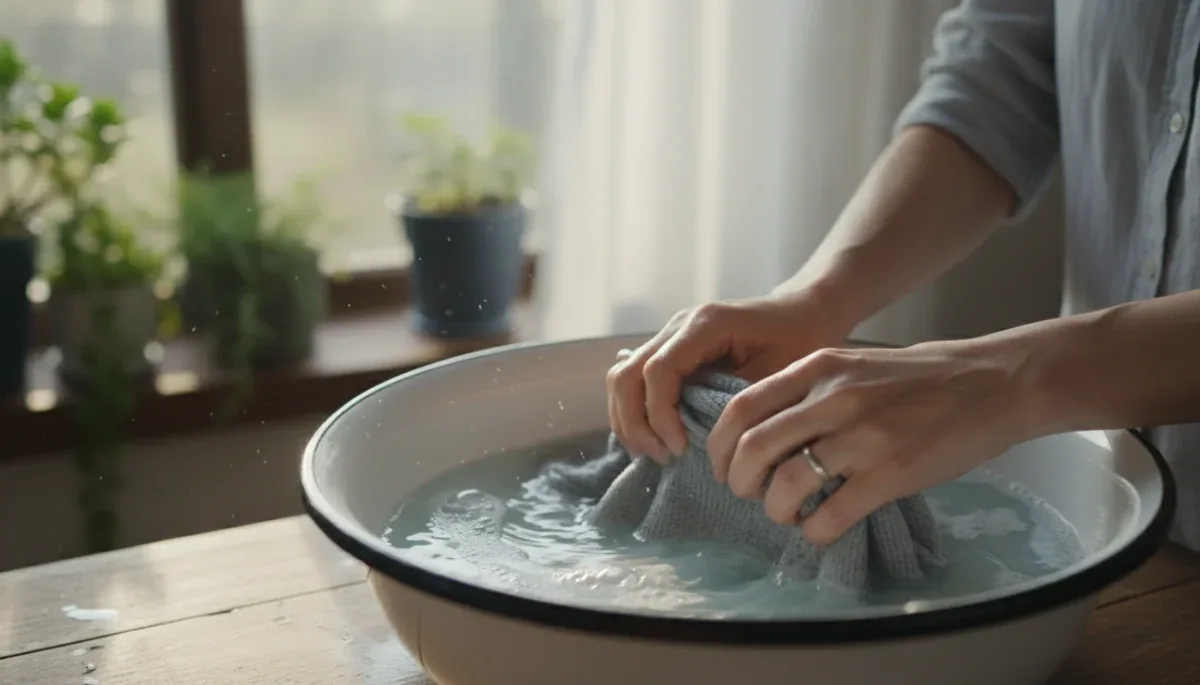
Hand washing a merino sweater takes less than twenty minutes of active effort and yields the most consistent results. Begin by filling a clean sink, plastic tub, or washbasin with cool to lukewarm water, ensuring the temperature does not exceed thirty degrees Celsius or eighty-five degrees Fahrenheit. Pour in a small dose of wool-safe liquid detergent and disperse it thoroughly before adding the garment.
Submerge the sweater fully into the soapy water, gently pressing down so the liquid saturates the core of the fibers. Submerging dry wool requires gentle patience, as natural lanolin traces can momentarily resist moisture. Avoid scrubbing, twisting, or pulling the fabric, as aggressive friction initiates surface pilling and felting.
Let the garment soak undisturbed for ten to fifteen minutes to allow the surfactant to lift body oils and environmental dust. Drain the wash water, refill the basin with fresh cool water, and gently press the sweater down to rinse out the suds. Repeat this rinse step once or twice until all soap residue vanishes completely from the water.
Removing excess water and drying flat
Never wring, twist, or stretch a wet merino wool sweater. Wet wool loses a substantial portion of its tensile strength, making it vulnerable to permanent misshaping and torn seams. Instead, press the garment gently against the side or bottom of the basin to discharge the initial bulk of rinse water.
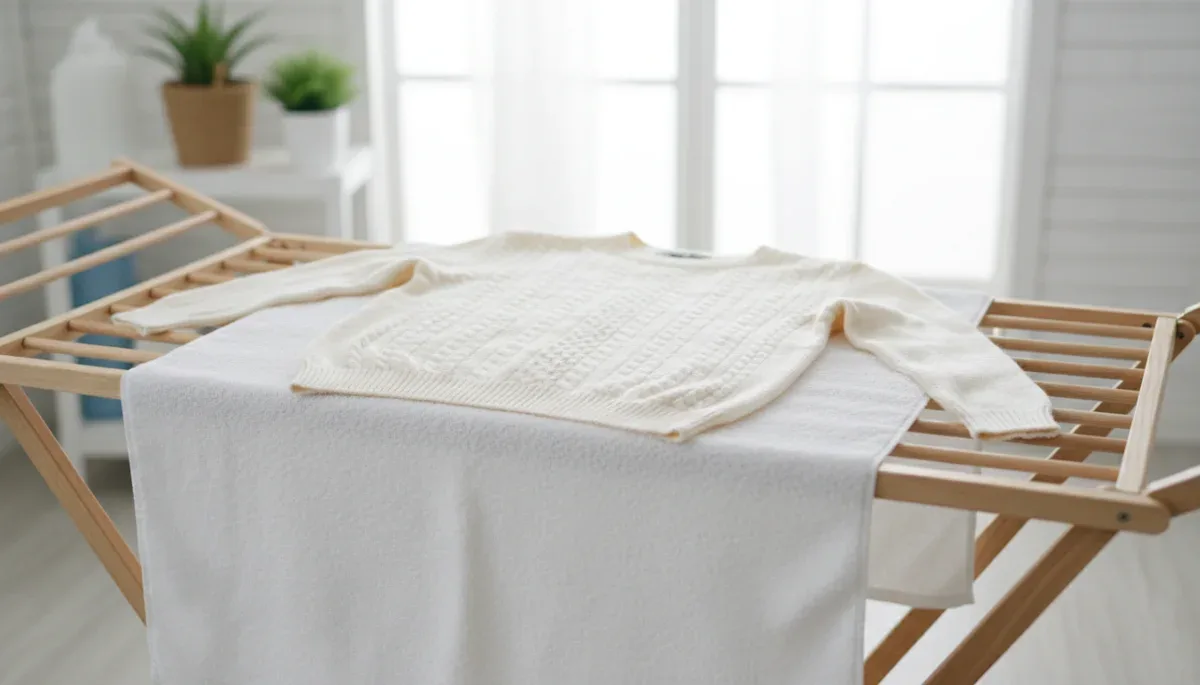
Next, lay a clean, dry terrycloth towel flat on a hard surface and spread the sweater evenly on top. Carefully roll the towel and sweater together into a cylinder, similar to a jelly roll. Press down firmly along the entire length of the rolled towel using your forearms to absorb remaining moisture without stressing individual knit stitches.
Unroll the towel and transfer the damp sweater to a dry, clean towel or a mesh drying rack. Arrange the garment into its correct proportions, smoothing out the collar, cuffs, hem, and side seams with your hands. Allow the piece to air-dry completely at room temperature, keeping it away from direct sunlight, radiators, heating vents, and forced hot air.
Selecting the proper detergent and laundry tools
Preserving fine animal hair requires specialized laundry products formulated around a neutral pH of roughly seven. Conventional heavy-duty laundry liquids are typically alkaline, sitting between an eight and ten on the pH scale, which swells protein fibers and strips their protective outer layer. Look for mild liquid detergents formulated specifically for wool, silk, and fine washables.
Fabric softeners should never touch merino wool. Standard conditioning liquids coat wool fibers in a silicone or fatty residue that inhibits their natural ability to breathe, regulate temperature, and manage moisture vapor. Furthermore, these residues attract dust and make future cleaning cycles less effective over the life of the garment.
No-rinse wool washes containing natural lanolin are popular alternatives for hand care. These plant-derived formulas require minimal water agitation, reducing physical handling while replenishing small amounts of natural moisture to coarse or dry yarns. Always measure detergent carefully, as excess soap requires extended rinsing that increases mechanical wear on the knit.
Preventive care between wash cycles
Merino wool possesses natural antibacterial properties due to its complex chemical structure, meaning it rarely requires washing after a single wear. The internal cortex of the fiber absorbs perspiration vapor while the outer cuticle repels liquid water, preventing the bacterial growth that creates body odor. Most sweaters remain fresh after multiple wears with simple airing.
Hang your sweater outdoors in shaded fresh air or near an open window for a few hours after wearing it. Fresh air circulation releases absorbed moisture and neutralizes everyday odors without introducing the fiber wear associated with wet cleaning. This passive routine significantly cuts down on overall laundering frequency.
When minor surface spots occur, practice targeted spot cleaning rather than full immersion. Dab the affected area using a damp cloth moistened with diluted wool wash, working from the outside edge of the spot inward to prevent rings. Store folded merino sweaters flat in cotton storage bags with cedar blocks to prevent moth damage and preserve fabric loft between seasons.
At a glance
| Care factor | What to know |
|---|---|
| Water temperature | Use consistently cool or lukewarm water to prevent thermal shock and shrinkage. |
| Detergent type | Choose pH-neutral, enzyme-free liquid formulas made specifically for animal protein fibers. |
| Drying technique | Dry flat on a clean towel or mesh rack away from heat and direct sunlight. |
| Washing frequency | Air out between wears and wash only after several uses or when visibly soiled. |
Frequently asked questions
Can I put a merino wool sweater in the dryer?
No, you should never put a merino wool sweater in a tumble dryer unless the care tag explicitly permits it. The combination of circulating hot air, mechanical friction, and rapid moisture loss causes rapid fiber felting, which permanently shrinks the garment by several sizes.
How do I fix a merino sweater that already shrunk?
You can sometimes relax slightly shrunken fibers by soaking the sweater in lukewarm water mixed with hair conditioner for twenty minutes. Gently stretch the wet knit back to its original dimensions on a flat towel, pin the edges in place, and let it dry completely.
Is dry cleaning better than hand washing for merino wool?
Hand washing is generally superior for casual merino sweaters because dry cleaning chemicals can strip natural fiber oils over time. However, structured garments featuring tailored linings, shoulder pads, or delicate embroidery should always be sent to a professional dry cleaner according to the care label.
Can I use regular laundry detergent on merino wool?
Standard household detergents should be avoided because they often contain protease enzymes that break down protein fibers like wool. Using these products repeatedly dissolves microscopic cuticles, leading to fiber coarseness, thinning yarn, and accelerated surface pilling over time.
The bottom line
Washing merino wool sweaters safely comes down to avoiding heat, harsh agitation, and standard alkaline detergents. By hand soaking in cool water with a mild wool wash and drying the garment flat on a towel, you protect the knit from felting and maintain its original silhouette. Before laundering your sweater, always check the manufacturer care tag sewn into the inner side seam to verify whether the garment allows gentle machine cleaning or demands dry cleaning.
Written by
Maria Eduarda
Maria Eduarda writes about benefits, clothes and shoes for bestinyour.com. Each article explains how things work, compares published details such as prices, policies and program rules, and points readers to the official source before they decide.