
How silicone and water foundations interact with skin
Advertisements
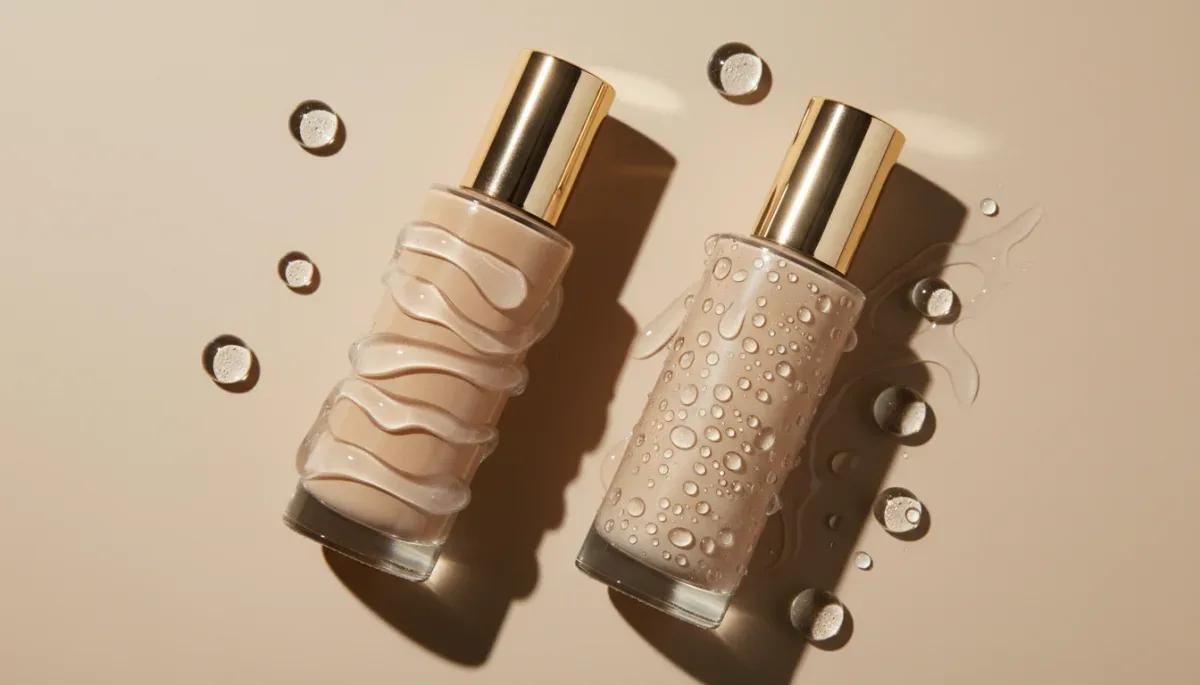
Silicone foundations create a breathable, flexible film over the surface of the skin to lock in moisture and diffuse uneven texture, whereas water-based foundations absorb partially into the upper layers of the epidermis to deliver lightweight hydration. Choosing between a silicone vs water foundation depends on how your natural skin oils react to film-forming agents and whether your daily skincare routine uses lipid-rich oils or water-binding humectants. The catch is that neither formula is universally superior, and pairing either one with the wrong skincare prep or primer results in immediate cosmetic separation, patchy wear, and frustrating product pilling.
Many consumers struggle with makeup breaking apart midday without realizing that chemical incompatibility between their cosmetic base and their skin barrier is the underlying cause. When cosmetic polymers encounter an incompatible base, the emulsion destabilizes and creates visible flaking or uneven pooling in pores. Understanding how polymer networks and aqueous carriers function at the cutaneous level allows you to align your makeup choices with your specific skin type, leading to longer wear times and a balanced finish throughout the day.
The chemical makeup of cosmetic emulsions
All liquid foundations are emulsions, which means they are stable mixtures of liquids that normally do not blend together on their own. In decorative cosmetics, these formulations consist of an internal phase dispersed within an external continuous phase, stabilized by specialized emulsifiers and surface-active agents. The continuous phase dictates the category of the product, determining whether the formula behaves as a water-based suspension or a polymer-heavy barrier coat. This structural difference fundamentally changes how the product feels, how it dries down, and how it responds to the heat and sebum produced by facial skin.
Advertisements
Water-based foundations are typically oil-in-water emulsions where water serves as the continuous phase carrying suspended pigment particles, light emollients, and active botanical extracts. Because water evaporates relatively quickly when exposed to ambient air and body heat, these formulas rely on humectants like glycerin, hyaluronic acid, and sodium PCA to hold water against the skin surface. As the liquid vehicle evaporates after application, the remaining pigments settle onto the skin without creating a thick hydrophobic barrier, resulting in a finish that feels practically weightless and allows cutaneous moisture exchange to continue uninterrupted.
Silicone-based foundations are usually water-in-silicone or cyclopentasiloxane-in-water emulsions where silicones act as the primary structural vehicle or carrier fluid. Common volatile silicones such as cyclopentasiloxane evaporate gradually, leaving behind cross-linked polymers like dimethicone, trimethicone, or cetyl dimethicone. These synthetic organosilicon compounds feature repeating silicon-oxygen backbones with organic side chains, giving them exceptionally low surface tension. This low surface tension allows silicone foundations to spread across microscopic facial ridges with minimal friction, creating a uniform film that water molecules cannot easily penetrate or disturb.
How silicone foundations interact with skin biology
When you apply a silicone-based foundation, the product does not sink into skin cells or enter deeper cutaneous layers. Instead, the large molecular size of dimethicone and related siloxane polymers prevents transdermal absorption, causing the foundation to remain strictly on the stratum corneum, the outermost layer of dead skin cells. This outer film acts as a semi-occlusive barrier that reduces transepidermal water loss by trapping moisture within the skin, while simultaneously repelling external moisture, atmospheric humidity, and light perspiration.
Advertisements
For individuals with oily or combination skin, silicone formulas interact uniquely with natural sebum. Sebum contains triglycerides, wax esters, squalene, and free fatty acids produced by the sebaceous glands. While pure vegetable oils can dissolve silicone polymers over several hours, high-grade cosmetic silicones resist sebum breakdown far longer than simple aqueous films. The silicone network forms an elastomeric matrix over enlarged pores, physically smoothing over the openings without settling into them, provided the skin is properly cleansed at the end of the day.
Key characteristics of silicone wear on skin
- Forms a smoothing, flexible mesh that visibly softens rough texture and enlarged pores.
- Resists atmospheric humidity and sweat through hydrophobic polymer defense.
- Prevents rapid transepidermal water loss in dry or environmentally stressed skin.
- Requires thorough double cleansing with an oil cleanser to remove fully at night.
However, the occlusive nature of silicone can present challenges for certain complexions. While silicones are chemically inert and non-comedogenic by design, their ability to trap moisture can also trap ambient dirt, residual facial bacteria, and dead keratinocytes if applied to poorly cleansed skin. People prone to inflammatory acne or congestion may find that prolonged wear of heavy, cross-linked silicone foundations creates a microenvironment where bacteria proliferate beneath the polymer sheet, making meticulous evening skin hygiene essential.
How water-based foundations interact with dry and sensitive complexions
Water-based foundations function through surface hydration and lightweight pigment distribution, making them gentler on reactive skin barriers. Because water is the primary carrier, these foundations do not form an impermeable hydrophobic seal. Instead, the aqueous carrier delivers humectants directly to the stratum corneum, drawing ambient moisture toward the skin and temporarily boosting epidermal hydration levels. This makes water-based formulas feel cool upon initial contact, soothing inflamed areas and reducing redness associated with rosacea or eczema.
Because these formulations lack heavy synthetic film-formers, they do not grip the skin with the same structural tension as silicone matrices. For dry skin that experiences active flaking, water-based products are significantly less likely to cling to micro-fissures or accentuate peeling patches. A silicone formula can sometimes adhere unevenly to raised, dehydrated skin flakes, outlining them in stark relief. A fluid water-based emulsion distributes color evenly across dry areas without highlighting dead skin edges, provided the skin underneath has received adequate lipid replenishment.
The primary trade-off with water-based options centers on wear duration and sebum control. Sebaceous oils naturally repel water; as your sebaceous glands secrete sebum throughout the day, the oil pushes upward against the aqueous pigment film. Without an oil-resistant polymer shield to resist this pressure, water-based foundations tend to separate, break apart around the T-zone, or fade after four to six hours of standard wear. They are inherently less resistant to friction, meaning everyday actions like touching your face or wearing glasses will displace the pigment more rapidly.
The mechanics of pilling and product separation
One of the most frequent cosmetic frustrations is product pilling, which occurs when foundation balls up into tiny rubbery fragments instead of adhering to the face. Pilling is fundamentally a physical and chemical collision between conflicting surface tensions. When you layer a product dominated by water over a product dominated by silicones, or vice versa, the two layers cannot establish cohesive bonding. The hydrophobic silicone layer actively pushes away the water-rich fluid, causing the top layer to roll back onto itself under mechanical pressure from your fingers or makeup tools.
To avoid pilling, cosmetic chemists evaluate the vehicle compatibility of your entire skincare and makeup routine. If your morning routine includes an oil-free hyaluronic acid serum and a light water-based gel moisturizer, a water-based foundation will integrate seamlessly with those layers. The aqueous phases merge, allowing the pigment to anchor directly to the skin. But if you apply a heavy dimethicone-based primer directly over a thick, unabsorbed botanical oil, the primer slides across the lipid barrier, creating an unstable foundation that peels as soon as you apply friction.
Common causes of foundation clashing
- Applying water-based foundation over a high-concentration dimethicone primer.
- Spreading silicone foundation over damp skincare before humectants have fully absorbed.
- Using excessive friction or rubbing motions instead of gentle stippling techniques.
- Layering heavy facial oils beneath water-dominant liquid foundations without an emulsifier.
Separation on the face differs slightly from immediate pilling. Separation usually develops two to four hours into wear, primarily around the nose, chin, and forehead. This phenomenon happens when facial oil breaks through the foundation unevenly. When using a silicone vs water foundation, pairing mistakes amplify separation: a water-based foundation placed over oily zones without an appropriate sebum-controlling primer will quickly dissolve into patchy pools, while an overly dry silicone formula over dehydrated skin will crack along fine expression lines.
Reading cosmetic ingredient labels accurately
Identifying whether a foundation is truly silicone-based or water-based requires examining the packaging ingredient declaration rather than trusting front-facing marketing claims. Almost all liquid foundations list water or aqua as their very first ingredient. This causes widespread confusion among consumers who assume that because water appears first, the foundation must be water-based. In reality, water is simply the solvent used to dissolve watersoluble components and hydrate the mixture during industrial manufacturing, even in silicone-dominant formulations.
To determine the true nature of the formula, look closely at the first five to eight ingredients listed after water. Ingredients are legally required to appear in descending order of predominance up to a certain concentration. In a silicone-based foundation, you will see ingredients ending in the suffixes "-cone", "-siloxane", or "-conol" within those top spots. If you see dimethicone, cyclopentasiloxane, cyclohexasiloxane, phenyl trimethicone, or cetyl PEG/PPG-10/1 dimethicone prominently listed, the foundation relies on a silicone vehicle regardless of the water content listed at the very top.
In contrast, a genuinely water-based foundation features water as the solvent, followed immediately by skin conditioners, humectants, and plant-derived or mineral thickeners without major silicones in the opening positions. Typical secondary ingredients include glycerin, butylene glycol, propanediol, cellulose, or natural gums. Some water-based foundations may include a tiny percentage of silicone near the very end of the ingredient list to improve slip or prevent formula bubbling in the bottle. However, if the silicone appears below phenoxyethanol, preservatives, or color additives, its concentration is too low to change the overall water-based classification of the product.
Application methods and skincare prep for each base
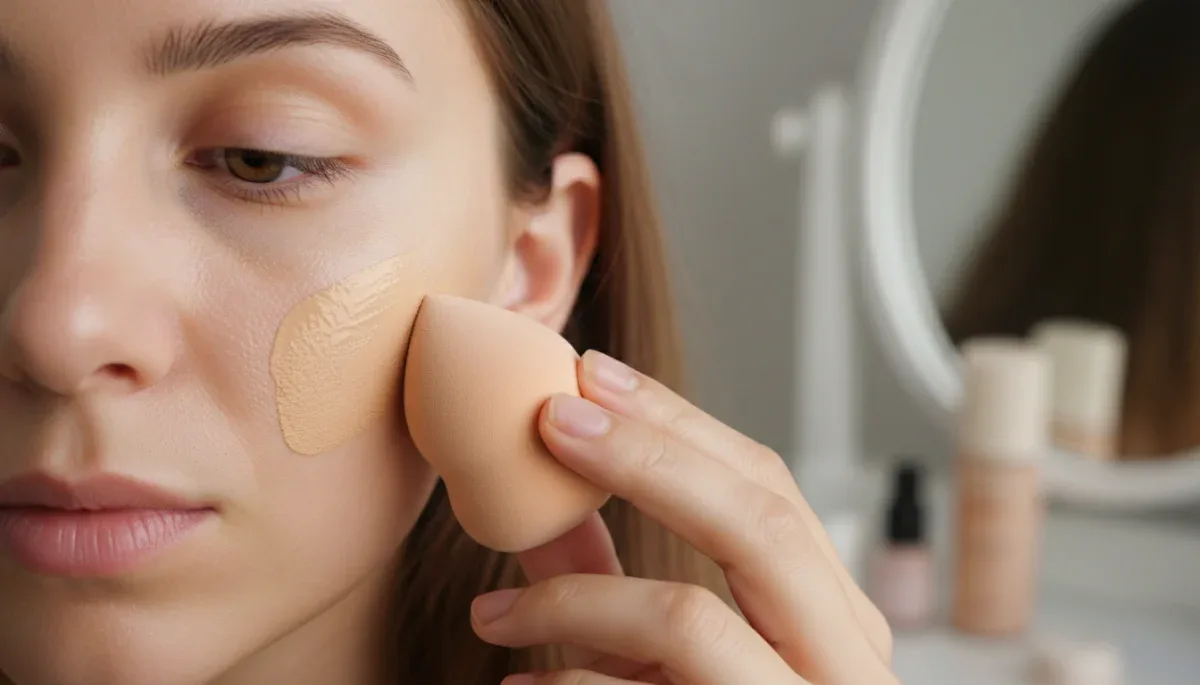
Your application method must match the chemical properties of your chosen base to ensure proper adhesion and a natural finish. Silicone foundations perform best when worked into the skin using tools that provide controlled pressure without stripping away the polymer layer. Dense synthetic buffing brushes and dry-to-semi-damp blending sponges work exceptionally well with silicone formulas. The synthetic bristles help distribute the viscous polymers evenly over skin crevices, while light stippling presses the flexible matrix directly against the stratum corneum without disturbing the skincare underneath.
Prepping the skin for a silicone foundation requires allowing your moisturizer to absorb fully before starting makeup application. If you apply a silicone foundation over a damp face, the hydrophobic film cannot anchor, leading to premature slipping. Wait two to three minutes after skincare before applying a primer. If using a primer, ensure it is also silicone-based, featuring dimethicone or cross-polymers near the top of its ingredient list. This creates a uniform molecular bridge between your prepped skin and your decorative cosmetic layer, extending wear and preventing migration into fine lines.
Water-based foundations demand a different application approach. Because these formulas are thinner and evaporate more quickly, applying them with a soaking-wet sponge can dilute the pigment and weaken the emulsion, leading to streaky coverage. A slightly damp sponge, a flat foundation brush, or clean fingertips are the most effective tools. The natural warmth of your fingertips helps melt the humectants and plant oils into the skin, encouraging smooth distribution. When prepping for water-based products, apply a hydrating serum or a lightweight, water-based gel cream, applying the foundation while the skin is still slightly pliant and hydrated for a natural, dewy finish.
At a glance
| Factor | What to know |
|---|---|
| Primary ingredient signals | Silicone bases feature dimethicone or siloxanes in the top five slots, while water bases feature humectants like glycerin. |
| Skin type compatibility | Silicone suits oily, combination, or textured skin, whereas water suits dry, sensitive, or congestion-prone complexions. |
| Finish and wear time | Silicone delivers long-wearing, blurring, and transfer-resistant coverage; water provides lightweight, dewy, shorter-duration wear. |
| Primer matching rule | Always match silicone primers with silicone foundations and water-based primers with water-based foundations to avoid pilling. |
Frequently asked questions
Can you use a water-based primer with a silicone foundation?
You should generally avoid this combination because water repels silicone. When you place a silicone foundation over a water-based primer, the foundation struggles to grip the skin, causing the liquid to slide, pill into tiny balls, or separate unevenly within a few hours of wear.
Does water as the first ingredient mean a foundation is water-based?
No, water is the primary solvent in almost all liquid cosmetics. To confirm the true base, check the next four to six ingredients; if dimethicone or another siloxane appears near the top, the product is functionally silicone-based despite containing water.
Which foundation formula is better for acne-prone skin?
Water-based foundations are often preferable for acne-prone skin because they feel lighter and do not form occlusive barriers over active breakouts. Silicone is non-comedogenic by nature, but it can trap sweat, dead cells, and surface sebum if not cleansed thoroughly.
Why does my foundation separate around my nose and chin?
Foundation separates when natural facial oils break down an incompatible cosmetic emulsion. This happens when using water-based formulas over oily zones without powder, or when applying silicone formulas over heavy, unabsorbed facial oils that dissolve the polymer film.
The bottom line
Choosing between silicone and water-based foundations is a matter of understanding your skin barrier needs, daily lifestyle, and cosmetic layering habits. Silicone foundations excel at blurring texture, locking in moisture, and resisting midday oil breakdown, while water-based formulas offer breathable hydration that will not overwhelm delicate, dry, or easily congested skin. Before purchasing a new foundation, check the top five ingredients of your daily moisturizer and primer to ensure their chemical vehicle matches the foundation you plan to wear.
Written by
Maria Teixeira
Maria Teixeira writes about clothes, makeup and benefits for bestinyour.com. Each article explains how things work, compares published details such as prices, policies and program rules, and points readers to the official source before they decide.