
Rubber vs Leather Outsoles for Wet Weather Grip
Advertisements
Rubber outsoles provide significantly better grip on wet surfaces than leather outsoles, making them the superior choice for rainy weather. When water sits on smooth pavements, tiles, or metal grates, a leather sole acts almost like a hydrofoil, sliding across the thin film of moisture rather than cutting through it to find purchase.
Understanding this material difference helps daily commuters, office professionals, and heritage boot enthusiasts avoid slips and falls without entirely compromising the appearance of tailored footwear. The catch is that heavy-duty rubber soles can add bulk to sleek dress profiles, while genuine leather soles remain the historical standard for formal events and high-end shoe manufacturing.
How water alters leather friction
Untreated vegetable-tanned leather is naturally porous, firm, and relatively smooth. On dry concrete or carpeted office floors, a leather sole provides adequate surface contact and a comfortable, molded step. However, leather loses its dry friction properties the moment it meets water on an impervious surface.
Advertisements
When water covers a sidewalk or polished lobby floor, it forms a microscopic barrier known as a fluid film. Because traditional leather soles are smooth and ungrooved, they cannot channel this water away from the contact patch. The trapped water acts as a lubricant between the leather fibers and the ground. Furthermore, as leather absorbs water, the fibers swell and soften. Rather than biting into microscopic surface irregularities to generate grip, wet leather compresses and slides easily across slick stone, tile, and painted crosswalk stripes.
Why wet leather becomes slippery
- Lack of tread channels: Smooth leather bottoms offer no void space to displace pooled water.
- Surface glazing: Everyday walking compacts the outer grain of leather into an even smoother, buffed finish over time.
- Hydroplaning at walking speed: Even a thin sheet of water prevents direct contact between the sole and the walkway.
The engineering of rubber traction
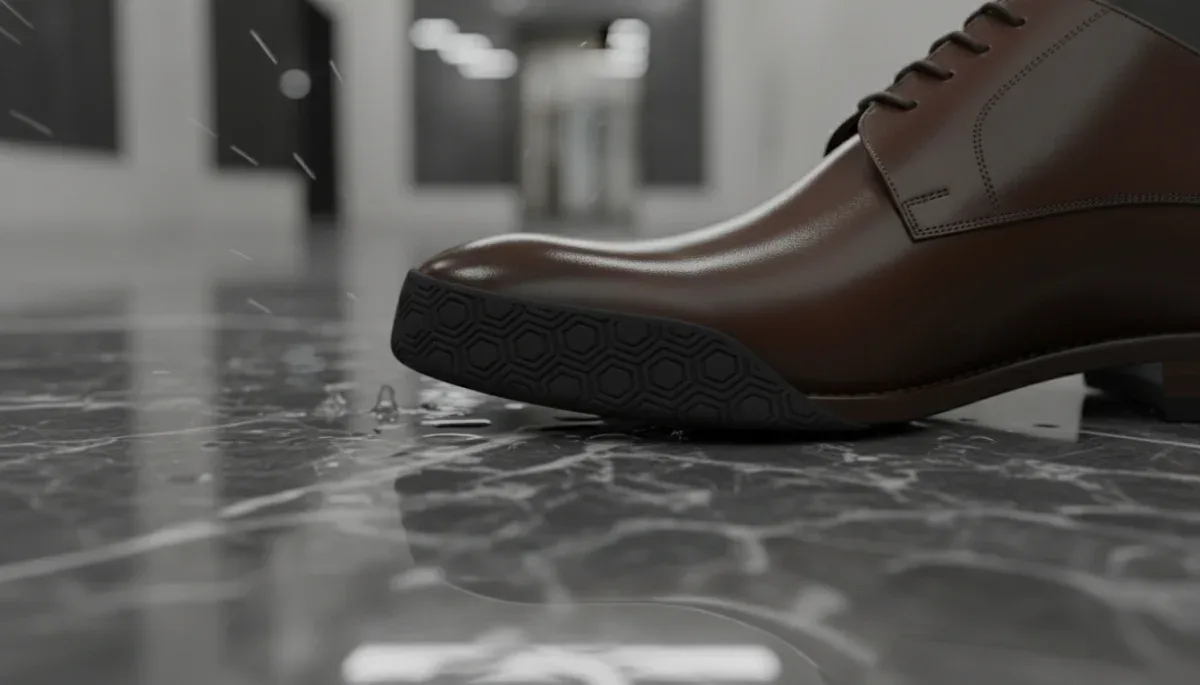
Rubber compounds behave fundamentally differently from tanned hide when exposed to moisture. Synthetic and natural rubbers are non-porous elastomeric materials, meaning they deform under pressure to conform to the tiny ridges and bumps of the ground before springing back into shape.
This elasticity allows a rubber sole to maintain direct contact with the ground even when water is present. The chemical structure of vulcanized rubber resists water absorption, ensuring the material retains its structural integrity and firmness regardless of downpours. By staying dry inside its dense molecular structure, rubber maintains a high coefficient of friction across asphalt, gravel, and wet stone steps.
Advertisements
Tread geometry further amplifies rubber's natural grip advantage. Lugs, ridges, and sipes (thin slits cut into the rubber) act as drainage channels. When you step down, your body weight forces water outward through these channels, clearing the contact surface so the rubber meets the ground directly.
Rubber sole varieties for formal footwear
Many shoe owners avoid rubber outsoles because they associate them with thick, aggressive hiking boots or chunky workwear lugs. In modern shoe construction, several refined rubber profiles maintain a low, tailored profile while providing reliable wet weather stability.
Common low-profile rubber options
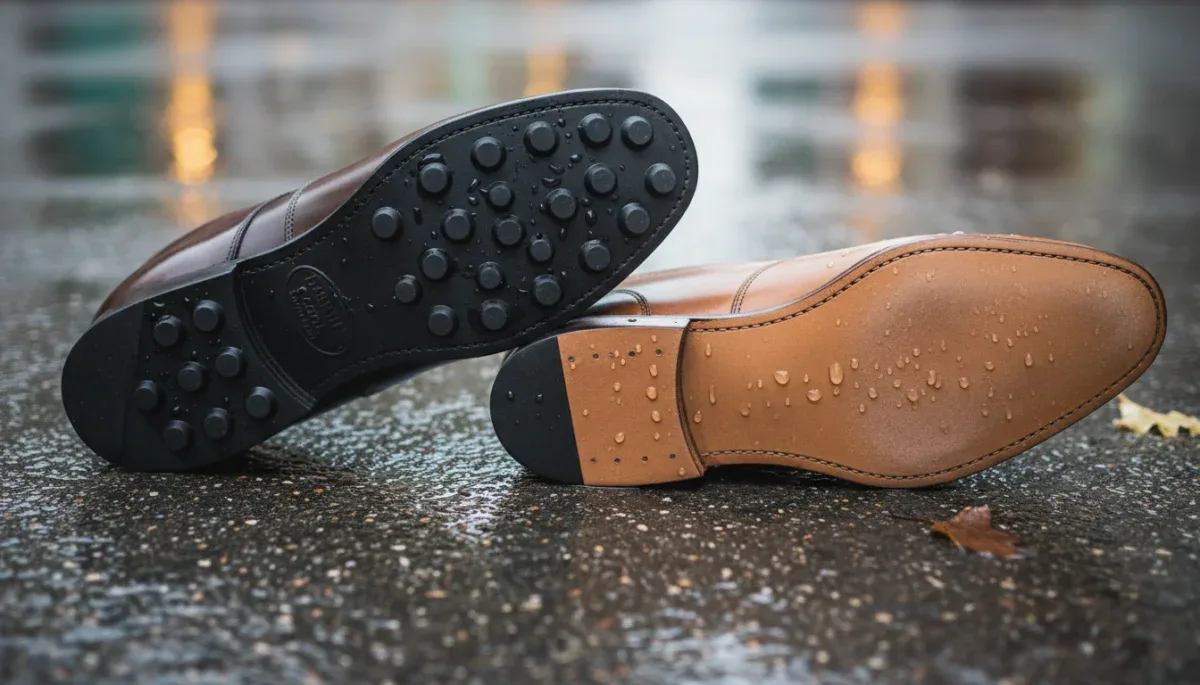
- Dainite studded soles: Made in England by the Harboro Rubber Company, these soles feature low-profile, round studs that grip wet pavement without gathering mud or disrupting a slim welt.
- Ridgeway soles: Designed with segmented, directional ridges that offer more substantial traction than studs while remaining relatively unobtrusive from the profile view.
- Commando and mini-lug soles: Classic deep-lugged patterns designed for maximum mud and snow traction, best suited for casual boots, heavy brogues, and country calf leather.
- Vibram Eton or city soles: Clean, flat rubber sheets with recessed tread lines designed specifically to mimic the exact silhouette of a leather dress sole.
Hybrid solutions: protective topy half-soles
If you already own dress shoes with smooth leather bottoms, you do not need to replace the entire sole to survive a wet commute. Cobblers routinely install thin rubber protective soles, commonly known by brand names like Topy or Vibram protective half-soles.
To install a topy, a cobbler lightly buffs the forward striking area of the leather sole to create a mechanical bonding surface. They then apply industrial contact adhesive and press a dense, one-to-two-millimeter textured rubber sheet over the leather. This layer protects the forward half of the shoe—the primary point of slip and wear—from water absorption and abrasion.
A topy installation is fully reversible and significantly cheaper than a complete resole. It preserves the clean, formal leather waist and arch of the shoe while providing practical grip on slick sidewalks and subways. Because the edge of the leather sole is trimmed and painted along with the rubber edge, casual observers rarely notice the modification from eye level.
Durability and sole maintenance after rain
Aside from slip hazards, wet weather directly attacks the structural longevity of leather outsoles. When leather absorbs water, it becomes structurally vulnerable. Grit, sand, and tiny glass particles embedded in wet city pavement act like coarse sandpaper against soft, wet leather fibers, accelerating sole wear by several times compared to dry conditions.
If you walk in leather-soled shoes during rain, proper drying protocol is essential to prevent warping and dry rot. Never dry wet leather shoes next to direct heat sources like radiators, vents, or hairdryers, as rapid drying shrinks and cracks the material. Insert raw cedar shoe trees to absorb moisture from the inside out and lay the shoes on their sides on an unvarnished wooden rack or clean towel so air can circulate underneath the wet soles.
In contrast, rubber outsoles require virtually no special post-rain maintenance. Mud and road grime wipe clean with a damp cloth, and the material does not stretch, soften, or retain moisture. For prolonged exposure to winter slush, ice-melt salts, and deep puddles, rubber outsoles outlast unprotected leather soles by a wide margin.
At a glance
| Feature | What to know |
|---|---|
| Wet pavement traction | Rubber cuts through fluid films; smooth leather slips easily on wet stone and metal. |
| Water damage vulnerability | Leather softens and wears down rapidly when wet; rubber is waterproof and stable. |
| Formal appearance | Leather gives the thinnest profile, but fine studded rubber looks nearly identical from the side. |
| Resole and repair options | Cobblers can add thin rubber half-soles to existing leather shoes without rebuilding the shoe. |
Frequently asked questions
Can you wear leather soles in the rain?
Yes, you can wear leather soles in light rain, but you will experience significantly reduced traction on smooth surfaces like marble, painted curbs, and metal grates. Prolonged exposure to standing water will also soften the sole and accelerate abrasive wear from sidewalk grit.
Do rubber topy soles ruin leather shoes?
No, a professionally installed rubber topy does not ruin a leather shoe. The cobbler removes only a negligible amount of the surface grain to glue the rubber down, and the modification dramatically extends the lifespan of the underlying leather sole.
Which rubber sole looks most formal on dress shoes?
Dainite studded rubber soles and thin city soles offer the most formal aesthetic. Their low side profiles mimic traditional single leather soles, keeping the studs or grooves hidden beneath the footbed so they remain invisible from eye level.
How long should leather shoes dry after getting soaked?
Leather shoes require at least 24 to 48 hours to dry naturally at room temperature. Keep cedar shoe trees inside them to draw out moisture and maintain the shoe's shape, and never place them near a radiator or forced air vent.
The bottom line
Rubber outsoles are unquestionably the safer, more durable choice for wet weather grip, eliminating the slip hazards and structural degradation inherent to wet leather. If you want the refinement of a traditional dress shoe without the constant fear of slick lobby floors, opt for low-profile studded rubber soles or have a cobbler install rubber half-soles on your current pairs. Before you head out into rainy weather, check the underside of your shoes to ensure you have adequate rubber tread on the forefoot.
Written by
Lucas Bastos
Lucas Bastos writes about benefits for bestinyour.com. Each article explains how things work, compares published details such as prices, policies and program rules, and points readers to the official source before they decide.