
How to Choose the Best Walking Shoes for Flat Feet
Advertisements
Selecting walking shoes for flat feet centers on finding footwear with structured arch support, firm heel counters, and stable midsoles that prevent excessive inward rolling of the foot during movement. This approach helps individuals with low or fallen arches walk long distances without placing undue strain on the plantar fascia, ankles, knees, or lower back, though it requires avoiding overly flexible, unstructured, or minimalist shoe styles.
Flat feet change how your body distributes body weight and absorbs impact with every step you take. When an arch makes complete or near-complete contact with the ground, the ankle naturally rolls inward to compensate—a biomechanical pattern known as overpronation. By understanding the mechanical components of walking footwear, such as torsional rigidity, medial posting, and foam density, you can choose a pair that offers consistent comfort, proper alignment, and dependable durability.
Understanding flat feet and overpronation
Flat feet, clinically referred to as pes planus, occur when the arches on the inside of the feet are flattened, allowing the entire sole to touch the floor when standing. Some people are born with flat feet due to genetics, while others develop fallen arches over time from repetitive stress, aging, or tendon wear. There are two primary categories of flat feet: flexible flat feet, where an arch is visible when the foot is off the ground but disappears upon standing, and rigid flat feet, where the foot remains flat regardless of weight-bearing status.
Advertisements
In both cases, flat feet alter the natural gait cycle. During a healthy stride, the foot lands on the outer edge of the heel and rolls inward slightly to absorb shock before pushing off through the ball of the foot. In people with flat feet, this inward rolling motion is often pronounced. Overpronation forces the leg bones and knee joints to rotate inward, which can cause muscle fatigue, shin splints, and heel pain if your footwear fails to provide adequate structural control.
Key indicators of overpronation
- Uneven wear on the inner edges of your shoe outsoles and midsoles
- Persistent aching in the arch, heel, or along the lower shin after walking
- Inward tilting of the ankle bones toward each other when standing straight
- Rapid fatigue in the muscles of the lower leg during everyday walking routines
Essential stability features in walking shoes
When searching for walking shoes for flat feet, stability and motion control are the most critical factors. A supportive shoe acts as a solid foundation, guiding your foot through a neutral gait cycle and preventing the arch from collapsing completely against the ground with every step. Unstructured casual shoes or ultra-plush running models often lack the perimeter support necessary to control overpronation.
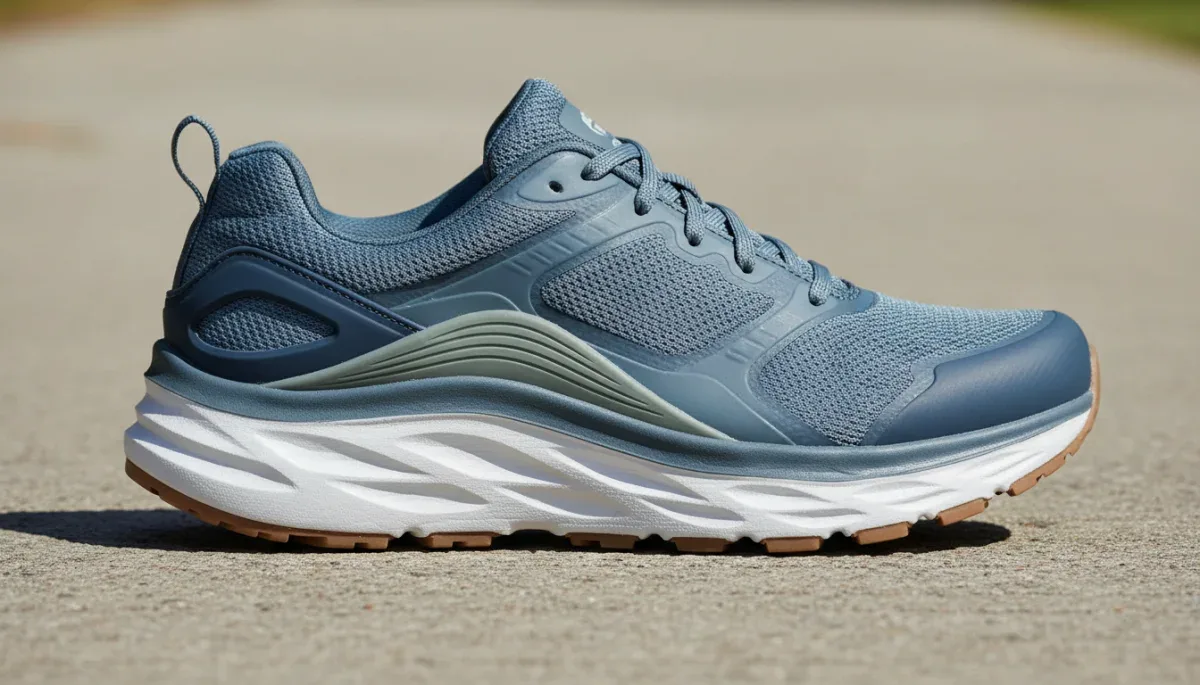 The core mechanism that provides stability is the medial post or guide rail system built into the midsole. A medial post uses a firmer density of foam or a rigid plastic insert along the inside edge of the shoe to resist inward compression. Modern footwear designs also utilize holistic guide rails, which line both the medial and lateral sides of the heel and midfoot to gently steer the foot forward without feeling overly stiff or intrusive.
Advertisements
Non-negotiable structural elements
- Firm heel counter: A rigid cup encasing the back of the heel to lock the calcaneus bone in place and prevent lateral sliding
- Torsional rigidity: A midfoot shank or stiff sole construction that resists twisting when wrung like a towel
- Broad base of support: A wide outsole platform through the midfoot that prevents the shoe from tipping inward under weight
- Removable factory insoles: Generous interior volume to allow for the placement of custom orthotics or structured aftermarket insoles
Cushioning versus firmness: striking the right balance
A common misconception among walkers with flat feet is that maximum, pillow-soft cushioning provides the best pain relief. While soft foam feels comfortable during initial wear, excessive softness often worsens overpronation. When an arch collapses into soft foam, the material compresses unevenly, exaggerating the inward tilt of the ankle and forcing foot muscles to work harder to maintain balance.
Instead, look for structured, moderate cushioning made from dual-density ethyl vinyl acetate (EVA) or polyurethane blends. These materials offer responsive shock absorption under the heel and forefoot while retaining their structural integrity across the medial arch. Polyurethane is naturally heavier and denser than standard EVA, making it an excellent choice for individuals who require durable support that will not pack down quickly after several months of regular walking.
The shape of the midsole also matters. Shoes engineered with a mild rocker bottom—where the sole curves slightly upward at the heel and toe—can help facilitate a smooth transition from heel strike to toe-off. This geometry reduces the mechanical workload placed on the plantar fascia and Achilles tendon, which are frequently overloaded in flat-footed walkers.
Sizing, width, and toe box considerations
Proper fit is just as important as structural design. Flat feet tend to spread out and widen under body weight, especially through the midfoot and forefoot. Wearing shoes that are too narrow constricts the metatarsals, restricts blood flow, and pushes the medial edge of the foot over the side of the midsole, neutralizing any built-in stability features.
To ensure adequate room, look for shoes with a wide or extra-wide width option (such as D widths for women or 2E and 4E widths for men) and an anatomical, wide toe box. A wide toe box allows the toes to splay naturally during the push-off phase of your stride, which improves natural stability and prevents the formation of bunions, corns, and calluses. Always measure both feet while standing, as feet expand under load, and size your footwear according to the larger foot.
Step-by-step shoe fitting checklist
- Shop for shoes in the late afternoon or evening when feet are at their largest due to natural daily swelling
- Wear the exact socks and orthotics you plan to use during your regular walking sessions
- Verify that there is roughly a half-inch of space (about a thumbnail width) between your longest toe and the end of the shoe
- Perform a heel-lock test by walking on an incline to confirm that your heel does not slip out of the rear collar
Evaluating outsole materials and heel drop
The outsole of a walking shoe provides traction and serves as the bottom platform for structural stability. Look for outsoles made from durable carbon rubber or blown rubber compounds that feature segmented crash pads. A segmented crash pad decouples impact forces at the outer heel, allowing for a gradual landing that reduces the rotational torque transmitted up the leg.
Another technical metric to evaluate is heel-to-toe drop, which refers to the height difference between the heel cushioning and the forefoot cushioning. Most traditional stability walking shoes feature a moderate to high drop ranging from 8 to 12 millimeters. A higher drop elevates the heel slightly, which reduces tension on the Achilles tendon and calf complex—tissues that are frequently tight in individuals with flat feet.
While zero-drop and low-drop shoes (0 to 4 millimeters) have gained popularity for promoting natural foot mechanics, they require significant foot strength and flexibility. For people with flexible or symptomatic flat feet, transitioning abruptly to a zero-drop shoe can cause severe strain on the arch and posterior tibial tendon. A moderate drop remains the safest, most supportive starting point for dedicated fitness walking.
When to use aftermarket insoles or custom orthotics
Most walking shoes come equipped with basic foam sock liners that offer minimal arch contouring. If you have flat feet, replacing these stock insoles with structured aftermarket inserts or custom orthotics prescribed by a podiatrist can significantly enhance comfort and alignment. Semi-rigid insoles made with a composite or plastic arch bridge provide targeted support directly against the plantar surface.
When planning to use an orthotic insert, verify that the shoe has a removable factory insole and sufficient internal volume. Placing an orthotic on top of a non-removable insole reduces interior room, which can crush your toes against the upper mesh and cause heel slippage. Stability walking shoes paired with structured insoles create a comprehensive support system that addresses both external gait mechanics and internal arch contact.
At a glance
| Feature | What to look for |
|---|---|
| Medial support | Firm foam posting or guide rails to reduce overpronation |
| Heel counter | Rigid structure that holds the rearfoot securely in place |
| Midsole foam | Dual-density cushioning that balances shock absorption with firmness |
| Toe box | Broad design allowing natural toe splay and midfoot expansion |
Frequently asked questions
Can flat feet be corrected simply by wearing stability walking shoes?
Stability shoes do not permanently reshape bone structure or permanently restore collapsed arches. Instead, they provide external mechanical support that aligns the feet and ankles, reducing joint strain, muscle fatigue, and pain while you are actively walking.
Should people with flat feet completely avoid flexible walking shoes?
Yes, people with symptomatic flat feet should avoid overly flexible, minimalist, or unsupportive shoes for long walks. Shoes that bend easily in the middle allow the arch to collapse repeatedly, increasing the risk of plantar fasciitis, tendonitis, and joint pain.
How often should walking shoes for flat feet be replaced?
Most walking shoes should be replaced every 300 to 500 miles, or roughly every six months with regular use. The structural support foam and medial posting break down from repeated pressure well before the outer fabric displays visible holes or tears.
Are running shoes suitable for flat-footed fitness walkers?
Yes, stability and motion-control running shoes are excellent options for walking. Running shoes undergo rigorous engineering for impact absorption and stability, making their medial support and durable midsoles ideal for managing overpronation during fitness walking.
The bottom line
Choosing the right walking shoes for flat feet requires prioritizing stability, torsional rigidity, and structured arch support over ultra-soft cushioning. Look for footwear featuring a firm heel counter, a wide base of support, and a spacious toe box that accommodates natural foot expansion. Before purchasing your next pair, check the shoe's midfoot stiffness by attempting to twist the sole; if it resists bending through the middle, it will provide the support your arches need.
Written by
Lucas Bastos
Lucas Bastos writes about benefits for bestinyour.com. Each article explains how things work, compares published details such as prices, policies and program rules, and points readers to the official source before they decide.