
How to break in stiff leather boots without damage
Advertisements
Breaking in stiff leather boots safely requires gradual mechanical flexing combined with targeted conditioning rather than aggressive heat or water soaking. Leather is an animal hide composed of dense protein fibers held together by natural and applied oils, meaning it responds best to body heat, ambient humidity, and steady movement.
This measured approach helps owners of heavy work boots, heritage footwear, and dress boots avoid blistering while preserving the upper leather, though it requires several weeks of patient, low-impact wear to achieve lasting comfort. Rushing the process with improper methods can permanently weaken the grain, split the stitching, or void the manufacturer warranty.
Understanding how boot leather stretches and flexes
Leather does not stretch infinitely; instead, its interwoven collagen fibers shift, compress, and lengthen slightly along natural stress lines created by your foot movement. Premium boot makers typically use thick full-grain or top-grain hides, which contain the densest fiber network directly below the hair layer. This high density produces exceptional durability and water resistance, but it also creates the initial rigidity that feels uncomfortable against the heel counter, ankle collar, and instep.
Advertisements
The tanning method used during manufacturing also dictates how easily the upper will conform to your foot. Vegetable-tanned leather, common in traditional work boots and premium footbeds, relies on tree bark tannins and produces a firm, structured material that yields slowly over dozens of hours. Chrome-tanned leather uses chromium salts, resulting in a softer initial feel, though heavy-weight pull-up varieties still require dedicated break-in time to prevent pinch points across the vamp.
Key differences in common boot leathers
- Vegetable-tanned leather: Exceptionally firm out of the box, molds precisely over time, and demands gradual pressure without excess moisture.
- Chrome-tanned leather: More pliable from day one, resilient against water spots, but still stiff around reinforced heel caps.
- Oil-tanned leather: Impregnated with heavy oils and waxes at the tannery, offering high weather protection and moderate initial flexibility.
- Roughout and suede: Features flesh-side presentation that generally yields faster across the forefoot than smooth full-grain uppers.
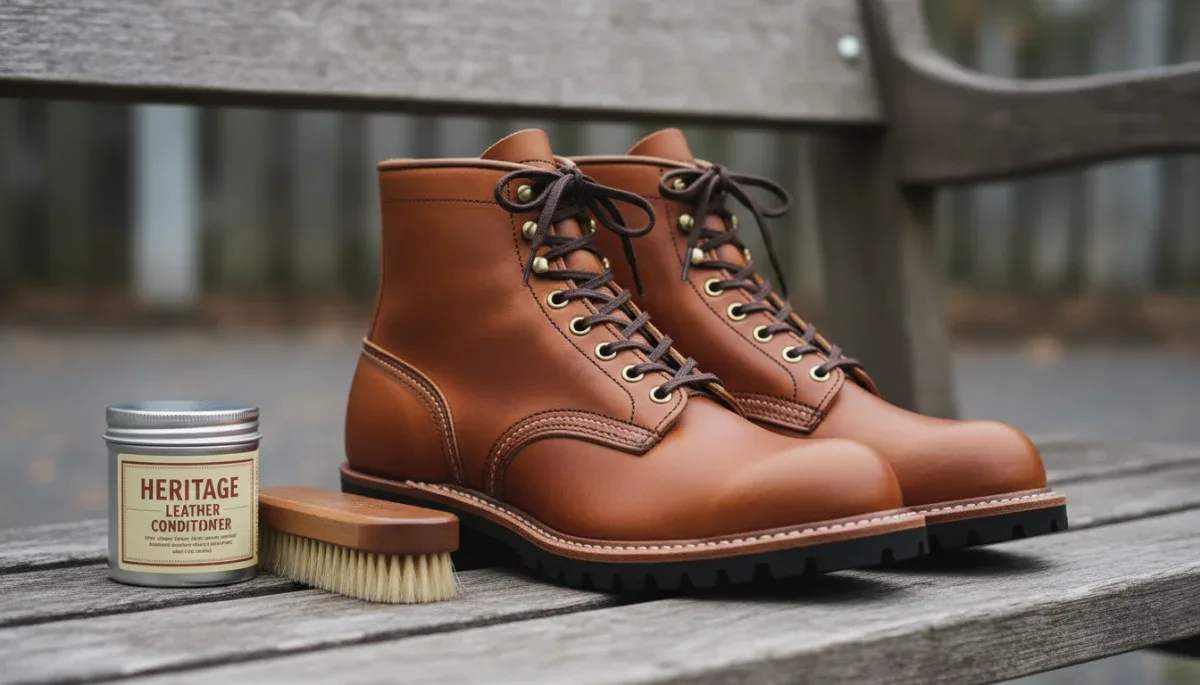
Preparing new leather with a light conditioner
Brand-new footwear often sits in climate-controlled warehouses and retail stockrooms for months before purchase, allowing natural moisture to evaporate from the hide. Dry collagen fibers are brittle and resist movement, increasing the risk of premature micro-creasing, crack formation, or surface tearing when you first bend your toes. Applying a balanced leather conditioner before your first long walk restores lubricating lipids to the upper, enabling the fiber bundles to glide over one another without structural strain.
Select a conditioner suited to your boot type. Heavy petroleum-based greases or pure mink oil can oversaturate the leather, darkening light shades and softening the hide so dramatically that the boot loses its supportive shape. Instead, use a lightweight, wax-free leather cream or a dedicated boot balm designed to penetrate without breaking down internal adhesives or fiberboard counters.
Advertisements
Steps for the initial conditioning pass
- Wipe the entire boot surface with a dry or barely damp microfiber cloth to clear away packing dust and warehouse debris.
- Apply a dime-sized amount of neutral leather cream to a soft cotton cloth or applicator sponge.
- Work the product into the hide using small circular motions, giving extra attention to the flex points behind the toe cap and along the eyelet rows.
- Allow the conditioner to absorb for twenty to thirty minutes, then buff the surface firmly with a natural horsehair brush to disperse excess residue.
Structuring an indoor wear schedule
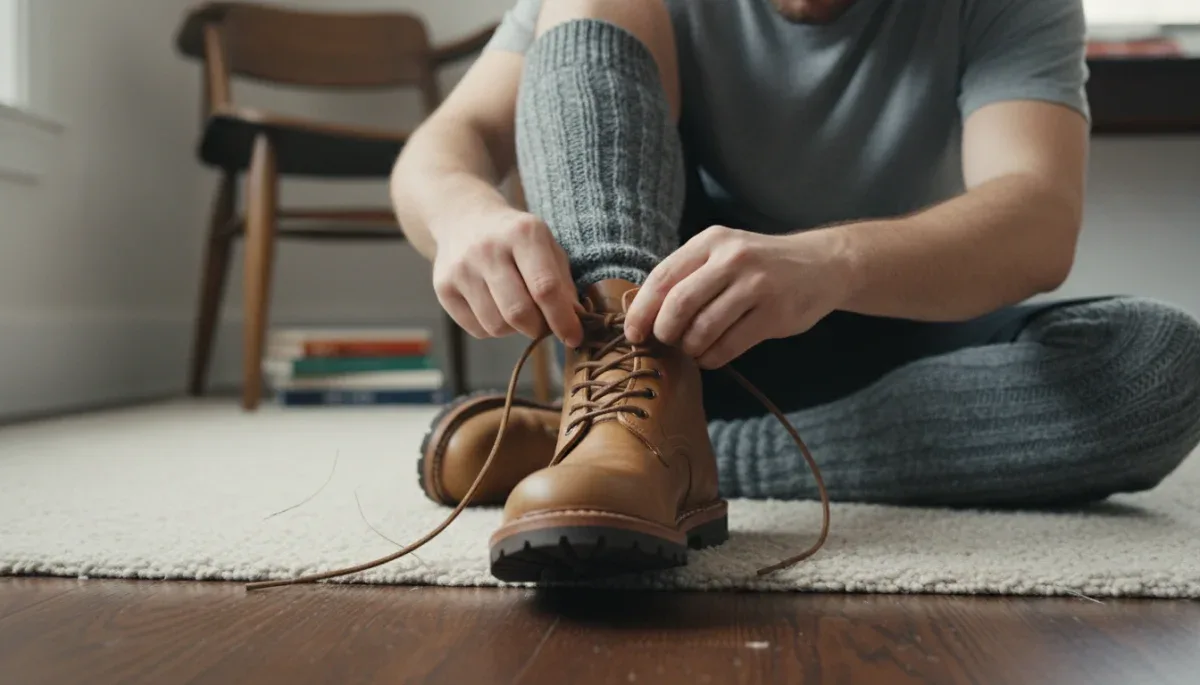
The safest way to break in leather boots is through short, controlled sessions inside your home. Indoor environments protect the outsoles from gravel, asphalt, and dirt, ensuring you can still return or exchange the boots if an unresolvable sizing issue becomes apparent. Walking on level indoor flooring also allows your feet to warm the interior footbed and lining gradually, softening the leather without exposing your skin to sudden, severe friction.
Start by wearing the boots for thirty to forty-five minutes on the first day while sitting, standing, and taking brief walks around the living room. Pay attention to hotspots, which are localized warm or burning sensations indicating high friction against your skin. Increase the duration by thirty minutes each day as long as your feet remain free of irritation, transitioning to full days of regular outdoor wear only after the vamp flexes naturally with your gait.
Recommended weekly wear progression
- Days 1 to 3: Wear the boots for thirty to forty-five minutes indoors while seated at a desk or performing light household tasks.
- Days 4 to 6: Extend indoor sessions to two hours per day, incorporating stair climbing to promote ankle creasing along the tongue.
- Days 7 to 10: Wear the boots for half-day indoor stretches or light errands on paved surfaces, checking for heel slippage.
- Day 11 onward: Transition into full-day casual use, keeping backup footwear accessible if pressure points develop unexpectedly.
Relieving stubborn pressure points safely
Even properly sized boots can exert uncomfortable pressure across specific anatomical contours, such as a high instep, prominent navicular bone, or wide metatarsal head. If a specific section of the leather feels uncomfortably tight after several indoor sessions, targeted mechanical assistance can ease the tension without compromising the integrity of the overall boot structure. Never attempt to force a boot that is fundamentally too short, as toe length cannot be altered by stretching.
A specialized two-way mechanical shoe stretcher made of hardwood or cast metal is the ideal tool for widening a tight forefoot. These devices allow you to apply gentle, measured outward pressure to the leather upper over a twelve-to-twenty-four-hour period. Many quality stretchers include movable plastic nodules designed to target localized bunion or pinky-toe pressure points. For minor instep tightness, inserting adjustable cedar shoe trees between wearings helps preserve the shape while absorbing foot sweat.
Safe mechanical tools for minor adjustments
- Two-way boot stretcher: Expands the width across the ball of the foot using a mechanical screw mechanism without pulling on the heel counter.
- Localized spot plugs: Insertable attachments that snap into a stretcher to target specific high-friction friction zones.
- Aromatic cedar shoe trees: Maintain forward tension in the vamp, prevent curled toes, and draw out moisture as the leather cools down.
- Specialized stretching spray: A formulated alcohol-and-water solution that temporarily relaxes surface tension before mechanical expansion.
Harmful methods that damage boot construction
Internet forums and folklore often suggest extreme shortcuts to accelerate the break-in process, but these techniques carry severe risks of irreversible damage. Exposing leather boots to high heat sources, such as electric hair dryers, ovens, or direct radiator contact, drives out vital moisture and cooks the natural collagen fibers. Once cooked, leather becomes brittle, cracks along flex lines, and permanently loses its tensile strength.
Similarly, soaking boots in warm water or submerging them completely can ruin internal footwear components. Modern and heritage boots often incorporate leatherboard stiffeners, cork-filled cavities, paperboard footbed wraps, and solvent-based adhesives. Saturating these materials causes swelling, structural collapse, adhesive failure, and mold development within the insole. Freezing water bags placed inside the toe box is equally hazardous, as expanding ice applies uncontrolled pressure that can rupture welt stitching or delaminate rubber outsoles.
Shortcuts that destroy leather boots
- Baking or blow-drying: Evaporates natural fats, shrinks the hide, and weakens structural contact cement used in the sole assembly.
- Complete water submersion: Saturated midsoles rot from the inside, warp internal shanks, and discolor natural dyes.
- Freezer bag expansion: Exerts uncontrolled outward force that can burst outer stitching lines and tear internal lining textiles.
- Aggressive manual bending: Folding the boot sharply in half by hand causes deep, unnatural creases that crack the grain prematurely.
Protecting your feet while the leather softens
The primary hazard during any footwear break-in period is skin abrasion caused by friction. When stiff upper leather resists bending, your foot moves independently inside the boot, creating shearing forces against the skin that lead to blister formation. Mitigating this friction not only keeps you comfortable but also allows you to log the necessary hours of wear required to mold the footbed to your arch and heel profile.
Always pair new boots with medium-to-heavyweight merino wool socks. Wool fibers provide dense physical cushioning, resist compression better than cotton, and actively wick sweat away from the skin surface to minimize moisture-induced skin softening. If you feel a hot spot developing during a walk, apply medical-grade adhesive tape or moleskin directly onto your skin immediately rather than waiting for an open blister to form.
Foot protection essentials
- Merino wool boot socks: Provide high-density cushioning that buffers friction while regulating internal temperature and moisture.
- Adhesive moleskin padding: Applied directly to the skin at common pressure areas like the Achilles tendon and fifth metatarsal.
- Double-sock layering: A thin, smooth synthetic liner sock worn beneath a wool sock shifts friction between the fabric layers instead of your skin.
- Alternate lacing patterns: Skipping an eyelet or using a window-lacing technique relieves direct pressure over a sensitive, high instep.
At a glance
| Factor | What to know |
|---|---|
| Break-in timeline | Expect two to four weeks of intermittent wear before the leather fully adapts. |
| First-day routine | Wear boots indoors for thirty to forty-five minutes with thick merino wool socks. |
| Leather conditioning | Apply a light, wax-free leather balm to flex zones before regular wear. |
| Methods to avoid | Never submerge boots in water, use ovens, or freeze water bags inside uppers. |
Frequently asked questions
How long does it typically take to break in leather boots?
Most quality leather boots require between eighty and one hundred total hours of active wear to break in fully. Stiff, thick vegetable-tanned work boots can take up to a month of regular use, whereas lighter chrome-tanned boots often mold to your foot contours within two weeks of consistent, short outings.
Can I use rubbing alcohol to stretch my boots faster?
Do not use undiluted rubbing alcohol on leather boots because it strips out critical oils and leaves the hide brittle. Commercial stretching sprays contain a balanced ratio of water and specialized surfactants that safely relax the surface tension of the hide without causing discoloration, cracking, or severe grain dehydration.
Should new leather boots hurt when you first wear them?
New boots should feel snug, firm, and supportive across the width, but they should never cause acute pain or pinch your toes. If your toes touch the front of the toe box or you experience intense throbbing, the boots are fundamentally the wrong size or width for your feet.
Will breaking in boots change their overall size?
Breaking in boots adjusts their width and upper volume by a small fraction, but it will never increase the overall length. The leather will stretch slightly across the ball of the foot and mold around your heel, but the footbed length remains fixed by the sole construction.
The bottom line
Breaking in stiff leather boots is a gradual process that relies on body warmth, natural flexing, and appropriate leather hydration rather than aggressive shortcuts. Taking the time to wear your boots indoors with protective wool socks ensures long-term comfort while preserving the structural durability of the footwear. Before wearing your new boots outdoors, verify the manufacturer return policy to confirm that your indoor testing has not voided any exchange options.
Written by
Lucas Bastos
Lucas Bastos writes about benefits for bestinyour.com. Each article explains how things work, compares published details such as prices, policies and program rules, and points readers to the official source before they decide.