
Advertisements
Embrace the future of sustainable style with Upcycled Apparel, where creativity meets circularity in your daily outfits. In 2026, fashion is no longer about buying more, but about reimagining the high-quality pieces you already own.
By integrating repurposed garments into your rotation, you transform pre-loved textiles into unique, one-of-a-kind statements. This shift toward circular fashion allows you to express your individuality while significantly reducing your environmental footprint.
Ready to lead the eco-conscious movement? Discover how to curate a modern look using three to five reclaimed items that blend seamlessly with the latest seasonal trends and personal storytelling.
Advertisements
The Evolution of Sustainable Fashion: Embracing Upcycled Apparel 2026
The fashion industry is undergoing a significant transformation, with sustainability moving from a niche concept to a mainstream imperative. This shift is particularly evident in the growing prominence of upcycled apparel, which redefines how we consume and create clothing.
Consumers are increasingly demanding transparency and ethical practices, pushing brands to innovate beyond traditional production models. The focus is now on extending the life cycle of garments and reducing textile waste, making upcycled apparel a critical component of future fashion.
Advertisements
By 2026, integrating repurposed items into personal style will not only be a trend but a statement of conscious living. This movement signals a departure from fast fashion, embracing creativity and environmental responsibility in equal measure.
Understanding Upcycled Apparel and Its Impact
Upcycled apparel involves transforming discarded clothing or textiles into new garments, often of higher quality or value than the original. This process differs from recycling, which typically breaks down materials for new production, by preserving the existing fabric structure.
The environmental benefits are substantial, including reduced landfill waste, decreased demand for new raw materials, and lower energy consumption associated with manufacturing. Socially, upcycling often supports local artisans and small businesses, fostering unique craftsmanship.
Economically, upcycled fashion offers innovative business models and can provide consumers with distinctive, one-of-a-kind pieces. It represents a creative challenge for designers and an opportunity for individuals to express their unique style while contributing to a circular economy.
The Shift Towards Circular Fashion
- Resource Conservation: Upcycling minimizes the extraction of virgin resources, conserving water, energy, and land.
- Waste Reduction: It directly tackles the massive problem of textile waste, diverting garments from landfills.
- Creative Expression: Designers and consumers alike find new avenues for creativity, producing unique and personalized items.
This paradigm shift is not just about making existing clothes last longer; it’s about reimagining their potential. The Rise of Upcycled Apparel is fundamentally changing how we perceive and value our wardrobes.
Key Trends Driving Upcycled Apparel in 2026
Several factors are converging to accelerate the adoption of upcycled apparel as we approach 2026. Consumer awareness of environmental issues continues to grow, driving demand for more sustainable options across all industries, including fashion.
Technological advancements in textile processing and design software are making upcycling more efficient and aesthetically appealing. Brands are also recognizing the marketing potential of sustainability, leading to increased investment in upcycled collections and partnerships.
Furthermore, the influence of social media and fashion influencers is playing a crucial role in popularizing upcycled looks. They showcase how repurposed items can be both chic and responsible, inspiring a new generation of conscious consumers.
Designer Innovations and Brand Adoption
- Luxury Upcycling: High-end brands are incorporating upcycled elements into their collections, elevating its status.
- Mass Market Integration: Retailers are introducing upcycled lines, making sustainable fashion more accessible to a broader audience.
- Collaborations: Partnerships between designers, artists, and upcycling initiatives are fostering groundbreaking creations.
The momentum behind upcycled apparel is undeniable, signaling a significant and lasting change in the fashion industry. This movement is not merely a fleeting trend but a fundamental reevaluation of fashion’s role in a sustainable future.
Integrating Repurposed Items: A Practical Guide for Your 2026 Style
Adopting upcycled apparel into your 2026 style doesn’t require a complete wardrobe overhaul. The key is to start small, identifying a few versatile pieces that can seamlessly blend with your existing clothes, creating a cohesive and unique look.
Consider items that can be easily modified or that already possess a unique character. Vintage denim, old band t-shirts, or even forgotten scarves can be transformed into statement pieces with a little creativity and effort, becoming central to your upcycled apparel collection.
The goal is to cultivate a personal style that reflects both your aesthetic preferences and your commitment to sustainability. This approach encourages thoughtful consumption and celebrates the individuality that repurposed items bring.
Finding and Selecting Upcycled Pieces
Begin your search at thrift stores, vintage shops, or online marketplaces specializing in pre-owned clothing. Look for items with good quality fabric and interesting details that can be easily adapted or worn as-is.
Consider the potential for alteration: a slightly oversized blazer can be tailored, or a plain dress can be embellished. The beauty of upcycled apparel lies in its transformative potential, allowing you to create something truly unique.
Don’t shy away from pieces with minor imperfections; these can often be repaired, covered with patches, or even integrated into the design to add character. Embrace the story behind each item you choose for your upcycled apparel collection.
Styling Your Wardrobe: 3-5 Upcycled Items for a Distinctive Look
To effectively integrate upcycled apparel into your 2026 style, focus on selecting 3-5 key pieces that offer versatility and complement your existing wardrobe. These items should serve as anchors, around which you can build various outfits, showcasing your commitment to upcycled apparel.
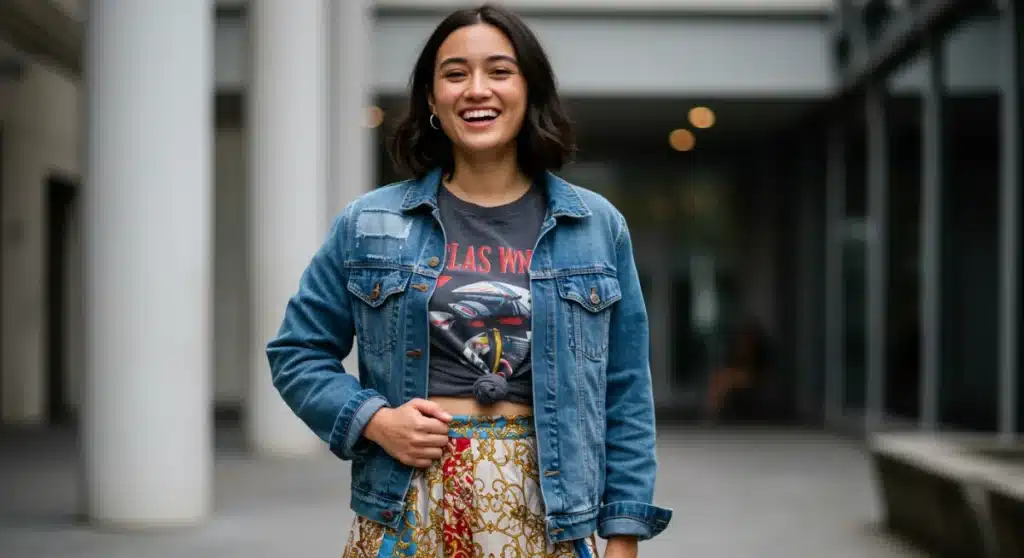
For example, a repurposed denim jacket with unique embellishments can be layered over dresses, t-shirts, or sweaters. A vintage silk scarf, transformed into a top or skirt, can add a touch of elegance and individuality to any ensemble.
The magic happens when these unique pieces elevate your everyday look, making a statement about conscious fashion. The Rise of Upcycled Apparel is about thoughtful curation.
Essential Upcycled Pieces to Consider
- Repurposed Denim: Jackets, jeans, or skirts with unique washes, patches, or distressed details.
- Vintage Blouses/Shirts: Often made from high-quality fabrics, these can be worn as-is or refashioned.
- Embellished Outerwear: Coats or jackets with added embroidery, paint, or fabric scraps.
- Transformed Accessories: Bags made from old upholstery or jewelry from discarded materials.
These selections allow for creative mixing and matching, proving that sustainable fashion can be both stylish and accessible. Embracing upcycled apparel empowers you to define your own unique fashion narrative.
DIY Upcycling: Personalizing Your Repurposed Garments
For those with a creative inclination, DIY upcycling offers an exciting way to personalize your repurposed items and truly make them your own. This approach not only saves money but also fosters a deeper connection with your wardrobe, as every piece tells a unique story.
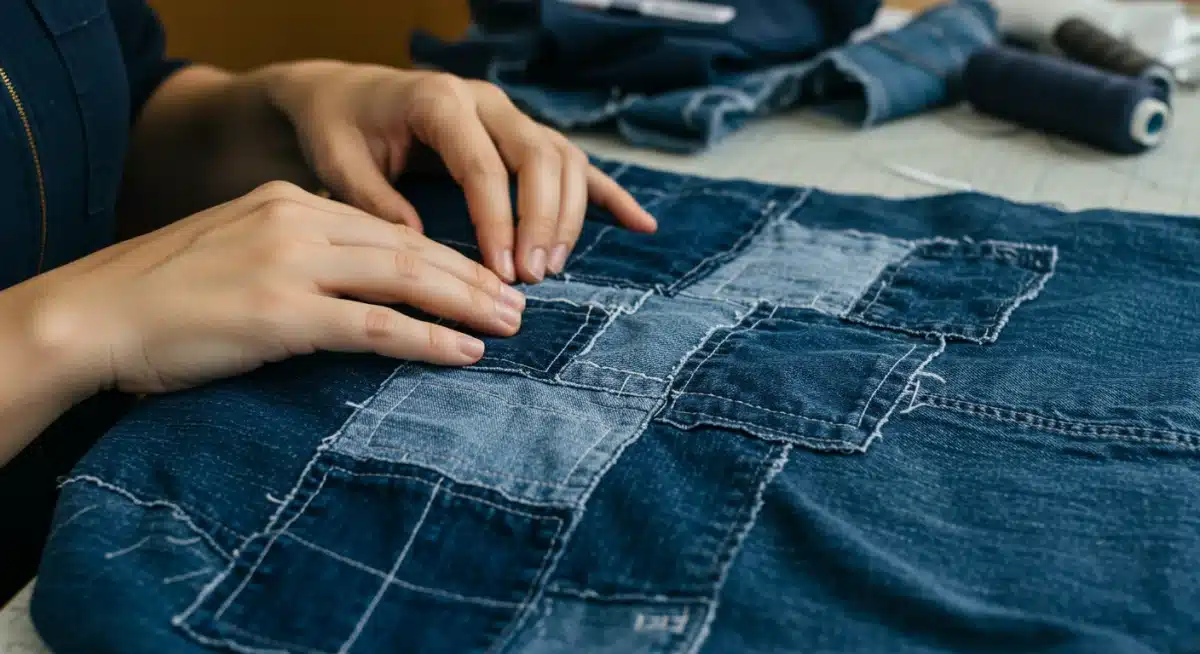
Simple techniques like adding patches, embroidery, or fabric paint can dramatically transform a basic garment. More advanced skills, such as deconstructing and reconstructing pieces, can lead to entirely new designs, pushing the boundaries of what upcycled apparel can be.
Online tutorials, workshops, and local craft communities provide ample resources for learning new skills and finding inspiration. The beauty of DIY upcycling lies in its boundless possibilities, allowing you to continually refresh and evolve your style with upcycled apparel.
Creative Upcycling Techniques
Start with simple alterations like cropping a t-shirt or adding decorative stitching to a pair of jeans. These small changes can make a big difference in revitalizing an old item and making it feel new again, enhancing your upcycled apparel collection.
Experiment with dyeing techniques to give new life to faded fabrics, or try appliqué to add interesting textures and patterns. Don’t be afraid to mix and match different textiles and materials to create truly unique pieces that reflect your personal aesthetic.
For those feeling more adventurous, consider deconstructing multiple garments and combining their elements to create a completely new design. This approach truly embodies the spirit of upcycled apparel, turning waste into wearable art.
The Economic and Ethical Advantages of Upcycled Apparel
Beyond the environmental benefits, the embrace of upcycled apparel brings significant economic and ethical advantages.
It challenges the traditional fast fashion model, which often relies on exploitative labor practices and generates massive waste, making the Rise of Upcycled Apparel a critical movement.
Supporting upcycled brands and artisans often means investing in local economies and fair labor practices. These businesses typically prioritize craftsmanship and ethical production, offering a stark contrast to the mass-produced garments of conventional fashion.
For consumers, upcycled items often represent better value due to their unique design and durability, encouraging a shift towards qualitative rather than quantitative consumption. This fosters a more sustainable and responsible approach to fashion for upcycled apparel.
Challenges and Future of Upcycled Apparel
Despite its growing popularity, upcycled apparel faces several challenges. Scaling production to meet mass market demand can be difficult due to the inherently unique nature of repurposed materials and the labor-intensive processes involved in their transformation.
Standardization and quality control can also be more complex compared to traditional manufacturing. Educating consumers about the value and benefits of upcycled items remains crucial to overcome perceptions that they are inferior or less stylish.
However, ongoing innovation in design, technology, and supply chain management is continually addressing these issues.
The future of upcycled apparel looks promising, driven by increasing consumer demand and a collective push towards a more sustainable fashion industry, making the Rise of Upcycled Apparel a key focus.
Overcoming Obstacles for Broader Adoption
- Supply Chain Innovation: Developing more efficient methods for sourcing and processing discarded textiles.
- Consumer Education: Raising awareness about the environmental and aesthetic value of upcycled products.
- Policy Support: Government incentives and regulations promoting sustainable fashion practices.
As these challenges are met, upcycled apparel is poised to become an even more integral part of our wardrobes and the global fashion economy. The movement towards upcycled apparel represents a profound shift in our relationship with clothing.
| Key Aspect | Description |
|---|---|
| Definition | Transforming discarded materials into new, higher-value garments. |
| Environmental Impact | Reduces waste, conserves resources, and lowers carbon footprint. |
| Styling for 2026 | Integrate 3-5 unique upcycled items for a distinctive, sustainable look. |
| Future Outlook | Continued growth and innovation despite production and perception challenges. |
Frequently Asked Questions About Upcycled Apparel 2026
Upcycled apparel refers to clothing created by transforming discarded or pre-owned garments and textiles into new items. Unlike recycling, which often breaks down materials, upcycling repurposes existing fabrics, often enhancing their value or aesthetic appeal in the process. This helps reduce textile waste and promotes sustainable fashion choices.
Start by identifying versatile pieces like a unique denim jacket, a vintage blouse, or an embellished accessory. These items can be mixed and matched with your current wardrobe. Focus on quality and individuality, allowing these upcycled pieces to become statement elements that define your personal aesthetic and contribute to The Rise of Upcycled Apparel: How to Integrate 3-5 Repurposed Items into Your 2026 Style.
The primary benefits include significant waste reduction, as textiles are diverted from landfills, and reduced demand for new resources. Additionally, upcycled apparel often offers unique, one-of-a-kind designs, supports ethical production practices, and promotes a more sustainable and conscious approach to fashion consumption, aligning with the principles of upcycled apparel.
The cost varies widely. Some designer upcycled pieces can be premium-priced due to their unique craftsmanship and limited availability. However, many upcycled items found in thrift stores or created through DIY projects can be very affordable. The value often lies in their distinctiveness and contribution to sustainability, making upcycled apparel a worthwhile investment.
You can find quality upcycled items at vintage stores, specialized online boutiques, artisan markets, and even through independent designers on platforms dedicated to sustainable fashion. Look for brands that clearly state their upcycling process and commitment to ethical practices. Exploring these avenues will help you discover unique pieces for your upcycled apparel collection.
Looking Ahead: The Future of Responsible Fashion
The continued ascent of upcycled apparel signifies a fundamental shift in consumer values and industry practices.
As we move closer to 2026, the integration of repurposed items into mainstream fashion will not only redefine personal style but also reinforce a global commitment to environmental stewardship.
This movement encourages innovation, supports local economies, and empowers individuals to make conscious choices that extend beyond fleeting trends.
The Rise of Upcycled Apparel is more than a trend; it’s a testament to fashion’s evolving role in a sustainable future.
Monitoring the evolution of upcycled apparel will provide valuable insights into broader shifts in ethical consumption and the circular economy. This trajectory indicates a promising path for a more responsible and creative fashion landscape.
