

Advertisements
Imagine spritzing on your favorite scent knowing it’s as kind to the planet as it is to your skin. The shifting landscape of sustainable fragrance brands proves you no longer have to choose between luxury and your eco-conscious values.
Today, the finest bottles in the US market are trading traditional chemical secrets for radical transparency and ethical sourcing. These pioneering green perfumeries are completely rewriting the rules of modern luxury, from biodegradable ingredients to zero-waste packaging.
Ready to discover the scents defining this year’s conscious beauty movement? Here are the top 10 eco-friendly perfumes poised to elevate your collection while honoring the earth.
Advertisements
The Rise of Eco-Conscious Perfumery
The fragrance industry, traditionally shrouded in proprietary formulas and complex supply chains, is undergoing a profound transformation.
A new generation of consumers is scrutinizing every aspect of product development, from the origin of raw materials to packaging disposal, driving brands towards greater accountability.
Advertisements
This shift is not merely a trend but a fundamental reevaluation of what constitutes luxury and quality in the modern era. Sustainability is no longer a niche concern but a core expectation, influencing purchasing decisions across all demographics.
Brands that fail to adapt to these evolving standards risk losing market share and consumer trust. The emphasis on transparency, ethical practices, and environmental protection is redefining the competitive landscape for sustainable fragrance brands.
Defining Sustainable Fragrance
Sustainable fragrance encompasses a multifaceted approach to perfume creation, prioritizing environmental and social responsibility at every stage.
This includes the ethical sourcing of natural ingredients, the use of green chemistry in formulation, and the adoption of eco-friendly packaging solutions.
It also extends to ensuring fair labor practices throughout the supply chain and minimizing waste and pollution. A truly sustainable fragrance brand considers its entire lifecycle, striving for a positive impact on both people and the planet.
The criteria for what defines a sustainable fragrance are becoming increasingly robust, moving beyond mere marketing claims to verifiable certifications and transparent reporting.
This holistic view is crucial for distinguishing genuinely eco-friendly options from mere greenwashing.
- Ethical Sourcing: Ingredients are obtained from responsible suppliers who ensure fair wages, safe working conditions, and minimal environmental impact.
- Clean Formulations: Avoidance of harmful chemicals, parabens, phthalates, and synthetic musks, prioritizing natural and safe synthetic alternatives.
- Eco-Friendly Packaging: Use of recycled, recyclable, or biodegradable materials, often minimizing excess packaging.
- Transparency: Open communication about ingredient origins, manufacturing processes, and environmental footprint.
Key Pillars of Sustainable Fragrance Brands
For a fragrance brand to be considered truly sustainable, it must integrate several core principles into its operations.
These pillars form the foundation of an ethical and environmentally responsible business model, demonstrating a genuine commitment to sustainability rather than superficial efforts.
From the initial concept to the final product, every decision must reflect a dedication to minimizing harm and maximizing positive impact. This holistic approach is what sets leading sustainable fragrance brands apart in a crowded market.
Understanding these foundational elements allows consumers to critically evaluate brands and support those that align with their values. It also pushes the industry towards higher standards of environmental and social performance.
Ingredient Sourcing and Transparency
The origin of fragrance ingredients is a critical factor in determining a brand’s sustainability profile.
Many traditional perfumery raw materials, while beautiful in scent, often come with significant environmental and social costs, including deforestation, over-harvesting, and exploitative labor practices.
Leading sustainable fragrance brands prioritize traceable, ethically sourced ingredients, often engaging in direct trade relationships with farmers and communities.
This ensures fair compensation and supports sustainable agricultural practices that protect biodiversity and ecosystems.
Transparency in ingredient lists, including the disclosure of natural and safe synthetic components, empowers consumers to make informed choices. Brands that clearly communicate their sourcing policies build trust and demonstrate accountability.
Eco-Friendly Packaging Innovations
Packaging constitutes a substantial portion of a product’s environmental footprint, and the fragrance industry is no exception.
Traditional perfume bottles and elaborate boxes often contribute to significant waste, especially single-use plastics and non-recyclable materials.
Sustainable fragrance brands are innovating with packaging solutions, moving towards refillable systems, minimalist designs, and materials that are recycled, recyclable, or biodegradable.
This commitment extends beyond the bottle to secondary packaging, shipping materials, and even product inserts.
The goal is to minimize waste at every step, reducing the demand for virgin resources and mitigating the impact on landfills. These innovations are crucial for a truly circular economy within the beauty sector.

Top 10 Sustainable Fragrance Brands for 2026 in the US
As we look towards 2026, several pioneering brands are setting the standard for sustainable perfumery in the United States.
These companies have demonstrated a steadfast commitment to environmental ethics, ingredient transparency, and innovative eco-conscious practices.
Their efforts range from meticulously sourcing botanicals to implementing cutting-edge, low-impact manufacturing processes, all while delivering exceptional fragrance experiences.
This list highlights brands that are not just selling perfumes but are actively contributing to a more sustainable future.
These brands offer a diverse range of olfactory profiles, proving that sustainability does not compromise luxury or artistry. They represent the forefront of the movement towards truly ethical and environmentally responsible personal care.
1. PHLUR
PHLUR has rapidly gained recognition for its commitment to clean ingredients and transparent formulations.
The brand provides full ingredient lists and emphasizes responsible sourcing, ensuring that consumers are well-informed about what they are applying to their skin.
Their fragrances are free from parabens, phthalates, and other known irritants, appealing to a health-conscious audience. PHLUR’s dedication to sustainability extends to its packaging, which often incorporates recycled content and is designed for recyclability.
This holistic approach has positioned PHLUR as a leader among sustainable fragrance brands, resonating with consumers who prioritize both personal well-being and environmental impact.
2. Henry Rose
Founded by Michelle Pfeiffer, Henry Rose is a trailblazer in the clean fragrance movement, being the first and only fine fragrance brand to be EWG Verified™ and Cradle to Cradle Certified™.
This dual certification provides unparalleled assurance of ingredient safety and environmental responsibility.
The brand is entirely transparent about its ingredients, offering full disclosure for every scent. Their commitment to sustainability is unwavering, utilizing 100% recycled glass for bottles and 100% post-consumer waste paper for cartons.
Henry Rose exemplifies how luxury and rigorous sustainability standards can coexist, setting a high bar for other sustainable fragrance brands to follow.
3. Ellis Brooklyn
Ellis Brooklyn combines modern perfumery with a strong emphasis on natural and safe synthetic ingredients. The brand is known for its sophisticated scents that are cruelty-free, vegan, and free of phthalates and parabens.
Their commitment to sustainability is evident in their use of responsibly sourced raw materials and eco-friendly packaging, including glass bottles and FSC-certified paper cartons. Ellis Brooklyn also actively works to reduce its carbon footprint through various initiatives.
The brand’s stylish aesthetic and ethical foundation make it a popular choice for consumers seeking chic yet conscious sustainable fragrance brands.
4. By / Rosie Jane
By / Rosie Jane offers a collection of natural, vegan, and cruelty-free fragrances crafted with a minimalist approach. The brand prioritizes transparency, listing all ingredients clearly and avoiding harmful chemicals.
Their commitment to sustainability is reflected in their use of organic alcohol and recyclable packaging materials. By / Rosie Jane also focuses on small-batch production to minimize waste and maintain quality control.
This dedication to clean beauty and environmental care solidifies its position among top sustainable fragrance brands, appealing to those who value simplicity and purity.
5. DedCool
DedCool stands out with its unique, gender-neutral scents and a deep commitment to sustainability. The brand utilizes organic, plant-based ingredients and a water-free fragrance formulation process, significantly reducing its environmental impact.
Their products are vegan, cruelty-free, and packaged in recycled and recyclable materials. DedCool emphasizes a conscious consumption model, encouraging customers to reuse and recycle their bottles.
This innovative approach to formulation and packaging positions DedCool as a forward-thinking leader in the sustainable fragrance brands sector.
6. Heretic Parfum
Heretic Parfum is renowned for its all-natural, handcrafted fragrances that challenge conventional perfumery. The brand uses 100% naturally derived ingredients, often wild-harvested or ethically cultivated, ensuring purity and potency.
Their commitment extends to avoiding synthetic chemicals, parabens, and phthalates. Heretic Parfum’s artisanal approach ensures a high level of quality and transparency in every bottle, making them a distinctive choice among sustainable fragrance brands.
The brand’s focus on botanical ingredients and traditional perfumery techniques, combined with modern ethical considerations, creates a truly unique and sustainable offering.
7. Skylar
Skylar specializes in hypoallergenic, clean fragrances designed for sensitive skin. All their perfumes are free from parabens, phthalates, and synthetic dyes, prioritizing ingredient safety and consumer health.
The brand is committed to ethical sourcing and uses recyclable glass bottles and responsibly sourced paper for packaging. Skylar also focuses on creating light, refreshing scents that are both accessible and environmentally conscious.
Their dedication to clean beauty and gentle formulations makes Skylar a prominent player in the sustainable fragrance brands market, particularly for those with sensitivities.
8. The 7 Virtues
The 7 Virtues is a B Corp certified company focused on peace-building through perfume, sourcing natural essential oils from regions impacted by war or strife. This ethical sourcing model supports local communities and promotes economic stability.
Their fragrances are made with natural, organic, and fair-trade ingredients, free from phthalates, parabens, and sulfates. The brand uses recyclable packaging and offers refill programs, further enhancing its sustainability credentials.
The 7 Virtues exemplifies how sustainable fragrance brands can have a profound social impact, making every purchase a contribution to a better world.
9. Abel Odor
Abel Odor, originally from Amsterdam but widely available in the US, crafts 100% natural and ethically sourced perfumes. The brand is committed to transparency, listing all ingredients and their origins.
Their formulations are entirely plant-derived, using organic and sustainably harvested essential oils. Abel Odor’s packaging is minimalist and made from recycled and recyclable materials, reflecting their dedication to environmental responsibility.
As a global leader in natural perfumery, Abel Odor represents the pinnacle of sustainable fragrance brands, offering sophisticated scents with a pure conscience.
10. Lake & Skye
Lake & Skye offers a range of clean, vegan, and cruelty-free fragrances inspired by nature. The brand focuses on high-quality, plant-based ingredients and avoids synthetic additives, parabens, and phthalates.
Their commitment to sustainability is evident in their use of recyclable packaging and their emphasis on mindful production practices. Lake & Skye’s ethereal scents evoke a sense of calm and connection to the natural world.
This brand appeals to consumers seeking a serene and eco-conscious olfactory experience, solidifying its place among influential sustainable fragrance brands.
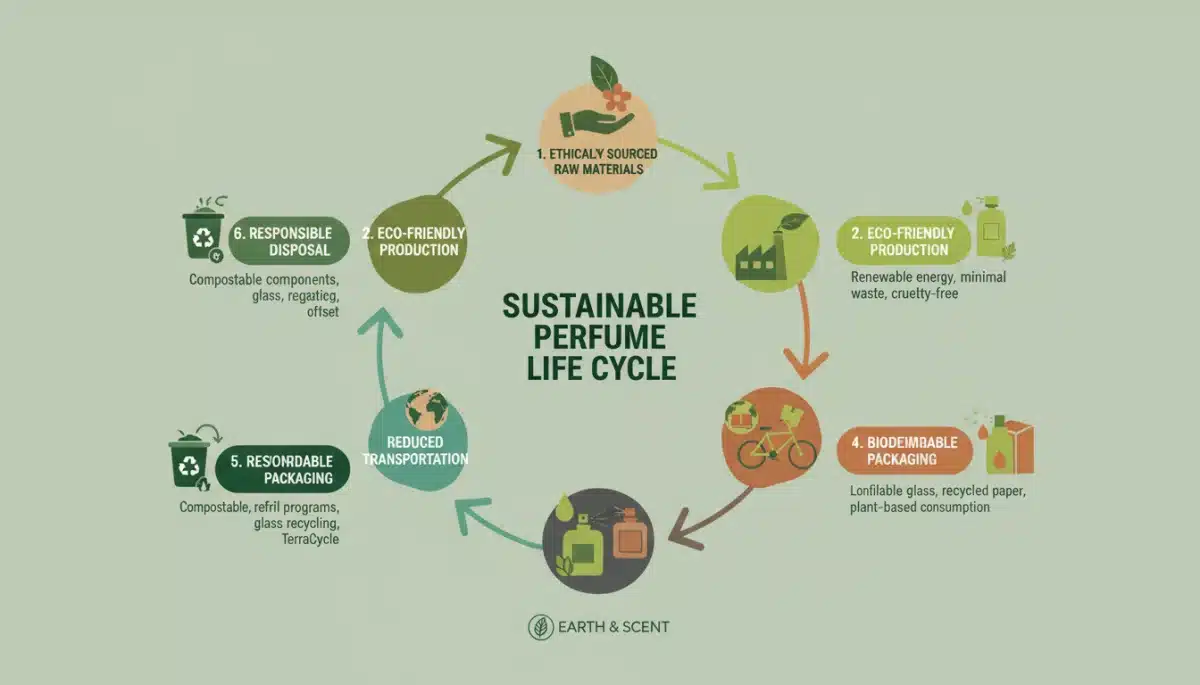
The Future of Fragrance: Innovation and Responsibility
The trajectory for sustainable fragrance brands in the US is one of continuous innovation and heightened responsibility. As consumer awareness grows, so does the imperative for brands to push the boundaries of what is possible in eco-conscious perfumery.
Future developments are expected to focus on advanced green chemistry, further reducing the environmental impact of synthetic ingredients and exploring novel biodegradable materials.
The industry will also likely see an increase in circular economy models, such as widespread refill programs and upcycling initiatives.
These advancements will not only benefit the environment but also offer consumers even more refined and ethically sound choices. The landscape of sustainable fragrance brands is dynamic, promising exciting developments in the years to come.
Advancements in Green Chemistry
Green chemistry principles are increasingly being applied to fragrance formulation, aiming to reduce hazardous substances and minimize waste throughout the production process.
This involves developing new synthetic ingredients that are safer for human health and the environment, along with more efficient extraction methods for natural raw materials.
Innovations in biotechnology and fermentation are also playing a significant role, allowing for the creation of complex scent molecules with a lower environmental footprint than traditional methods.
These scientific advancements are crucial for expanding the palette of sustainable fragrance brands without compromising performance or artistry.
The integration of these cutting-edge technologies will enable the industry to create truly sustainable and high-performing fragrances, addressing both ecological concerns and consumer desires for innovative scents.
Circular Economy Models and Refillables
The adoption of circular economy models is a critical step towards comprehensive sustainability in the fragrance industry. This involves designing products and systems that eliminate waste and pollution, circulate products and materials, and regenerate natural systems.
Refillable fragrance bottles are a prime example, allowing consumers to replenish their favorite scents without purchasing new packaging. Several sustainable fragrance brands are already implementing such programs, significantly reducing glass and plastic waste.
Beyond refills, the industry is exploring upcycling waste materials from other industries to create new fragrance components or packaging. These initiatives are vital for minimizing resource consumption and moving towards a truly regenerative system.
| Key Aspect | Description |
|---|---|
| Ethical Sourcing | Ensuring fair labor and environmental practices in ingredient acquisition. |
| Clean Formulations | Avoiding harmful chemicals; prioritizing natural & safe synthetic components. |
| Eco-Packaging | Utilizing recycled, recyclable, or biodegradable materials; promoting refills. |
| Transparency | Open disclosure of ingredients, sourcing, and environmental impact. |
Frequently Asked Questions About Sustainable Fragrance
A sustainable fragrance brand prioritizes ethical sourcing of ingredients, uses clean and safe formulations, and adopts eco-friendly packaging solutions. They also demonstrate transparency in their supply chain and manufacturing processes, minimizing their environmental footprint and ensuring social responsibility throughout their operations.
Not necessarily. While natural ingredients can be sustainable if ethically sourced, their extraction can sometimes lead to over-harvesting or deforestation. Sustainable synthetic ingredients, developed through green chemistry, can offer a more environmentally friendly alternative by reducing reliance on natural resources and minimizing pollution during production.
Packaging is extremely important. Traditional fragrance packaging often contributes significantly to waste. Sustainable brands focus on using recycled, recyclable, or biodegradable materials, and implement refillable bottle programs. This reduces the demand for virgin resources and helps diminish landfill waste, crucial for environmental protection.
Look for certifications like EWG Verified™, Cradle to Cradle Certified™, B Corp, or certifications from organizations like the Forest Stewardship Council (FSC) for packaging. These certifications indicate that a brand has met rigorous standards for environmental performance, social responsibility, and ingredient safety, providing third-party verification of their claims.
No, not at all. Leading sustainable fragrance brands are proving that eco-consciousness does not mean sacrificing quality or longevity. Advancements in natural ingredient extraction and green chemistry allow for the creation of complex, long-lasting, and luxurious scents that rival conventional perfumes, offering a truly premium experience.
Looking Ahead: The Evolving Landscape
The ongoing evolution of sustainable fragrance brands signifies a broader shift in consumer values and industry practices. This movement is not merely about alternative products but represents a fundamental reorientation towards ethical consumption and environmental stewardship.
As 2026 approaches, the market anticipates further innovations in ingredient technology and supply chain transparency. Consumers are encouraged to continue scrutinizing brand claims and supporting companies that demonstrate genuine commitment to sustainability, thereby driving continuous improvement across the sector.
The impact of these choices extends beyond personal well-being, contributing to global efforts for a more sustainable and responsible future for the entire beauty industry.
