
How to stretch running shoes for wide feet safely
Advertisements
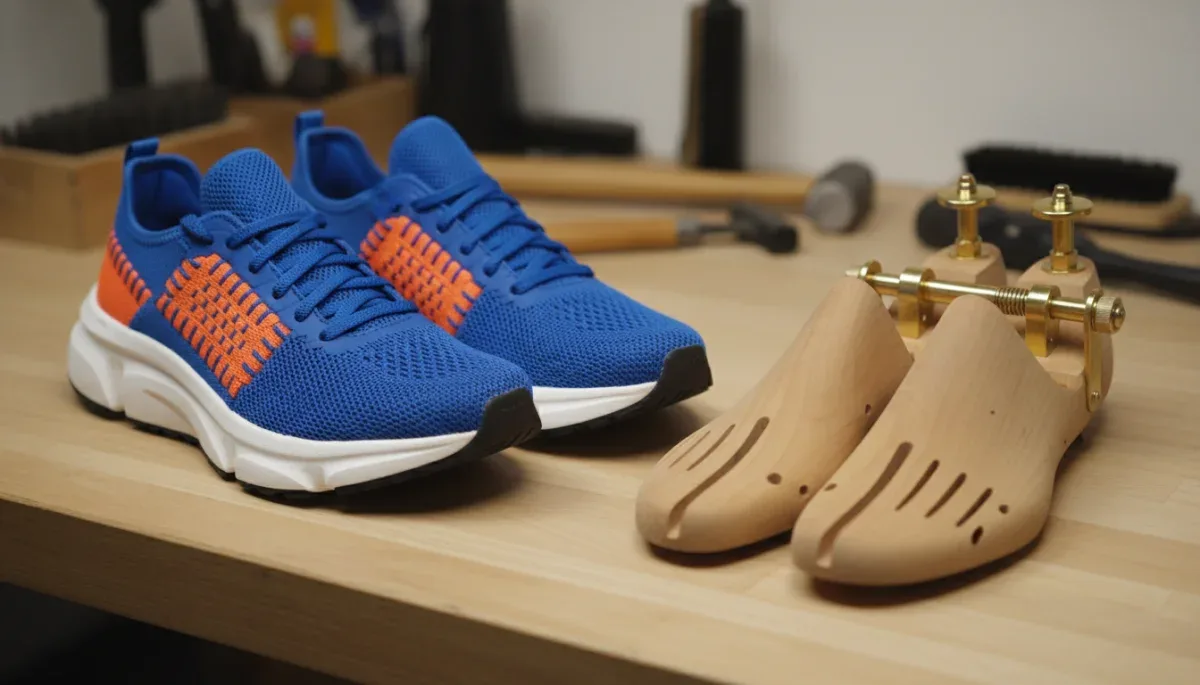
You can stretch running shoes for wide feet safely by applying controlled mechanical tension to the upper or by modifying your lacing technique to relieve forefoot pressure. These gentle adjustments allow synthetic textiles to relax slightly without tearing threads or compromising the structural stability of the shoe.
This process helps runners who deal with localized hot spots, mild toe-box crowding, or bunion discomfort, but it cannot expand the physical footprint of the firm rubber sole underneath. Understanding the physical boundaries of modern running footwear ensures you gain comfort while protecting the cushioning and alignment you paid for.
Understanding running shoe materials and their limits
Modern athletic footwear rarely relies on traditional leather. Instead, manufacturers build performance running shoes from engineered polyester mesh, circular knits, woven nylon, and thin thermoplastic polyurethane overlays that provide structure without adding weight. Because synthetic fibers resist natural moisture and elasticity compared to animal hides, they do not stretch in the same manner as work boots or casual dress shoes.
Advertisements
The upper material is bonded directly to an ethylene-vinyl acetate or block-copolymer foam midsole using high-strength industrial contact cement. This bond creates a permanent perimeter known as the lasting board. While the flexible woven fabric of the upper can yield a few millimeters of relief under sustained tension, the solid midsole base remains completely rigid in its width. Attempting to stretch a running shoe beyond its lasting limits will simply cause the fabric to bulge awkwardly over the edge of the sole.
When you attempt to stretch running shoes for wide feet, your goal is to coax the weave of the fabric into a slightly wider orientation and relax structural laminates. Recognizing which components of your shoe will give and which will resist prevents accidental tears, seam blowouts, and ruined cushioning units.
Key material properties in athletic shoes
- Engineered mesh: Offers moderate horizontal stretch when fibers are tensioned gradually over twenty-four hours.
- Knit uppers: Contain elasticized threads that conform naturally to wider feet, often needing minimal mechanical assistance.
- Thermoplastic overlays: Welded plastic bands that resist stretching and retain their shape under pressure.
- Stitched synthetic leather: Yields slightly under mechanical pressure but requires slow, incremental adjustment to avoid popped seams.
Using a two-way mechanical shoe stretcher safely
A dedicated two-way shoe stretcher is the most reliable tool for creating lasting space across the forefoot. These devices feature a solid beechwood or heavy-duty plastic foot form operated by a threaded metal rod that spreads the front of the device horizontally when turned. Premium models include movable plastic contour plugs that insert into specific pre-drilled holes, allowing you to target protruding bunions or the joint of the little toe without widening unaffected areas.
Advertisements
Before inserting the stretcher, inspect the interior of your shoe and remove the factory insole. Removing the insole prevents its cushioned perimeter from becoming crushed, creased, or misshapen during the widening process. Next, insert the closed stretcher completely into the shoe until the wooden toe block touches the front of the toe box. Turn the lengthening wheel until the heel block seats firmly against the back counter, then slowly rotate the widening handle clockwise.
Stop turning the handle the moment you feel firm resistance and see the upper fabric tighten outward. Do not force the mechanism into an extreme stretch on your first attempt. Leave the stretcher in place for eight to twelve hours, allowing the synthetic fibers to set under tension. Once the time has elapsed, release the mechanism, replace the insole, and test the fit while wearing your standard running socks. If the shoe still pinches, repeat the process with an additional quarter-turn.
Modifying your lacing pattern for immediate forefoot relief
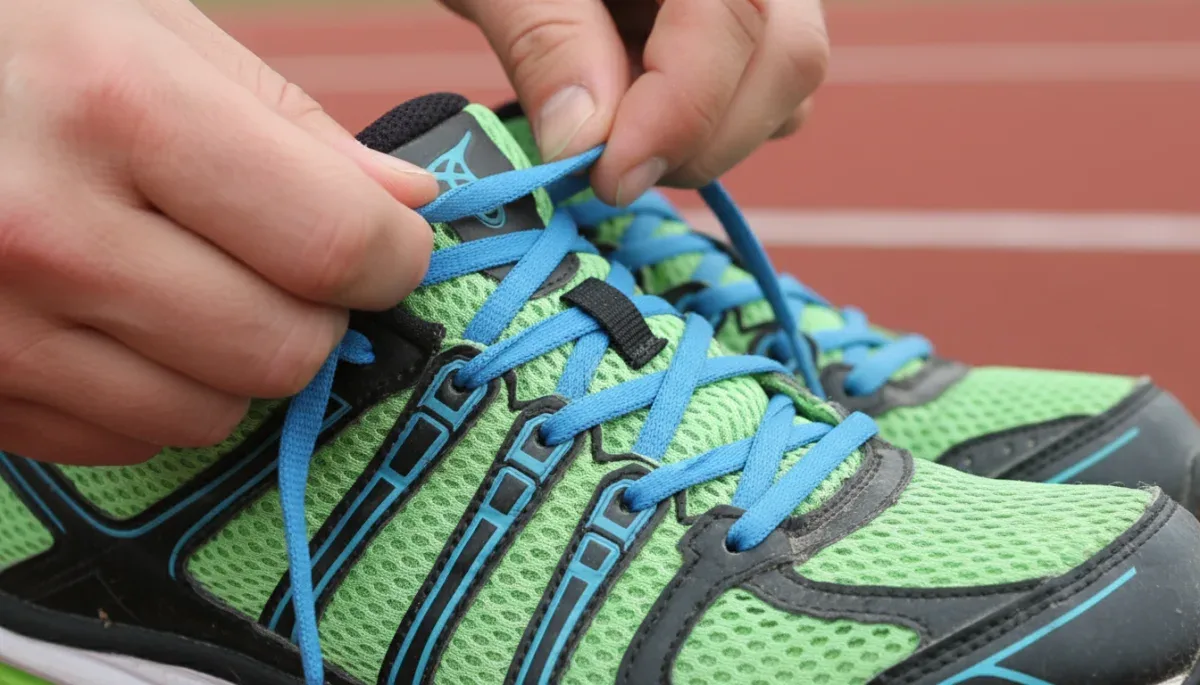
Many runners assume their shoes are fundamentally too narrow when the actual culprit is a restrictive factory lacing configuration. Standard crisscross lacing exerts continuous inward pressure across the entire length of the eyelet chain, pulling the medial and lateral sides together over the widest part of your foot. By altering how the lace weaves through the bottom third of the eyelets, you can instantly add room across the metatarsals.
One proven method is wide-forefoot lacing, sometimes referred to as window or box lacing. This technique removes diagonal cross-overs in areas where your foot requires maximum expansion. By running the laces vertically along the outer eyelets before crossing them higher up, the lower quarter of the upper can spread naturally with each stride, eliminating constriction across your widest foot joints.
Another approach involves skipping the lowest pair of eyelets entirely. If your shoes feel tight exclusively across the base of your toes, unthread the laces and begin the lacing pattern at the second eyelet from the bottom. This leaves the forward fabric completely unconstrained by lace tension, providing an immediate increase in volume without requiring any physical modification to the shoe materials.
Steps for wide-forefoot window lacing
- Unlace the shoe entirely down to the bottom eyelet pair.
- Thread the lace straight across the bottom on the underside and pull both ends equal.
- Run each lace end straight up the outside to the second eyelet without crossing over.
- Thread the lace through the second eyelet from the exterior to the interior to create an open vertical window.
- Resume standard crisscross lacing from the third eyelet upward through the ankle collar.
Targeted break-in techniques using thick socks and wear
If you prefer not to purchase specialized hardware, you can achieve modest expansion using your own body heat and controlled walking sessions. Footwear manufacturers design running shoes to handle dynamic multidirectional forces, making walking at room temperature a safe and natural method for adapting the upper to your proportions.
To begin, put on two pairs of everyday athletic socks, or select a single pair of thick winter wool socks. Put on your running shoes and tie them with moderate, even tension across the instep. The added thickness of the socks will force the upper material outward beyond its normal resting posture, applying distributed lateral pressure across the forefoot and midfoot.
Wear the shoes around your home for thirty to forty-five minutes while performing light indoor activities. As your feet warm the air inside the shoe, the synthetic yarns soften slightly and conform to the bulkier profile. Avoid running or performing high-impact exercises while double-socked, as the excessive bulk alters your gait and risks causing foot blisters or ankle instability. After three to four indoor sessions, try on the shoes with your standard running socks to check your progress.
Dangerous stretching methods that ruin running shoes
The internet contains numerous suggestions for stretching footwear that were originally designed for traditional work boots or stiff formal shoes. Applying these techniques to modern athletic shoes almost always results in permanent damage, structural failure, or personal injury. Two of the most common and destructive practices involve hair dryers and water-filled plastic freezer bags.
Using a hair dryer or heat gun to soften running shoes is particularly hazardous. Running shoe midsoles are constructed from thermally molded foams that lose their resilience and structural integrity when exposed to direct heat. Furthermore, the specialized adhesives holding the upper, midsole, and rubber outsole together are heat-activated; excessive warmth liquifies the glue, leading to rapid delamination and complete separation of the shoe components.
The freezer method—placing bags of water inside shoes and allowing the liquid to expand into ice—is equally unreliable. Ice expands in all directions without precision, often bursting internal seams or puncturing the upper. Furthermore, prolonged freezing temperatures weaken the cellular walls of cushioning foams, leaving your midsole brittle and significantly reducing shock absorption on your subsequent runs.
Techniques to avoid on performance footwear
- High-heat hair dryers: Melts structural bonding agents and shrinks thermoplastic overlays.
- Freezing water bags: Distorts internal heel counters and compromises foam shock absorption.
- Alcohol saturation: Degrades water-repellent treatments and dissolves internal stitch coatings.
- Submersion in boiling water: Warps the footbed, shrinks strobel stitching, and voids retail warranties.
Recognizing when stretching will not solve your fit issue
Stretching techniques can provide two to three millimeters of perimeter relief, which is often enough to eliminate mild friction against a pinky toe or relieve minor instep tightness. However, no amount of mechanical tension can compensate for a shoe that is fundamentally built on the wrong platform for your anatomical shape. If your foot rests improperly on the underlying sole, continuing to stretch the upper will not protect you from running injuries.
To determine if your shoe is fundamentally too narrow, perform the classic insole test. Remove the stock insole from your running shoe and place it flat on a hard floor. Stand on top of the insole with your full weight, wearing your typical running socks. Look down at your forefoot: if the sides of your toes, the bunion joint, or the base of your fifth metatarsal spill over the perimeter of the foam insole by more than a quarter of an inch, the shoe base itself is insufficient for your skeletal structure.
Running in shoes where your foot overhangs the firm midsole causes your foot to press against the unsupported sidewalls. This creates lateral instability, blisters, premature wear on the upper mesh, and potential nerve entrapment such as Morton's neuroma. When the insole test reveals substantial overhang, the only healthy solution is to replace the shoe with an official wide (2E) or extra-wide (4E) size from a brand that molds footwear on wider lasts.
At a glance
| Factor | What to know |
|---|---|
| Maximum stretch | Expect two to three millimeters of relief across the forefoot upper. |
| Sole modification | The rubber and foam midsole cannot be widened by any method. |
| Safest technique | A two-way wooden shoe stretcher combined with wide-foot lacing patterns. |
| Heat hazards | Applying external heat dissolves factory glues and ruins midsole cushioning. |
Frequently asked questions
Can you stretch running shoes by a full shoe size?
No, you cannot stretch running shoes by a full width or length size. Performance running shoes feature non-elastic synthetic fibers and rigid molded midsoles that limit expansion to a few millimeters. Attempting to force a full-size increase will tear the mesh fabric or burst the structural seams.
Will stretching a running shoe void the manufacturer warranty?
Yes, aggressive mechanical stretching or applying heat will void your manufacturer warranty. Most athletic brands cover defects in materials and craftsmanship but exclude damage caused by alterations, heat exposure, or intentional mechanical distortion. Adjusting your lacing patterns remains the only modification that never voids return policies.
How long should you leave a shoe stretcher inside running shoes?
Leave a mechanical shoe stretcher in place for eight to twelve hours per session. Synthetic running materials require sustained, moderate pressure to allow the polymer weave to relax without overstraining fibers. If additional width is needed after testing, apply another quarter-turn for an additional eight hours.
Do wide lacing techniques really make shoes feel wider?
Yes, parallel and window lacing patterns make running shoes feel noticeably wider across the forefoot. By removing diagonal crossovers over the metatarsal heads, the upper fabric is permitted to expand naturally outward during foot strike rather than being pulled inward by tight lace tension.
The bottom line
Stretching running shoes for wide feet is effective for relieving localized pressure points, provided you use gentle mechanical tools and reconfigure your lacing rather than relying on damaging heat or freezing methods. Modest adjustments will loosen tight synthetic mesh, but they cannot alter the fixed dimensions of the foam base underneath. Before committing to stretching your new pair, verify that your retailer's return window has closed, because exchanging them for an official wide width is always the superior choice for your running health.
Written by
Lucas Bastos
Lucas Bastos writes about benefits for bestinyour.com. Each article explains how things work, compares published details such as prices, policies and program rules, and points readers to the official source before they decide.