
How to Store Perfume Bottles at Home to Prevent Oxidation
Advertisements
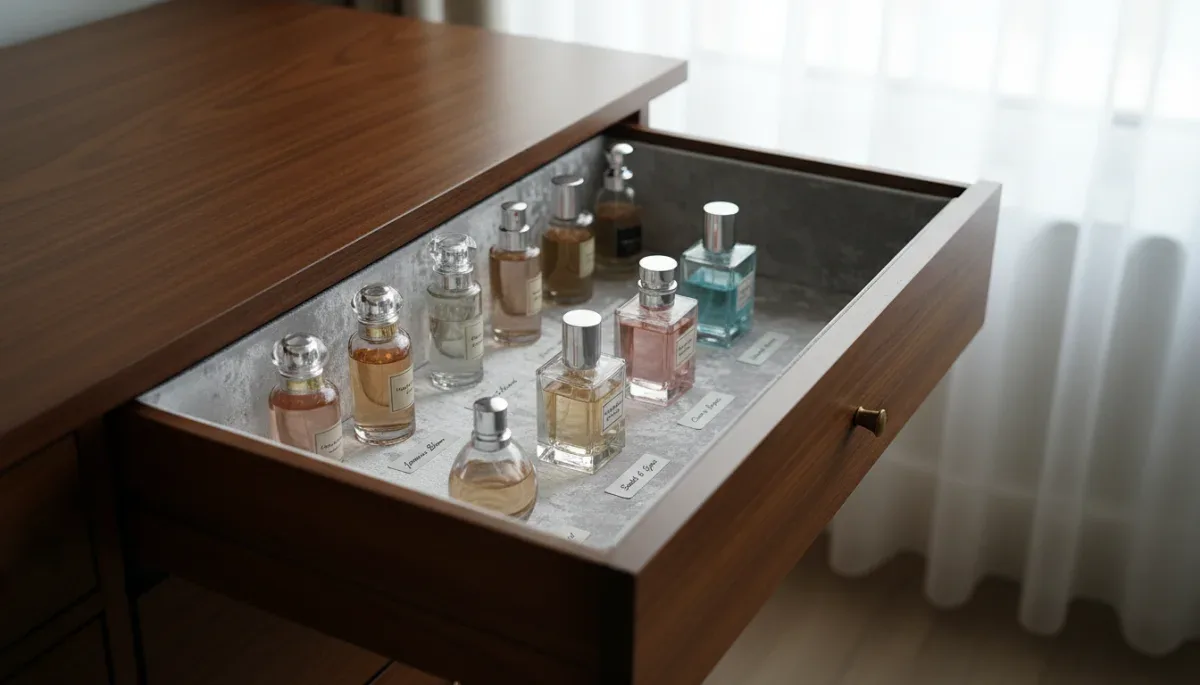
To store perfume bottles properly and prevent premature oxidation, keep your fragrances upright inside a dark, temperature-stable space such as a bedroom closet shelf or a deep dresser drawer. This method protects the delicate aromatic compounds from ultraviolet radiation, rapid temperature swings, and excessive moisture, which together constitute the primary causes of fragrance degradation. While this technique guarantees that your collection maintains its intended scent profile and sillage over many years, it requires sacrificing decorative vanity displays and resisting the convenience of keeping bottles on open bathroom counters.
Fragrance collectors, casual wearers, and beauty enthusiasts in the United States often invest significant resources into building a versatile wardrobe of scents, only to find that exposed bottles lose their sparkling top notes or turn sour within a couple of seasons. Commercial perfumes represent complex chemical solutions comprising volatile aromatic molecules, synthetic fixatives, distilled water, and pure denatured ethyl alcohol. When external environmental forces disrupt this delicate balance, chemical oxidation alters the fragrance permanently. Understanding how specific household environments affect perfume integrity allows you to make minor adjustments at home that safeguard your investment without requiring costly specialized equipment.
The chemical mechanisms behind perfume oxidation
Oxidation is a chemical process that occurs when oxygen interacts with volatile organic compounds contained within fragrance oils. Every time you depress the atomizer pump on a spray bottle, a minute volume of air enters the chamber to replace the liquid discharged. This introduced air contains oxygen, which gradually breaks down sensitive bonds within aromatic hydrocarbons, esters, terpenes, and aldehydes. While some exposure to ambient oxygen is unavoidable once a bottle is unsealed, the rate of this oxidation reaction depends heavily on environmental catalysts, particularly thermal energy and ultraviolet light photons.
Advertisements
Light acts as an aggressive chemical accelerant through a reaction known as photodegradation. Natural sunlight contains energetic ultraviolet A and ultraviolet B waves that penetrate clear glass containers with ease. These photons collide with complex aromatic molecules, breaking carbon-carbon double bonds and generating unstable free radicals. The most susceptible elements in any formulation are the volatile top notes, especially natural citrus oils like bergamot, lemon, grapefruit, and mandarin. Once photodegradation begins, these bright notes develop an acrid, metallic, or vinegar-like scent, while the heavier base notes like vanilla, amber, and patchouli may darken dramatically in color.
Thermal stability plays an equally decisive role in controlling molecular decay. High ambient temperatures supply the kinetic energy needed to accelerate chemical oxidation reactions, causing volatile compounds to evaporate and alter the balance between alcohol and oil. When a fragrance experiences repeated cycles of warming and cooling, pressure differentials inside the bottle fluctuate, speeding up the interaction between the liquid and the trapped oxygen sitting inside the neck, an area known as headspace. Maintaining a steady physical environment minimizes these molecular shifts and preserves the perfume as the master perfumer intended.
Choosing optimal household storage zones
The ideal environment to store perfume bottles safely is a dark, interior location that maintains a steady ambient room temperature between 55 and 68 degrees Fahrenheit year-round. Interior architectural spaces that lack exterior walls or windows offer the greatest thermal inertia, meaning they resist the outdoor weather swings common throughout North American winters and summers. When identifying the best spot in your residence, evaluate light exposure, ambient humidity, and natural air circulation before selecting a final storage home for your collection.
Advertisements
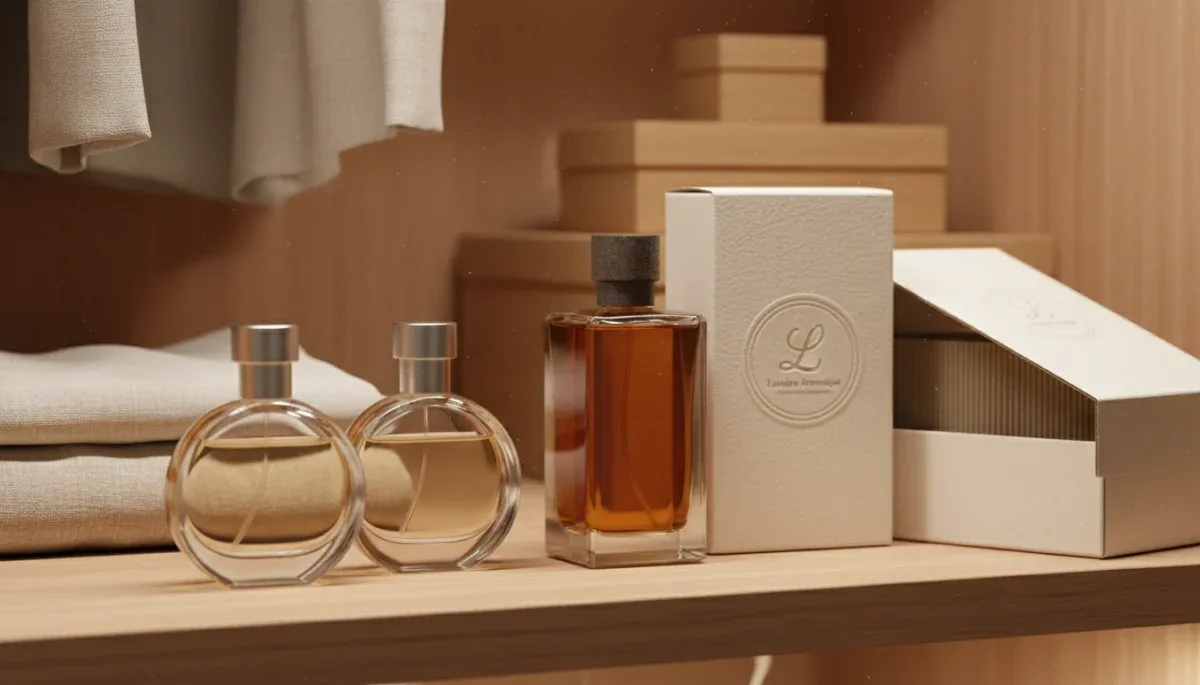
A walk-in bedroom closet or an enclosed wardrobe cabinet represents the gold standard for residential perfume storage. Because these areas remain dark throughout most of the day, they completely eliminate the risk of photo-oxidation caused by solar radiation or harsh overhead fluorescent lamps. Furthermore, closets located away from household heating registers and cooling units experience minimal ambient temperature oscillation. Storing bottles on an eye-level interior shelf ensures they stay upright and easily accessible while remaining shielded from direct drafts or accidental physical impacts.
Practical closet and cabinet storage configurations
- Dedicated wooden dresser drawers: Deep, felt-lined drawers protect bottles from sudden movements, keep ambient light out entirely, and provide reliable thermal insulation against seasonal room temperature changes.
- Enclosed armoires and linen cupboards: Storing collections inside solid wood or opaque composite cabinets maintains complete darkness while keeping bottles away from natural foot-traffic hazards.
- Secondary interior shelving: Solid upper shelves inside interior hallway closets offer stable, draft-free spaces that remain consistently temperate throughout changing weather conditions.
If you prefer keeping your collection in a bedroom or dressing area, consider storing your bottles inside dedicated opaque decorative storage boxes rather than out in the open. Heavy lidded boxes made of wood, dense paperboard, or lined leather provide a dark microclimate while allowing you to group fragrances by scent family, season, or concentration. Ensure that whatever container you choose permits every bottle to stand completely upright to minimize the liquid surface area exposed to internal trapped air.
Why bathrooms and windowsills destroy fine fragrances
The most common and destructive household location for perfume storage is the residential bathroom. While displaying ornate flacons on a decorative marble countertop, mirrored tray, or floating shelf next to the vanity mirror seems aesthetically pleasing, bathrooms subject delicate fragrances to the exact triad of environmental stresses that accelerate decay: intense heat, elevated humidity, and fluctuating artificial light. Every time a hot shower or bath runs, room temperatures surge rapidly while relative humidity often peaks above eighty percent.
Excess humidity affects both the exterior and interior mechanics of perfume bottles. Over time, warm water vapor works its way beneath loose-fitting caps, corroding metallic spray collars, degrading rubberized seals inside the atomizer pump, and sometimes seeping into screw-top formulations. Once the structural integrity of the pump mechanism deteriorates, external moisture and ambient microbes can contaminate the alcohol solution, destabilizing delicate natural absolutes and causing cloudiness, sedimentation, or accelerated spoilage. Furthermore, high humidity causes paper labels to peel and protective cardboard boxes to develop mildew.
Windowsills and exposed dressing tables represent an equally severe threat due to direct solar radiation and localized greenhouse effects. Sunlight passing through window glass concentrates radiant heat directly onto glass perfume flacons, creating intense thermal hotspots that trigger rapid molecular breakdown. Even during cold winter months, sun streaming through a windowpane can heat a glass bottle well above ambient room temperature, only for the bottle to chill rapidly once night falls. This daily thermal cycling forces air expansion and contraction within the bottle neck, pulling in fresh oxygen and ruining your fragrance within months.
The protective power of original packaging
One of the most effective, zero-cost methods to store perfume bottles securely is to keep each fragrance inside its original manufacturer packaging. Perfume packaging designers and cosmetic chemists engineer exterior boxes specifically to insulate the product during overseas freight, warehouse holding, and retail presentation. The thick, corrugated interior sleeves, rigid cardstock, and snug cardboard inserts found inside perfume boxes are designed to absorb physical shocks, cushion glass walls, and block one hundred percent of incident light.
Retaining original boxes also establishes an extra thermal barrier that buffers the bottle against rapid room temperature changes. A boxed perfume resting on a closet shelf experiences significantly slower thermal transmission during hot summer days than a bare glass bottle exposed to open air. This micro-insulation prevents sudden spikes in molecular agitation, keeping delicate fragrance oils stable over extended periods. Additionally, keeping the packaging intact preserves product lot batch codes, ingredient listings, and manufacture details that prove useful when tracking formulation dates or verifying authenticity.
Key advantages of retaining manufacturer packaging
- Absolute photoprotection: Opaque outer cartons eliminate all direct, ambient, and artificial light, stopping photochemical decay before it begins.
- Thermal dampening: The dead-air space between the outer box and the inner bottle reduces the speed of localized temperature shifts.
- Physical stability: Fitted inserts prevent tall, narrow flacons from tipping over, preventing catastrophic drops and cracked atomizer seals.
- Protection against oxidation during transport: Boxed bottles remain stable when moving homes, traveling, or undergoing seasonal storage reorganization.
If saving dozens of individual cardboard boxes feels cumbersome or visually cluttered, consider investing in a dedicated storage case equipped with modular foam dividers. Specialized hobbyist cases designed for essential oils, camera optics, or cosmetics provide identical shock absorption, light exclusion, and organized upright positioning without requiring you to retain stacks of mismatched commercial packaging across your shelves.
Navigating temperature swings and refrigeration myths
A prevalent discussion among fragrance enthusiasts concerns whether storing perfume bottles in a kitchen refrigerator or a dedicated skincare cooler extends their shelf life. While the core intuition—that cooler temperatures slow chemical oxidation—is chemically sound, domestic kitchen refrigerators introduce several practical risks that can inadvertently harm fine fragrance formulations. Domestic refrigerators maintain high internal humidity levels, expose contents to strong food odors, and vibrate constantly due to internal compressor cycles.
Moreover, taking a cold perfume bottle out of a forty-degree refrigerator into a warm, humid seventy-two-degree room induces immediate water condensation on the cold glass surface. If this condensation collects around the crimped collar of the spray nozzle, capillary action can pull moisture past the gasket and directly into the fragrance reservoir. Furthermore, extreme cold can cause natural waxes, resinoids, and heavier base oils to precipitate out of the alcohol solution. Once these heavy compounds crystallize or separate, they rarely re-dissolve completely at room temperature, altering the texture and olfactory balance of your scent.
If you choose to use dedicated refrigeration, opt for a thermoelectric beauty cooler or an electronic wine refrigerator calibrated specifically between 52 and 60 degrees Fahrenheit. Thermoelectric units do not use mechanical compressors, eliminating vibrations that disturb liquid equilibrium, and wine chillers maintain stable, controlled humidity levels without extreme cold. However, for the vast majority of consumer collections, an interior, climate-controlled household closet remains entirely sufficient, simpler to manage, and free from the risks associated with excessive chilling and mechanical condensation.
Managing headspace and decanting as bottles empty
As you enjoy your perfume and the liquid level drops, the ratio of liquid fragrance to trapped air within the container changes. This expanding air volume inside the bottle is known in perfumery as headspace. A bottle that is ninety percent full contains very little oxygen, meaning chemical degradation proceeds at an imperceptibly slow pace. Conversely, a bottle that is down to its final ten or fifteen percent of liquid contains an abundance of oxygen trapped inside the chamber, which accelerates oxidation of the remaining perfume oils.
When rare, vintage, or high-value niche fragrances reach low levels, standard ambient storage precautions may no longer suffice to halt noticeable aromatic drift. The increased oxygen volume continually reacts with the small pool of remaining perfume, often degrading delicate citrus or herbal top notes within six to twelve months. To counteract this phenomenon, proactive collectors frequently utilize airtight glass atomizers to decant and consolidate remaining volumes, thereby minimizing surface exposure to ambient air.
Techniques to minimize headspace damage
- Decant into smaller glass containers: Transfer the remaining liquid from a mostly empty large bottle into a clean five-milliliter or ten-milliliter amber glass spray vial to eliminate excess oxygen contact.
- Prioritize older, low-volume bottles: Rotate your fragrance usage so that bottles with significant headspace are finished before opening duplicate or similar formulations.
- Keep atomizers firmly attached: Never unseal, unscrew, or disassemble crimped spray pumps unless actively decanting, as breaking factory airtight seals dramatically accelerates air exchange.
- Avoid frequent shaking: Shaking bottles introduces microscopic air bubbles into the liquid column, temporarily increasing the contact surface between dissolved oxygen and aromatic oils.
When selecting decanting vials, prioritize medical-grade borosilicate glass or dark amber and cobalt bottles equipped with airtight Teflon-lined screw caps. Clear plastic atomizers should be avoided for long-term storage because various polymers permit slow gas permeation over time and can leach plasticizers directly into high-concentration alcohol solutions, degrading the original olfactory composition.
Recognizing the signs of perfume oxidation and spoilage
Despite your best efforts to store perfume bottles in pristine conditions, fragrances can eventually undergo chemical alterations over decades of ownership. Being able to distinguish between harmless natural maturation and true oxidative spoilage helps you decide whether a scent remains wearable or needs to be discarded. Natural maturation, often called maceration, occurs when heavier base notes like natural vanilla, sandalwood, and oud blend deeper over time, frequently accompanied by a gradual, uniform darkening of the juice.
True oxidation, by contrast, manifests as a sharp, unpalatable degradation in scent quality. The earliest and most reliable indicator of oxidative spoilage is the total collapse of the top notes. When sprayed onto test paper or skin, an oxidized perfume often opens with an unmistakable smell resembling acetone, nail polish remover, sour celery, or oxidized cooking oil. While the heavier dry-down notes might still smell moderately recognizable after thirty minutes, the opening and heart notes lose their complexity, radiance, and projection.
Visual changes also signal chemical destabilization. While gradual ambering from natural vanilla is normal, sudden discoloration—such as a pale pink liquid turning dull murky brown, or a clear marine fragrance turning cloudy yellow—indicates photochemical breakdown. If you observe cloudy precipitates, suspended floating flakes, or separation lines where oils have fallen out of alcohol suspension, the formulation's physical stability has broken down. While applying oxidized fragrance generally causes nothing worse than olfactory disappointment, individuals with sensitive skin should exercise caution, as oxidized terpenes can occasionally trigger contact skin sensitivity.
At a glance
| Storage factor | What to know |
|---|---|
| Optimal location | Interior bedroom closets and deep dresser drawers provide stable temperatures and total darkness. |
| Sunlight exposure | Ultraviolet rays break molecular bonds in fragrance oils, permanently destroying delicate top notes. |
| Bathroom counters | Rapid temperature surges and extreme humidity corrode metal sprayers and introduce internal moisture. |
| Headspace management | Transferring low-volume fragrances into small amber vials slows down oxidative degradation. |
Frequently asked questions
Can I keep my perfume in the bathroom cabinet?
No, storing perfume in a bathroom cabinet remains ill-advised. Even inside closed cabinetry, the extreme heat spikes and dense humidity generated by daily showers penetrate standard packaging, destabilizing volatile oils and corroding metal atomizer mechanisms over time.
Does clear glass make perfume oxidize faster than dark glass?
Yes, clear glass permits ultraviolet and ambient light waves to pass unhindered into the liquid formulation. Opaque, tinted, or dark amber glass bottles block harmful light frequencies, offering significantly superior native protection against photochemical degradation.
What temperature is ideal for long-term perfume storage?
The ideal temperature range sits between 55 and 68 degrees Fahrenheit in a dry environment. Consistent, stable temperatures prevent the thermal expansion and molecular agitation that accelerate oxidation reactions inside partially filled glass bottles.
Can an oxidized perfume be fixed or restored?
No, perfume oxidation is an irreversible chemical process that permanently alters molecular structures. Once aromatic esters and aldehydes break down into sour, acidic byproducts, no chemical additive, dilution, or filtering process can restore the original scent profile.
The bottom line
Preserving your fragrance collection against chemical oxidation comes down to controlling four critical environmental variables: light exposure, heat fluctuations, moisture, and excess air. Storing your bottles upright inside their original packaging on a dark, interior closet shelf eliminates the most aggressive catalysts of molecular decay without requiring specialized equipment. Before re-arranging your vanity or organizing a long-term storage space, verify that your selected location remains completely isolated from direct window sunlight and exterior bathroom steam.
Written by
Mariana Viana
Mariana Viana writes about makeup, perfumes and shoes for bestinyour.com. Each article explains how things work, compares published details such as prices, policies and program rules, and points readers to the official source before they decide.