
Setting powder vs finishing powder for oily skin
Advertisements
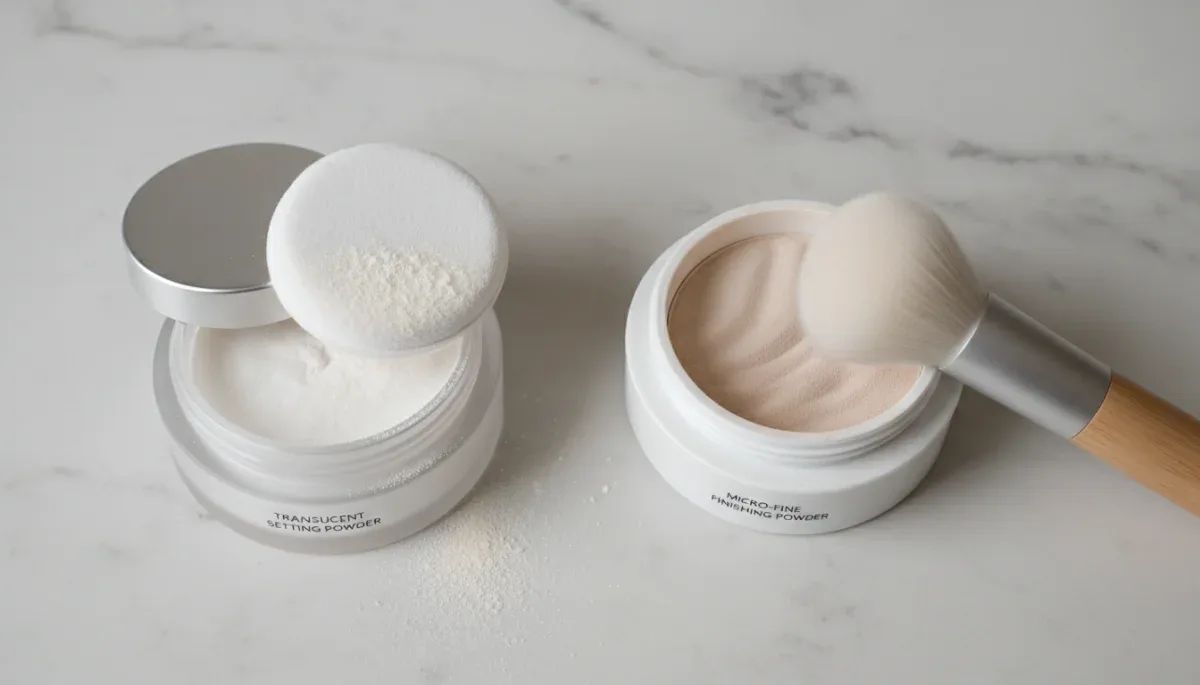
Setting powder locks liquid and cream cosmetics into place while absorbing sebum throughout the day, whereas finishing powder smooths skin texture and minimizes the visual appearance of pores just before you step out. For oily complexions, choosing the wrong category often leads to midday slip or visible separation around the nose, forehead, and chin.
This distinction matters most to people whose skin produces excess oil within hours of foundation application, but using both products incorrectly can create an uncomfortable, cakey barrier. Knowing which formula targets moisture absorption and which one provides an optical blur will help you establish a dependable routine that controls shine without flattening your facial dimension.
The primary purpose of setting powder for oil control
Setting powder is formulated specifically to transition wet makeup formulations, such as liquid foundation, tinted moisturizer, and concealer, into a stable, transfer-resistant state. When oil glands produce active sebum throughout the day, the oils naturally mix with the emulsifiers in your base makeup. Without a barrier to bind that moisture, foundation breaks down, slips across the surface of the skin, and pools in natural expression lines.
Advertisements
The core mechanism of setting powder relies on oil-absorbing minerals and starches that sit directly on top of liquid cosmetics. By creating an absorbent bridge between your skin and external air, setting powder gives your base products structural integrity. Most formulas come in loose or pressed formats and offer translucent or skin-toned coverage options to match various complexions.
For oily skin, translucent loose setting powders offer the highest degree of hold because they contain fewer added binders than pressed varieties. Pressed compacts require waxes or oils to hold their solid shape in the pan, which can occasionally reduce overall absorbency for individuals with pronounced shine across the central T-zone.
Key qualities of setting powders
- Formulated with starch, talc, or silica designed to absorb surface oil and perspiration.
- Extends foundation wear time by locking down emollients and preventing transfer.
- Available in translucent variants and tinted shades to reinforce base coverage.
- Applied with pressing tools such as powder puffs or dense flat sponges.
How finishing powder alters optical texture
Finishing powder focuses on aesthetics and light reflection rather than mechanical oil absorption. While setting powder manages the longevity of your makeup, finishing powder functions as a cosmetic filter designed to soften the appearance of fine lines, texture, and enlarged pores under natural and artificial lighting. It is typically applied as the absolute final step in your complexion routine.
Advertisements
Finishing powders are milled to an exceptionally fine particle size, often relying on spherical silica, mica, or polymethylsilsesquioxane to scatter incoming light across the skin. This optical scattering effect reduces the hard shadows cast by textured pores, which frequently appear more prominent on oily skin types due to expanded sebaceous follicles.
Because finishing powders are designed to sit delicately on the surface of set makeup, they contain little to no binding capability for liquid cosmetics. Applying a finishing powder directly over wet foundation causes the micro-fine particles to clump into uneven patches, leaving your face with rough texture rather than a diffused, airbrushed finish.
Key qualities of finishing powders
- Ultra-fine, micronized particle size engineered for visual smoothing and light diffusion.
- Provides little structural hold or sebum absorption against active oil production.
- Prone to creating camera flashback if applied heavily or formulated with excess silica.
- Best applied sparingly with a large, feathery brush using gentle sweeping motions.
Key ingredient differences that affect oily skin
The functional gap between setting and finishing powders stems directly from their raw ingredient lists. Setting powders for oily skin frequently rely on ingredients like talc, corn starch, rice starch, kaolin clay, and calcium carbonate. These mineral and plant-based substances possess high porosity, allowing them to draw in liquid lipids and hold them suspended away from your foundation pigments.
In contrast, premium finishing powders often list pure silica, dimethicone vinyl dimethicone crosspolymers, or synthetic fluorphlogopite as their primary components. While silica can temporarily absorb small quantities of surface moisture, its primary industrial function in high-end cosmetic powders is ball-bearing lubrication and light refraction. The spherical particles roll across the skin surface to create a velvety slip that minimizes visible friction.
For someone with oily skin, relying exclusively on a pure silica finishing powder to control oil will almost certainly result in makeup failure by midday. Once sebum production exceeds the minimal absorption limit of the silica, the excess oil pools above the powder, creating an unnatural, separated shine that looks uneven in daylight.
Common ingredients by powder category
- Talc: A classic absorbent mineral that provides slip, opacity, and consistent hold.
- Corn or rice starch: Plant-derived starches that draw in sebum without drying out deeper skin layers.
- Kaolin clay: A dense mineral powder ideal for persistent oiliness across the forehead and nose.
- Spherical silica: A light-scattering mineral used in finishing powders for optical diffusion.
Application techniques and tool selection for oily complexions
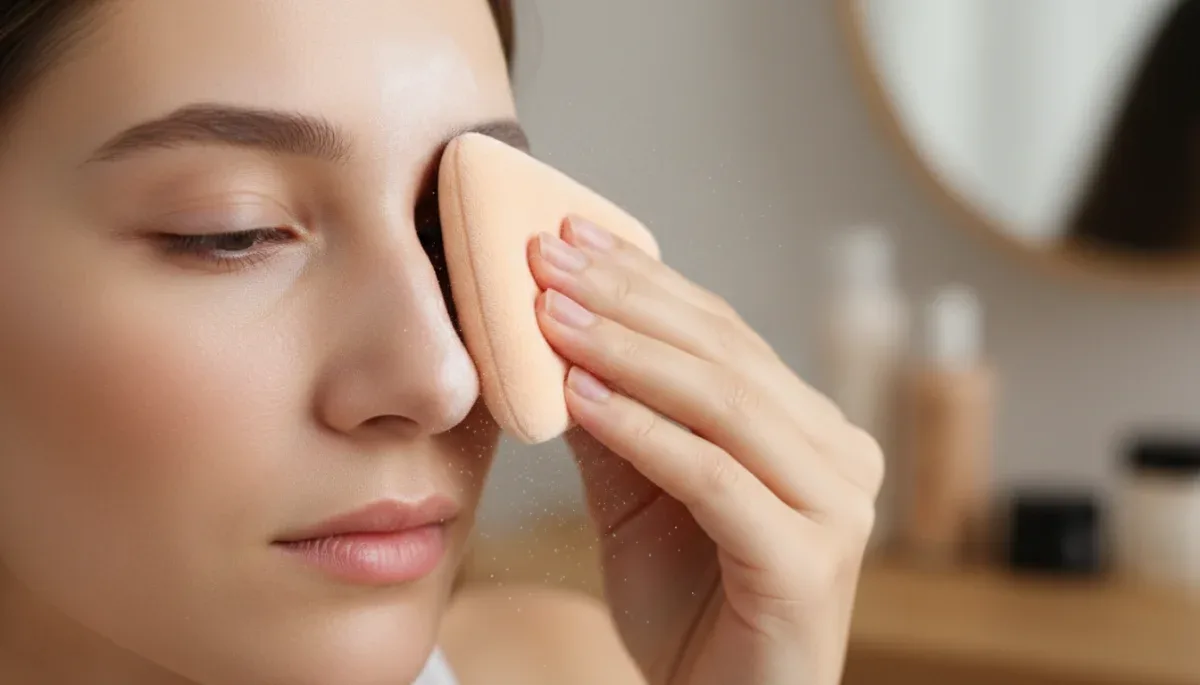
Tool selection determines whether your powder controls oil effectively or settles into prominent facial lines. When applying setting powder to oily skin, sweeping a fluffy brush across wet foundation often displaces your coverage and deposits an inadequate amount of product. Instead, a velour powder puff or a slightly damp makeup sponge provides the mechanical pressure needed to bind powder into foundation.
To set high-shine areas like the nose and chin, pick up a moderate amount of setting powder with your puff, pat it against the back of your hand to distribute the product evenly through the velour fibers, and press firmly into the skin. This rolling and pressing motion forces the absorbent particles into microscopic crevices where oil breaks through first, ensuring consistent wear.
Finishing powder requires the opposite approach. Because you only want a whisper-thin veil of light-diffusing particles, use a soft, domed brush with long, flexible bristles. Swirl the brush lightly in the container, tap off all visible excess, and dust it across the high points of your face in downward strokes to avoid raising facial hair or disturbing the set foundation below.
Application steps for balanced wear
- Apply your liquid or cream complexion products and blend until seamless.
- Press loose setting powder into oily zones using a velour puff with firm pressure.
- Allow the setting powder to integrate for one to two minutes before dusting away excess with a clean brush.
- Apply powdered blushes, bronzers, or contour products over your set base.
- Gently sweep a micro-fine finishing powder across the entire face using a light, feathery brush.
Can you use both powders together on oily skin?
Layering both setting powder and finishing powder is standard practice in photographic and event makeup, but it demands careful product restraint on oily complexions. The risk of layering multiple dry products over an active sebum barrier is heavy accumulation, commonly referred to as caking. When makeup cakes, natural skin movement forces the thick paste to crack, accentuating the very texture you aimed to conceal.
If you choose to use both, designate specific zones for each product rather than coating your entire face in multiple heavy layers. Concentrate your oil-absorbing setting powder exclusively on your oil-prone regions, such as the center of the forehead, the bridge and sides of the nose, and the chin. Keep the perimeter of your face lightly powdered or completely bare if those zones are naturally dry.
Reserve your finishing powder for the areas where enlarged pores or rough surface texture are most visible in natural lighting, often the apples of the cheeks and between the brows. By applying each formula only where its active properties solve a specific problem, your base remains lightweight, breathable, and resilient against midday shine.
Avoiding flashback and chalkiness under artificial lighting
Flashback occurs when bright camera flashes bounce off reflective ingredients in your makeup, creating an eerie white cast on the skin in photographs. While this phenomenon can happen with any powder containing titanium dioxide or zinc oxide, it is most notorious with pure silica finishing powders applied too generously over oily skin.
Because oily complexions often prompt people to reapply powder throughout the day, using a finishing powder for touch-ups multiplies the risk of a ghostly white cast. The microscopic silica beads build up in clusters, creating a reflective shield that bounces direct flash photography straight back into the camera lens.
To avoid chalkiness and flashback, never use finishing powder for midday shine touch-ups. Instead, blot excess oil with plain blotting papers or single-ply tissue first, then use a sheer, tinted setting powder pressed lightly with a puff. This preserves the matte balance of your makeup without stacking light-refracting minerals that ruin evening photography.
At a glance
| Factor | What to know |
|---|---|
| Main function | Setting powder anchors wet base products; finishing powder provides an optical blurring veil. |
| Oil absorption | Setting formulas absorb heavy sebum; finishing powders offer minimal moisture control. |
| Primary tools | Use a velour puff for setting powder and a loose, fluffy brush for finishing powder. |
| Touch-up utility | Only setting powder or blotting paper should be used for midday oil maintenance. |
Frequently asked questions
Can I skip setting powder and only use finishing powder for oily skin?
Skipping setting powder is generally ineffective for oily skin because finishing powders lack the absorbent ingredients required to anchor liquid foundation. Your base makeup will likely slide, crease, and break down within a few hours once active sebum surfaces.
Why does my finishing powder look white in flash photos?
Finishing powders frequently contain concentrated silica or mica particles that reflect bright artificial light directly back into camera sensors. Applying too much product or failing to blend thoroughly leaves a chalky film visible in flash photography.
Which powder should I apply first when doing my makeup?
Always apply setting powder first directly over your foundation and concealer to lock the wet base in place. Finishing powder comes at the absolute end of your routine, after cheek products, to smooth overall texture.
How do I touch up oily skin without making my powder cake?
Press oil-absorbing blotting paper over shiny areas to remove surface sebum before applying any additional powder. Once oil is removed, lightly press a translucent or tinted setting powder onto the skin using a clean puff.
The bottom line
Setting powder and finishing powder are distinct tools that solve different cosmetic challenges for oily skin. Setting powder is your functional foundation anchor that absorbs active oils and prolongs wear, while finishing powder is an optional aesthetic veil that scatters light to blur surface texture. Before purchasing either product, check the ingredient list on the manufacturer package to ensure the formula contains oil-absorbing minerals rather than pure optical silicas if your main challenge is shine control.
Written by
Maria Teixeira
Maria Teixeira writes about clothes, makeup and benefits for bestinyour.com. Each article explains how things work, compares published details such as prices, policies and program rules, and points readers to the official source before they decide.