
Advertisements
The birds are chirping, the frost is melting, and your closet is likely screaming for a refresh. Mastering a Seasonal Wardrobe Transition is the ultimate secret to shedding winter’s bulk and inviting in the vibrant energy of a new year.
Forget the chaos of overflowing bins and mismatched hangers as we step into Spring 2026. This guide simplifies your closet rotation by focusing on smart garment curation and strategic attire management to streamline your morning routine.
By prioritizing fluid silhouettes and breathable fabrics, you’ll transform your dressing area into an inspiring sanctuary. Let’s dive into these five pillars of apparel coordination to ensure you’re perfectly prepped for the warmer days ahead.
Advertisements
Step 1: The Essential Purge – Decluttering Your Closet
The first and arguably most critical step in any successful Seasonal Wardrobe Transition is a thorough decluttering process.
This involves more than just removing winter garments; it requires a critical evaluation of every item in your closet to determine its current relevance and utility.
Advertisements
Begin by taking everything out of your closet. This seemingly daunting task provides a clear overview of all your possessions, allowing you to assess each item without the distraction of a crowded space.
Spreading your clothes out on a bed or floor gives you the necessary perspective to make informed decisions about what stays and what goes.
As you sort through your items, categorize them into distinct piles: Keep, Donate/Sell, and Discard. This systematic approach ensures that no item is overlooked and helps you maintain focus during the decluttering phase, which is vital for an effective Seasonal Wardrobe Transition.
Evaluating Each Item Critically
When deciding whether to keep an item, ask yourself a series of probing questions. Does it fit well? Is it still in good condition? Have you worn it in the last year? Does it align with your current style and lifestyle?
Be honest with your answers. Holding onto clothes that no longer serve you only creates clutter and makes it harder to find the pieces you truly love and wear. This critical evaluation is a cornerstone of a functional Seasonal Wardrobe Transition.
- Consider the “one-year rule”: If you haven’t worn it in a year, it’s likely time to let it go.
- Assess condition: Discard anything stained, torn, or beyond repair, unless it holds significant sentimental value.
- Reflect on fit and style: Clothes that don’t fit or no longer suit your aesthetic should be rehomed.
Making Tough Decisions and Letting Go
Letting go of clothes can be emotionally challenging, especially items with sentimental value or those you spent a lot of money on. However, a cluttered closet can lead to decision fatigue and a lack of clarity when getting dressed.
Remember that decluttering is about making space for what truly serves you. Donating or selling items can give them a second life and bring joy to someone else, while also contributing to a more sustainable approach to fashion.
This mindset shift is essential for a successful Seasonal Wardrobe Transition.
Step 2: Smart Storage Solutions for Off-Season Apparel
Once you’ve decluttered, the next crucial step in your Seasonal Wardrobe Transition is to properly store your off-season items. Incorrect storage can lead to damage, mildew, and pest infestations, ruining your beloved garments before they ever see the light of day again.
Proper storage is not just about tucking things away; it’s about protecting your investment and ensuring your clothes remain in pristine condition for future use. This organized approach extends the life of your wardrobe and simplifies future seasonal transitions.
Consider the space you have available for storage and choose solutions that maximize efficiency and protection. Investing in quality storage containers and practices will pay dividends in the long run for your Seasonal Wardrobe Transition.
Cleaning and Repairing Before Storage
Before storing any item, ensure it is thoroughly cleaned. Even invisible stains can attract pests or become permanent over time. Dry clean items that require it, and wash everything else according to its care label.
Take this opportunity to make any minor repairs, such as sewing on a loose button or mending a small tear. Storing damaged items means they’ll be in the same condition (or worse) when you retrieve them, creating more work later.
This preventative measure is key for a smooth Seasonal Wardrobe Transition.
- Wash all washable items to remove dirt, oils, and odors.
- Dry clean delicate or structured garments as needed.
- Inspect for and repair any damage before packing away.
Choosing the Right Storage Containers
The type of storage container you choose significantly impacts the longevity of your clothes. Opt for breathable materials like cotton garment bags for items that need air circulation, such as wool coats or delicate dresses.
For sweaters and everyday winter wear, clear, airtight plastic bins are excellent for protection against dust, pests, and moisture.
Avoid vacuum-seal bags for natural fibers like wool and cashmere, as prolonged compression can damage the fibers.
Always include cedar blocks or lavender sachets to naturally deter moths and keep clothes smelling fresh. Proper container selection is a cornerstone of effective Seasonal Wardrobe Transition.
Step 3: Organizing Your Spring Wardrobe for Accessibility
With winter clothes neatly stored away, your focus shifts to organizing your spring wardrobe for maximum accessibility and visual appeal. An organized closet not only looks good but also makes getting dressed a more efficient and enjoyable experience.
Think about how you use your closet daily and arrange items in a way that makes sense for you. Grouping similar items together, whether by type, color, or occasion, can significantly reduce the time spent searching for outfits. This strategic organization is vital for a smooth daily routine.
Proper organization also helps you identify any gaps in your spring wardrobe, preventing impulse purchases and encouraging more thoughtful additions.
A well-organized closet supports a more mindful approach to fashion, aligning with the goals of a seamless Seasonal Wardrobe Transition.
Categorizing and Grouping Garments
Start by categorizing your spring clothes. Hang dresses, skirts, blouses, and jackets. Fold sweaters, t-shirts, and jeans for shelf or drawer storage. Consider using drawer dividers or shelf organizers to keep folded items neat and prevent them from toppling over.
Within each category, organize further by color or fabric. This visual organization makes it easier to spot what you need and assemble outfits quickly. Uniform hangers can also create a cohesive look and save space, an often-overlooked detail in Seasonal Wardrobe Transition.
- Use slim, non-slip hangers to maximize hanging space.
- Group similar items: all blouses together, all pants together, etc.
- Arrange by color within categories for easy visual access.
Optimizing Closet Layout and Storage Tools
Assess your closet’s layout and consider if any adjustments can improve functionality. Can you add more shelves, drawers, or hanging rods? Over-the-door organizers can be great for accessories like scarves, belts, or even light jackets.
Utilize vertical space with stackable bins or tiered hangers. Shoe racks or clear shoe boxes keep footwear tidy and visible. The goal is to make every item easily accessible without having to rummage through piles, enhancing your overall Seasonal Wardrobe Transition.
Step 4: Building a Versatile Spring Capsule Wardrobe
A key element of effective Seasonal Wardrobe Transition is the creation of a versatile spring capsule wardrobe.
This approach focuses on a curated collection of interchangeable pieces that can be mixed and matched to create numerous outfits, minimizing clutter and maximizing style.
Building a capsule wardrobe encourages intentional purchasing and helps you identify your true style. It reduces decision fatigue, saves money, and promotes a more sustainable approach to fashion by focusing on quality over quantity.
The core idea is to select timeless pieces in a cohesive color palette that can be dressed up or down. These foundational items then become the base for adding seasonal trends or statement accessories, ensuring your wardrobe remains fresh and relevant.
Identifying Your Core Spring Essentials
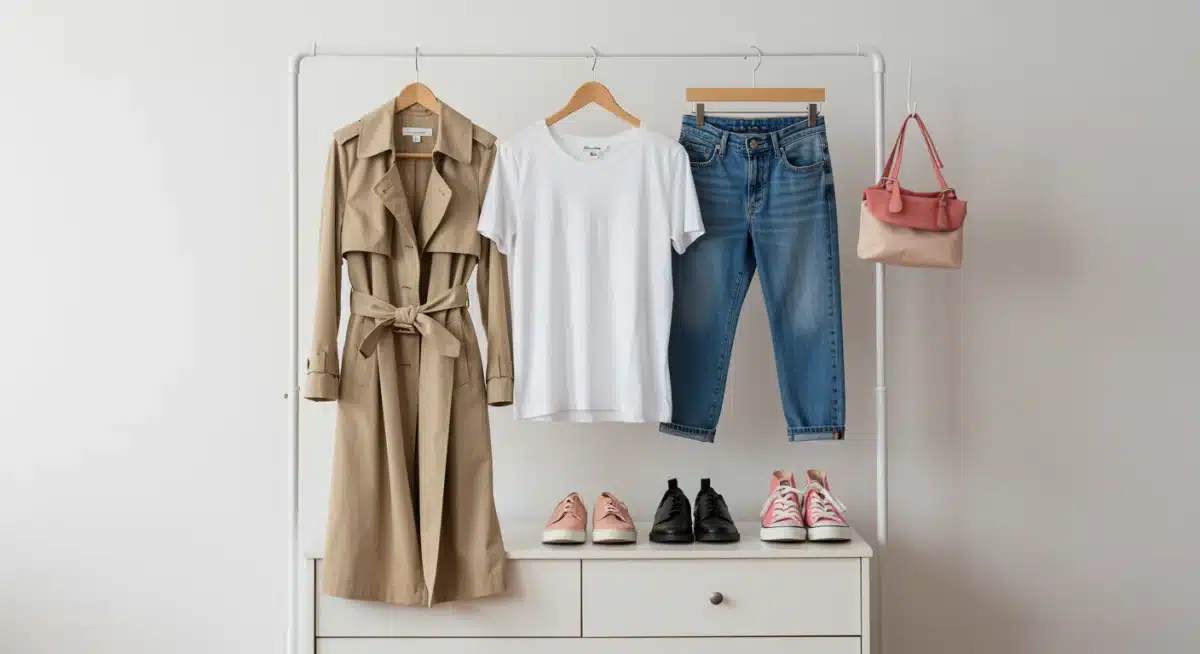
Start by identifying the essential items you need for spring. This typically includes a few versatile tops (t-shirts, blouses), comfortable bottoms (jeans, trousers, skirts), layering pieces (cardigans, light jackets, trench coat), and a couple of dresses or jumpsuits.
Consider your lifestyle and daily activities when selecting these core pieces.
Focus on neutral colors like white, black, navy, beige, and gray for your foundational items, as these are easy to mix and match. You can then introduce pops of color or patterns with accessories or a few key statement pieces.
This thoughtful selection process is crucial for a cohesive Seasonal Wardrobe Transition.
- Select 20-30 versatile items, including clothes, shoes, and accessories.
- Prioritize quality fabrics and classic silhouettes that withstand trends.
- Ensure all pieces are interchangeable to create multiple outfit combinations.
Integrating Accessories and Footwear
Accessories and footwear play a vital role in elevating a capsule wardrobe and adapting outfits for different occasions. A few carefully chosen scarves, pieces of jewelry, handbags, and shoes can transform a basic outfit into something unique and stylish.
For spring, consider comfortable yet chic sneakers, versatile flats, and a pair of dressier heels or sandals. A light scarf can add a pop of color and provide warmth on cooler days.
Thoughtful accessory integration is a smart way to complete your Seasonal Wardrobe Transition.
Step 5: Regular Maintenance and Seasonal Refresh
The final step in mastering your Seasonal Wardrobe Transition is to establish a routine for regular maintenance and periodic refreshing. A one-time organization effort is insufficient; consistency is key to keeping your wardrobe functional and inspiring throughout the season.
Regular maintenance involves small, consistent habits that prevent clutter from accumulating and keep your clothes in good condition. This proactive approach ensures that your organized spring wardrobe remains a source of ease and enjoyment, rather than a source of stress.
A seasonal refresh, typically mid-season, allows you to re-evaluate your wardrobe, address any new needs, and prepare for the next transition. This ongoing dedication to your wardrobe’s health is a hallmark of a truly successful Seasonal Wardrobe Transition.
Daily Habits for a Tidy Closet
Adopt simple daily habits to maintain your organized spring wardrobe. Always put clothes away immediately after wearing them, either back in the closet or in the laundry hamper. Don’t let clothes pile up on chairs or floors.
Hang items properly to prevent wrinkles and maintain their shape. Fold items neatly before placing them in drawers or on shelves.
These small actions collectively make a big difference in preventing clutter and preserving your organization, crucial for a lasting Seasonal Wardrobe Transition.
- Re-hang or fold clothes immediately after taking them off.
- Perform a quick tidy-up of your closet once a week.
- Address minor repairs or cleaning needs as they arise.
Mid-Season Review and Adjustments
Around halfway through spring, conduct a brief review of your wardrobe. Are there items you haven’t worn? Are there any unexpected weather patterns requiring different clothes?
This is the time to make minor adjustments, perhaps swapping out a few rarely worn items for something more practical or stylish.
This mid-season refresh helps you stay connected with your wardrobe’s functionality and ensures it continues to meet your needs.
It’s an opportunity to refine your capsule, identify any missing pieces, and prepare for the gradual shift towards summer attire, making your Seasonal Wardrobe Transition truly dynamic.
| Key Step | Brief Description |
|---|---|
| Declutter | Remove unworn, ill-fitting, or damaged items to create space. |
| Store Off-Season | Clean and properly store winter apparel using appropriate containers. |
| Organize Spring Wear | Categorize and arrange spring clothes for easy access and visibility. |
| Build Capsule | Curate versatile, interchangeable pieces for a cohesive spring wardrobe. |
Frequently Asked Questions About Spring Wardrobe Organization
A seasonal wardrobe transition is crucial for maintaining an organized and functional closet. It ensures you have appropriate clothing for the current weather, prevents clutter, and extends the lifespan of your garments by storing them correctly. This proactive approach simplifies daily dressing and enhances overall efficiency.
Ideally, you should declutter your wardrobe at least twice a year, during each major seasonal transition (e.g., spring/summer and fall/winter). This regular practice helps prevent accumulation of unworn items and keeps your closet manageable. A quick review mid-season can also be beneficial.
For winter clothes, clear, airtight plastic bins are excellent for protecting against dust, pests, and moisture. For delicate items like wool or cashmere, breathable cotton garment bags are preferable to allow air circulation. Always ensure clothes are clean and mended before storing them.
A capsule wardrobe is a collection of a few essential, versatile clothing items that can be mixed and matched to create numerous outfits. For spring, it simplifies dressing, encourages intentional purchases, reduces decision fatigue, and promotes a more sustainable and cohesive personal style.
Maintain your organized spring wardrobe by adopting simple daily habits: put clothes away immediately, hang items properly, and perform weekly quick tidies. A mid-season review helps you re-evaluate needs and make minor adjustments, ensuring your closet remains functional and inspiring.
Looking Ahead
The successful implementation of these 5 essential steps for Seasonal Wardrobe Transition goes beyond mere tidiness; it represents a commitment to efficiency and personal well-being.
By embracing these practices, individuals can anticipate a spring season marked by effortless style and a streamlined daily routine.
This proactive approach to wardrobe management sets a precedent for continuous improvement, aligning with broader trends in mindful living and sustainable consumption.
The continued focus on organized spaces will undoubtedly shape future discussions around personal efficiency and conscious choices.
