
French seam vs serged seam for garment durability
Advertisements
A French seam provides superior long-term durability and fray prevention compared to a standard serged seam because it completely encloses raw fabric edges within a double-stitched fold. This structural enclosure protects delicate fibers from abrasive washing cycles, mechanical friction, and edge unraveling throughout the lifespan of the garment.
Understanding these construction differences helps clothing shoppers assess garment quality before purchasing, though garments built with French seams generally carry higher retail prices due to the multi-step labor required during production. Inspecting the interior architecture of a piece provides immediate clarity on whether the item will withstand years of regular laundering or break down after limited wear.
How internal construction dictates garment durability
Garment longevity depends heavily on how interior edges are secured against continuous tension and mechanical washing agitation. When you wear clothing, seam lines endure multi-directional stress caused by body movement, stretching, and contact with seating surfaces. During home laundering, garments undergo severe turbulence, tumbling friction, and centrifugal force in the wash drum. Without adequate edge stabilization, these repeated mechanical forces pull woven yarns away from the stitch line, leading to internal fraying, thread pulling, and eventual seam slippage.
Advertisements
The method used to bind seam allowances determines whether those stresses distribute evenly across the textile or concentrate on individual thread loops. An exposed edge, even one wrapped in thread, remains vulnerable to abrasive wear when rubbed against the wearer's skin or adjacent clothing layers. High-quality construction isolates raw fiber ends from external friction entirely. When evaluating garments on the rack, looking past the exterior design into the interior finishes provides the most reliable indicator of overall build quality and expected service life.
Anatomy and engineering of the French seam
A French seam is an enclosed, self-bound seam constructed in two distinct sewing operations. The seamstress first aligns two fabric pieces with wrong sides facing outward and sews a narrow seam close to the raw edge. After trimming the excess allowance close to the initial stitch line, the fabric is pressed flat, turned right sides together, and stitched a second time along a slightly wider margin. This secondary pass fully traps the trimmed raw edges inside a neat, self-contained envelope of cloth, presenting a smooth, finished ridge on the garment interior and an invisible, flat join on the exterior.
Because the raw edges remain entirely sealed inside the secondary casing, they cannot fray or unravel regardless of laundering frequency. The dual line of straight lockstitches creates a balanced structural barrier that absorbs strain across two distinct rows of thread rather than concentrating tension on a single junction. This design proves especially vital for loosely woven, fine, or slippery natural fibers such as silk habotai, chiffon, organza, voile, and lightweight linen.
Advertisements
Structural advantages of a French seam finish
- Complete fiber containment: Raw edges are permanently protected from wash drum friction and physical contact.
- Double row security: Two separate lines of lockstitching share the mechanical load along structural joints.
- Clean skin feel: The smooth, self-fabric casing eliminates scratchy synthetic threads along sensitive skin contact zones.
- Long-term laundering resilience: Eliminates fraying threads that can tangle, pull, and weaken the seam over dozens of wash cycles.
Mechanics and function of the serged seam
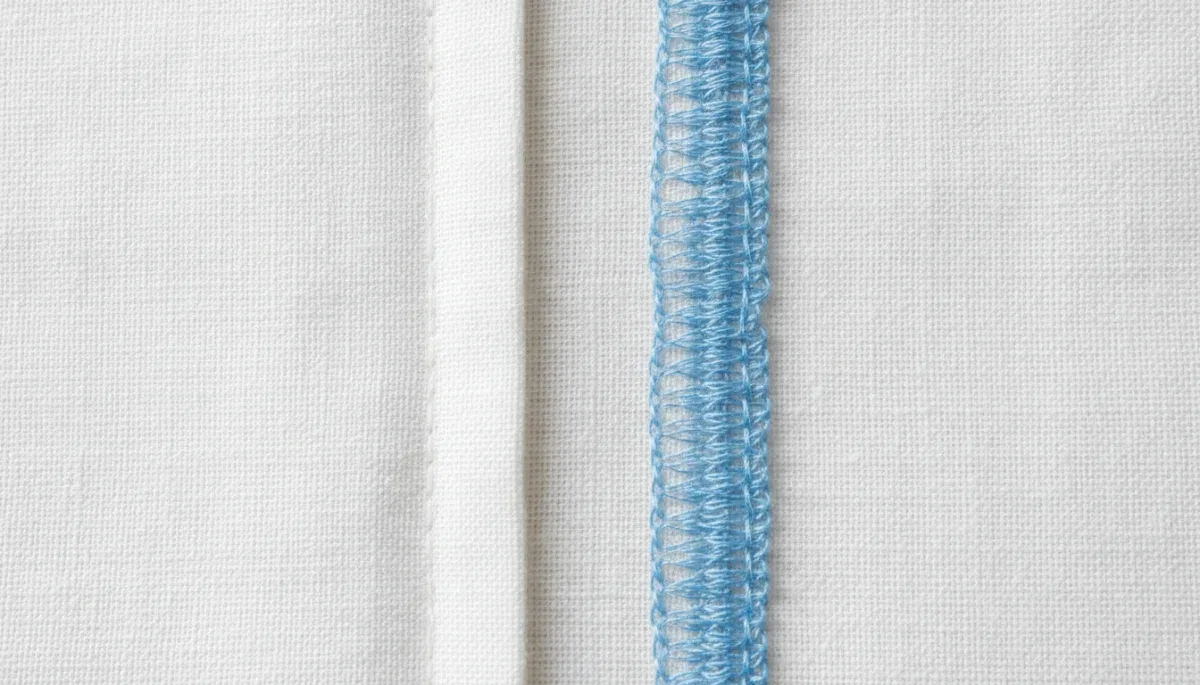
A serged seam, also known in commercial apparel manufacturing as an overlock seam, is created using a dedicated industrial machine that trims fabric edges with an integrated blade while wrapping them in interlaced thread loops. A standard three-thread or four-thread serger operates at high speeds, using upper and lower loopers alongside one or two needles to secure the raw edge simultaneously. Unlike standard lockstitch machines, sergers loop flexible thread formations around the cut border to prevent raw edge unraveling while maintaining longitudinal flexibility.
Serged finishes represent the undisputed standard across contemporary ready-to-wear apparel due to their manufacturing speed, cost efficiency, and performance on stretchy textiles. The interlocking loops provide substantial elasticity, allowing the seam to stretch and recover alongside flexible knit fabrics without snapping the internal threads. However, because the raw cut fibers remain visible beneath the open thread loops, they remain somewhat susceptible to friction, abrasive detergent exposure, and fiber shed over time.
Ideal applications for serged overlock construction
- Knitwear and stretch apparel: Provides the elastic yield necessary for jersey tees, activewear, and ribbed knit garments.
- Medium to heavy fabrics: Effectively secures thick textiles like twill, denim, and fleece without introducing excess bulk.
- High-volume commercial efficiency: Trims, joins, and overcasts seam allowances in a single pass to keep clothing affordable.
- Curved seam allowances: Navigates tight contours such as armholes and crotch curves without puckering the exterior line.
Comparing durability under routine laundry cycles
Laundering exposes seam finishes to their greatest durability tests. Water immersion weakens certain fibers, such as rayon and silk, making them vulnerable to mechanical abrasion when tumbling inside a domestic washing machine. In garments built with basic serged edges, repeated washing can cause raw edge fibers to fuzz, migrate through the loose loop network, and thin out along the perimeter. Over extended use, this gradual fiber loss compromises the anchoring fabric adjacent to the needle line, occasionally resulting in seam failure along stress points.
A French seam shields cut fibers from direct water currents and tumbling friction. The sealed tube of fabric serves as a protective buffer, ensuring the raw edge never rubs against the wash drum or other garments. Furthermore, industrial serging frequently utilizes lightweight polyester or spun nylon threads to minimize bulk across the loops, which can degrade or break if exposed to high heat settings in domestic dryers. A French seam uses identical thread to the structural construction, usually matched closely to the parent textile's heat tolerance and expansion rate.
Bulk, drape, and aesthetic considerations
While the French seam offers unmatched edge protection, it introduces four layers of fabric inside the finished allowance fold. On heavy woven textiles like wool flannel, heavyweight denim, or thick canvas, this accumulation creates rigid, protruding ridges that press uncomfortably against the body and disrupt the external drape of the garment. Pressing a heavy French seam flat is exceptionally difficult, frequently resulting in visible impression lines or shine marks on the exterior face of the garment.
Serged seams excel at maintaining a flat, low-profile finish across varying textile weights. By compressing the cut edge under flexible thread wraps, a serger leaves the seam allowance pliable enough to press open or press to one side cleanly. On sheer fabrics, however, a serged finish is visually disruptive, revealing messy thread loops through translucent materials. For delicate sheer blouses, eveningwear, and fine heirloom linens, the architectural minimalism of an enclosed French seam remains the undisputed gold standard for visual elegance and refined drape.
How to inspect seam quality on ready-to-wear racks
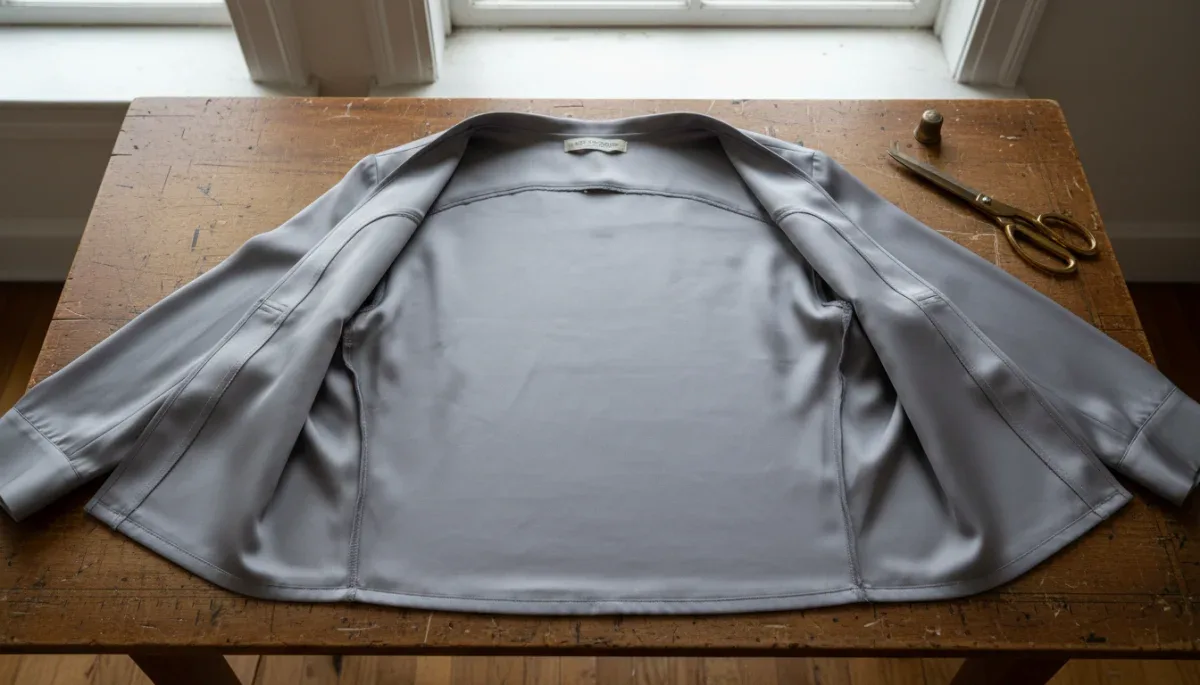
When shopping for long-lasting apparel, turning garments inside out allows you to evaluate craftsmanship before making a purchase. High-end brands occasionally cut manufacturing costs by utilizing quick three-thread serging on delicate silks where French seams should be standard practice. Conversely, quality heritage labels invest the time to enclose seams on lightweight cotton shirts, linen trousers, and silk slip dresses.
Examine the consistency of the internal stitching along side seams and shoulder lines. If you are inspecting a French seam, confirm that no raw fringe whiskers poke through the outer casing fold, which indicates sloppy trimming during the intermediate sewing stage. If evaluating a serged seam, gently pull the join laterally; if the stitch line gapes open to reveal laddered threads, the stitch density is too loose to support long-term tension. A well-constructed serged seam should lie perfectly flat without curling edges or loose thread tails extending past the hem line.
At a glance
| Construction factor | What to know |
|---|---|
| Fray prevention | French seams completely enclose edges to stop fraying, while serged seams wrap cut edges in flexible loops. |
| Fabric suitability | French seams suit lightweight woven textiles, whereas serged seams perform best on knits and medium to heavy fabrics. |
| Internal bulk | Serged seams remain flat and low-profile, while French seams introduce four internal layers of fabric bulk. |
| Production cost | French seams require two sewing passes and manual trimming, making them costlier than single-pass serged construction. |
Frequently asked questions
Can you use a French seam on stretchy knit fabrics?
No, French seams should not be used on stretchy knit fabrics. Because standard French seams rely on straight lockstitches, they lack the mechanical elasticity required for knits and will snap when stretched. Serged seams are the proper standard for jersey and stretch textiles.
Why are French seams rarely found in fast fashion?
French seams require twice the sewing time, precise manual pressing, and careful edge trimming during production. Fast fashion manufacturers rely on high-speed industrial sergers to trim and join panels in a single pass, keeping manufacturing labor and garment retail prices significantly lower.
Do serged seams eventually unravel over time?
Serged seams can unravel if the terminating thread tail is cut too close to the fabric or pulled loose. However, a properly anchored four-thread serged seam that has been back-tacked or caught in a hem remains stable through regular wear and standard washing.
Which seam style is better for heavy denim jeans?
Serged or flat-felled seams are far better for heavy denim than French seams. The multiple fabric folds in a French seam would produce an excessively thick, stiff ridge along the leg, causing intense discomfort against the skin and distorted exterior garment drape.
The bottom line
French seams deliver exceptional durability and edge containment on fine, lightweight woven fabrics, preventing fraying through repeated laundry cycles by locking raw threads away entirely. For knits, athletic apparel, and heavier textiles, serged seams provide the necessary stretch, flexibility, and flat profile that keeps clothing comfortable. Before purchasing your next investment piece, turn the garment inside out to confirm that the internal seam construction matches the weight, drape, and laundering requirements of the fabric.
Written by
Maria Eduarda
Maria Eduarda writes about benefits, clothes and shoes for bestinyour.com. Each article explains how things work, compares published details such as prices, policies and program rules, and points readers to the official source before they decide.