
How to clean salt stains from leather winter boots
Advertisements
You can remove salt stains from leather winter boots using a mild solution of equal parts white vinegar and cool water, wiped gently over the leather until the mineral lines dissolve. This method lifts white crust without stripping the finish, but you must work promptly and condition the hide immediately after it dries to keep the fibers supple.
Road salt and de-icing chemicals draw out natural moisture as they evaporate, leaving behind rigid deposits that stiffen and eventually crack untreated footwear. Taking care of winter boots requires only a few minutes and basic supplies you likely keep in your kitchen cabinet, though suede and untreated nubuck require separate, dry-cleaning techniques to avoid water spots.
Why road salt damages winter footwear
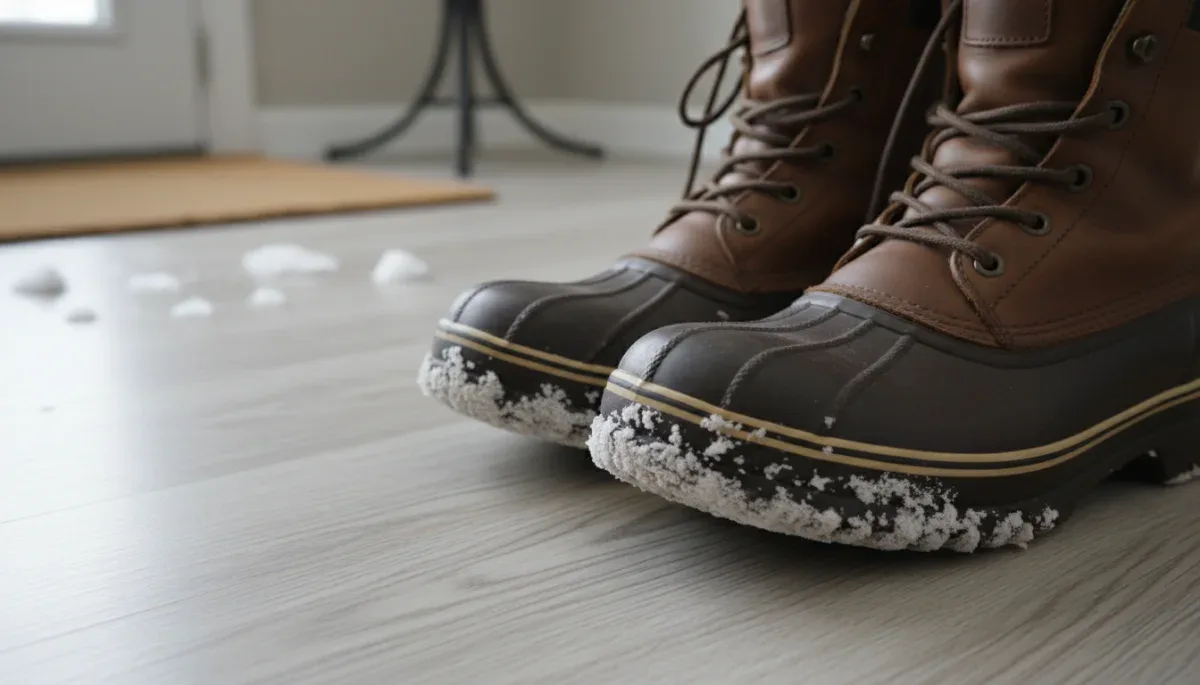
Municipal road crews and property managers across cold regions spread rock salt, calcium chloride, and magnesium chloride on walkways to melt ice. When you step through melting slush, dissolved minerals soak into the porous structure of smooth leather. As the water evaporates during indoor drying, the salt molecules stay trapped inside the grain, crystallizing into the visible white rings often called salt tide marks.
Advertisements
Beyond looking unkempt, trapped minerals alter the internal chemistry of animal hide. Salt is hygroscopic, meaning it continuously pulls ambient moisture out of neighboring materials. Over several weeks, this constant desiccation causes the protein fibers of the leather to tighten, shrink, and snap under regular walking stress. That structural breakdown leads to permanent creases, flaking pigment, and split seams along the vamp.
Rinsing boots with plain tap water rarely solves the problem. Plain water re-liquefies the salt and spreads it deeper into the hide rather than neutralizing the alkaline residue. To break the chemical bond between the mineral salts and the leather fibers, you need a slightly acidic agent that dissolves crystals without burning the hide.
Supplies you need before starting
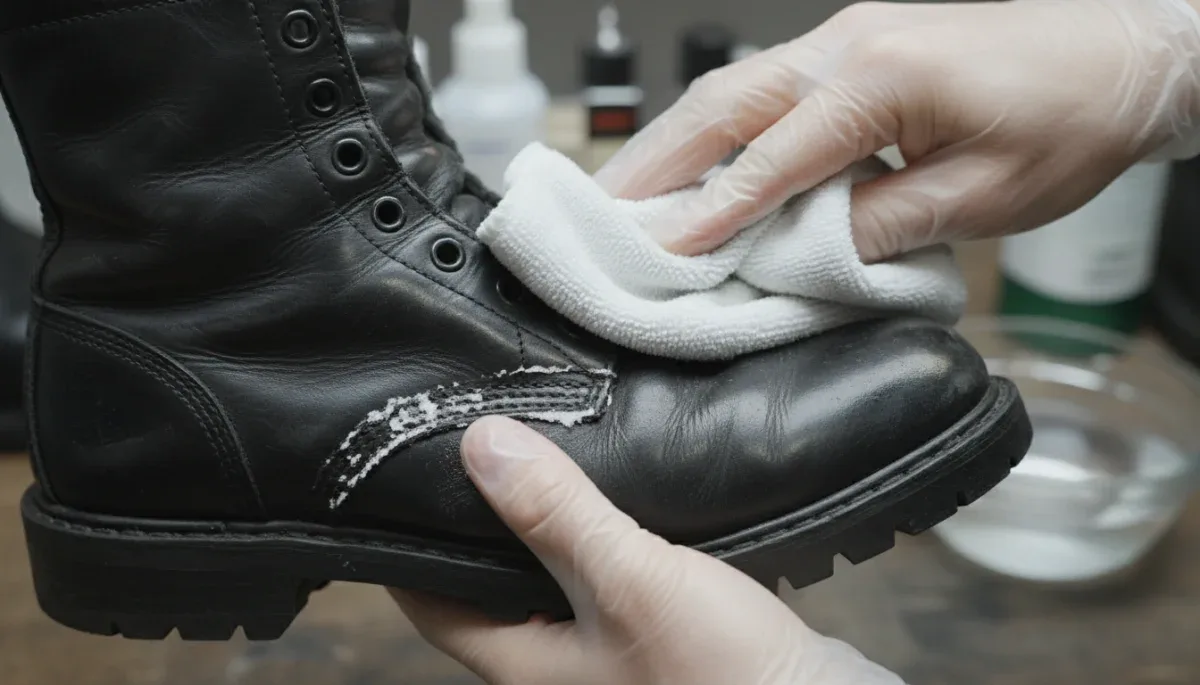
Gathering the proper supplies beforehand prevents messy delays and ensures you do not inadvertently scrub your boots with abrasive materials. Quality shoe care relies on gentle tools that lift grime without scratching topcoat finishes or dyed surfaces.
Advertisements
Essential cleaning items
- Plain white distilled vinegar with an acidity level of five percent.
- Distilled or filtered cool water to prevent mineral spotting from hard tap water.
- Two or three clean, lint-free white cotton rags or microfiber cloths.
- A soft horsehair shoe brush for sweeping away loose dust and crust.
- A quality wax-free leather conditioner formulated for smooth footwear.
Avoid colored rags because the acid in vinegar can cause unstable textile dyes to transfer directly onto light brown or tan leather. Similarly, never substitute cleaning vinegar, apple cider vinegar, or commercial household bleach, as their higher acidity or residual sugars can permanently disbar or stain fine footwear.
Step-by-step cleaning process for smooth leather
Before applying any liquid, unlace your boots and pull the tongue forward. Take your soft horsehair brush and sweep away all loose grit, dried mud, and surface salt dust. If you rub liquid directly onto dusty boots, you risk grinding abrasive grit into the grain, causing fine scratches across the surface.
Mix equal parts cool water and white distilled vinegar in a small bowl. Dip a clean white cloth into the mixture so it is damp, but not dripping wet. Excess liquid can saturate the inner lining or waterlog the midsole. Working in smooth, circular motions, dab and wipe along the salt line, beginning just outside the mark and blending inward. Do not scrub forcefully; allow the mild acid to dissolve the mineral crust naturally.
After wiping away the white line, take a second cloth moistened solely with plain distilled water to wipe down the entire boot. Wiping the entire panel ensures the leather dries uniformly, which prevents water rings. Dry the footwear at room temperature away from radiators, heat vents, and hair dryers, as forced hot air causes wet leather to curl, harden, and crack.
Restoring moisture with leather conditioner
Once your boots have dried completely at room temperature, which typically takes between two and four hours, the leather will look dull and feel slightly tight. Even a diluted vinegar rinse removes some surface fats and oils alongside the salt deposits. Skipping the conditioning phase leaves the grain vulnerable to immediate staining during your next outdoor walk.
Choose a dedicated leather cream or balm containing natural oils, such as neatsfoot oil, lanolin, or beeswax. Place a dime-sized amount of conditioner onto a clean dry cloth, then massage it evenly into the boot in small overlapping circles. Pay special attention to the welt, where the upper meets the sole, because salt often settles into those structural seams.
Let the conditioner soak into the pores for twenty to thirty minutes. Once absorbed, take a clean horsehair brush or a fresh dry towel and buff the surface with brisk back-and-forth strokes. Buffing distributes any excess balm and brings up a clean, healthy satin glow across the hide.
How to treat suede and nubuck boots
Suede and nubuck feature a buffed, napped texture that reacts poorly to liquid saturation. Applying a vinegar-and-water solution directly onto dry suede can flatten the delicate nap and leave permanent dark water borders. Cleaning these leathers requires dry agitation and specialized spot tools.
Begin by letting the boots dry completely away from heat. Use a dedicated suede brush with brass or stiff nylon bristles to comb the nap in one direction, dislodging dried mineral flakes. If white salt lines remain visible along the edges, gently rub a rubber suede eraser back and forth over the stain to crumble away trapped particles.
For stubborn salt crust that resists dry brushing, lightly moisten a clean cloth with equal parts white vinegar and cool water, squeezing it out until it is barely damp. Lightly dab the crusty edge without pressing moisture into the backing, then immediately brush the nap while damp to prevent matting. Allow the boots to air-dry, then restore the velvety texture with a clean crepe brush.
Preventing winter salt buildup
Preventative maintenance significantly cuts down the time you spend treating stubborn white rings through midwinter storms. Establishing a barrier coat prevents salty slush from penetrating deep into the animal hide, keeping minerals resting harmlessly on the surface where they wipe off effortlessly.
Apply a breathable fluoropolymer or silicone-free waterproofing spray designed for your specific boot material before the first winter freeze. Smooth full-grain work boots benefit from an oil-tanned wax or dubbin, which fills pores and naturally repels winter slush. Reapply your chosen protectant every four to six weeks during active winter months, especially after prolonged exposure to heavy snow.
Keep a slightly damp microfiber towel by your entryway or mudroom. Taking ten seconds to wipe the lower perimeter of your footwear when you return indoors eliminates the problem before crystallization occurs. Removing wet slush immediately stops salt from drawing moisture out of the leather overnight.
At a glance
| Care step | What to know |
|---|---|
| Vinegar mixture | Mix equal parts cool water and white vinegar to dissolve mineral crust safely. |
| Drying method | Dry boots slowly at room temperature away from forced heat vents and radiators. |
| Post-clean conditioning | Apply leather cream immediately after drying to replenish lost moisture and oils. |
| Daily wipe down | Wipe wet slush off boots right away to keep salt crystals from setting overnight. |
Frequently asked questions
Can I use rubbing alcohol to remove salt stains?
No, rubbing alcohol strips the protective dyes, factory finishes, and natural tanning oils directly from leather. It leaves the surface dry, brittle, and discolored. Stick to a diluted white vinegar solution, which dissolves alkaline salt minerals without dehydrating the hide.
How often should I clean salt off my boots?
Wipe your boots whenever white tide marks appear or immediately after walking through treated road slush. Leaving salt deposits on smooth leather for more than a day or two allows the minerals to pull moisture from the fibers, increasing the risk of structural cracking.
Will vinegar change the color of my leather boots?
A mild fifty-fifty mix of white distilled vinegar and water will not alter color if applied sparingly with a damp cloth. Always spot-test the mixture on an inconspicuous spot, like the inner heel or tongue, and wipe the full panel evenly to prevent water spots.
Can I dry my wet leather boots near a radiator?
Never place leather footwear near radiators, fireplaces, or electric space heaters. Rapid direct heat causes wet leather fibers to shrink abruptly, leaving the material brittle, misshapen, and prone to cracking. Let boots dry naturally at room temperature with cedar shoe trees inserted inside.
The bottom line
Removing road salt marks from your winter boots protects both their appearance and structural integrity. A simple solution of equal parts white distilled vinegar and water safely dissolves stubborn crust, while slow room-temperature drying and a generous coat of leather conditioner restore flexibility to the hide. Before you begin treating your footwear, check the manufacturer label or website to verify your boot material, ensuring you choose the right approach for smooth leather, suede, or nubuck.
Written by
Lucas Bastos
Lucas Bastos writes about benefits for bestinyour.com. Each article explains how things work, compares published details such as prices, policies and program rules, and points readers to the official source before they decide.