
Advertisements
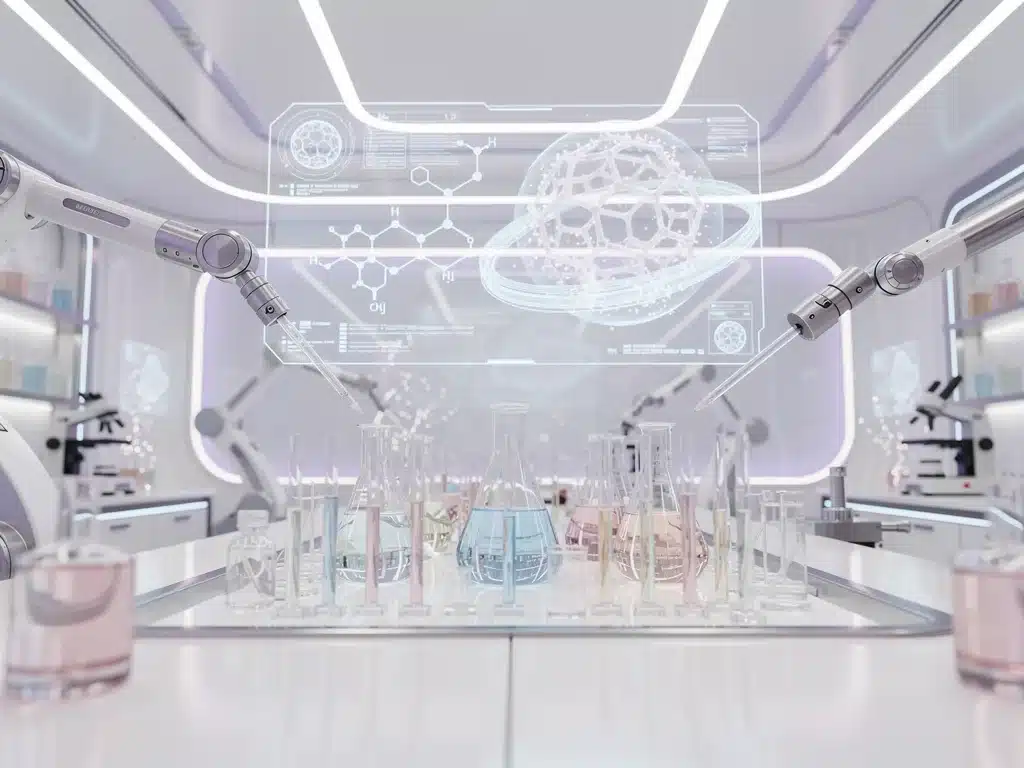
Have you ever wondered how your next favorite fragrance will be born? The rapid evolution of AI in Perfumery is completely transforming the luxury scent landscape this year, turning abstract emotions and memories into precise liquid formulas.
Innovative olfactory intelligence platforms are now analyzing millions of sensory data points to help master perfumers draft unique accords in seconds.
These cutting-edge computational tools act as a powerful co-pilot, predicting how individual ingredients will blend to spark specific emotional responses.
Advertisements
As we move forward, the focus shifts to how these smart formulation systems are bypassing regulatory hurdles and chemical restrictions to keep supply chains resilient.
Let’s dive into the major updates shaping the beauty industry and explore what these digital advancements mean for the future of your vanity.
Advertisements
AI’s Transformative Impact on Fragrance Creation
Artificial Intelligence is no longer a futuristic concept but a present-day reality profoundly influencing the perfumery industry. Recent advancements have propelled AI into the core of scent development, offering unprecedented opportunities for innovation and efficiency.
This integration marks a pivotal shift, moving beyond traditional methods to embrace data-driven insights and algorithmic creativity. The changes are not merely incremental; they represent a fundamental redefinition of how fragrances are conceived, formulated, and brought to market.
By 2026, the landscape of perfumery will be undeniably shaped by these technological leaps, with AI playing a central role in every stage of the creative process. Understanding these updates is crucial for anyone involved in or interested in the future of scent.
Revolutionizing Ingredient Discovery and Synthesis
One of the most significant contributions of AI in perfumery lies in its ability to accelerate and optimize ingredient discovery. Traditional methods are often time-consuming and resource-intensive, relying heavily on human intuition and extensive trial and error.
AI algorithms can analyze vast databases of chemical compounds, identifying novel molecules with unique olfactive properties.
This capability dramatically shortens the development cycle for new fragrance components, opening up a world of previously unimaginable scent possibilities.
Furthermore, AI-driven synthesis techniques are making it possible to create sustainable and ethically sourced alternatives to rare or endangered natural ingredients.
This not only addresses environmental concerns but also provides perfumers with a broader palette of materials for AI in Perfumery Scent Development.
Predictive Modeling for Novel Molecules
AI’s predictive power allows for the in-silico screening of millions of potential molecules, forecasting their scent profiles and stability before any laboratory work begins.
This targeted approach reduces waste and increases the likelihood of discovering groundbreaking new aroma chemicals.
Companies are investing heavily in machine learning models that can learn from existing fragrance structures and propose entirely new ones.
These models consider factors like volatility, diffusion, and longevity, ensuring that newly synthesized ingredients meet stringent performance criteria for AI in Perfumery Scent Development.
- Accelerated identification of new aroma compounds.
- Reduced time and cost in ingredient research.
- Development of sustainable and ethical alternatives.
Enhancing Formulation Precision and Complexity
The art of perfume formulation is incredibly complex, involving a delicate balance of hundreds of ingredients to create a harmonious scent. AI is now providing perfumers with tools to achieve unprecedented levels of precision and explore intricate compositions.
AI-powered systems can analyze the interactions between different fragrance notes, predicting how they will evolve over time and on various skin types.
This allows for the fine-tuning of formulas to achieve desired effects, from initial impression to dry-down, with greater accuracy.
Moreover, AI can assist in optimizing formulas for specific functional attributes, such as longevity, projection, or stability in different product bases. This level of granular control is transforming the creative process and the potential for AI in Perfumery Scent Development.

Optimizing Scent Profiles for Market Trends
AI algorithms can sift through vast quantities of market data, consumer reviews, and social media trends to identify emerging scent preferences and patterns.
This intelligence enables perfumers to create fragrances that are highly attuned to current and future consumer demands.
By understanding what resonates with different demographics and cultural groups, AI helps tailor existing formulations and inspire new ones.
This data-driven approach minimizes commercial risks and maximizes the potential for market success in AI in Perfumery Scent Development.
- Predictive analytics for consumer preference.
- Real-time adaptation to market shifts.
- Personalized fragrance creation at scale.
Personalization and Consumer Experience
The rise of AI is ushering in a new era of hyper-personalization in the fragrance industry. Consumers are increasingly seeking unique and bespoke products, and AI is making this aspiration a reality by enabling tailored scent experiences.
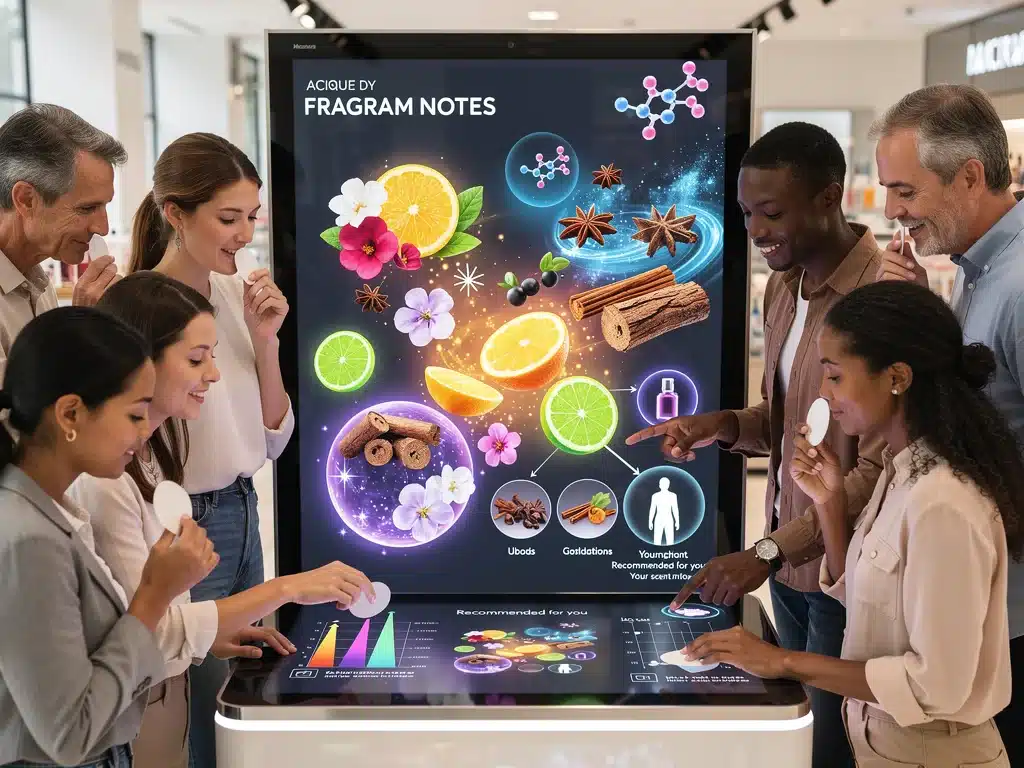
Through interactive platforms and smart devices, AI can gather data on individual preferences, lifestyle, and even mood to recommend or create personalized fragrances. This move from mass-market production to individualized offerings is a significant trend.
By 2026, it is expected that personalized scent services will become more widespread, allowing consumers to co-create their perfect fragrance with the assistance of AI.
This enhances customer engagement and fosters a deeper connection with the product in AI in Perfumery Scent Development.
Ethical Considerations and Data Privacy in AI Perfumery
As AI becomes more integrated into perfumery, ethical considerations surrounding data privacy and intellectual property are gaining prominence.
The collection and analysis of consumer data for personalization raise important questions about how this information is stored and used.
Companies are navigating the delicate balance between leveraging data for innovation and respecting individual privacy rights. Transparent data policies and robust security measures are becoming non-negotiable requirements for AI-driven fragrance brands.
Furthermore, the intellectual property of AI-generated scent formulas presents a new frontier in legal and ethical discussions.
Defining ownership and ensuring fair compensation for human perfumers collaborating with AI are critical challenges for the future of AI in Perfumery Scent Development.
Ensuring Fairness and Bias Mitigation
AI systems, if not carefully designed, can perpetuate or even amplify existing biases present in their training data. In perfumery, this could lead to a narrow range of scent profiles or an inability to cater to diverse cultural preferences.
Developers are actively working on algorithms that are fair and inclusive, ensuring that AI-generated fragrances appeal to a broad spectrum of consumers. Regular audits and diverse training datasets are essential to mitigate bias and promote equitable outcomes.
- Transparent data collection and usage policies.
- Robust security for consumer data.
- Fair intellectual property guidelines for AI-assisted creations.
Challenges and Opportunities for Perfumers
The advent of AI presents both challenges and exciting opportunities for human perfumers. While some may fear automation replacing human creativity, many see AI as a powerful tool that augments their capabilities and frees them to focus on higher-level artistic endeavors.
Perfumery schools and industry training programs are adapting their curricula to equip future perfumers with AI literacy and data science skills.
The new generation of perfumers will likely be proficient in collaborating with AI systems, blending traditional artistry with technological prowess.
This collaboration allows perfumers to explore more complex olfactive territories, experiment with novel ingredients, and refine their creations with unparalleled precision.
The synergy between human intuition and AI’s analytical power is set to elevate the art of AI in Perfumery Scent Development.
Future Outlook: AI and the Scent Ecosystem 2026
Looking ahead to 2026, AI’s influence will extend beyond formulation to encompass the entire scent ecosystem. From sustainable sourcing to intelligent manufacturing and personalized distribution, AI will be an integral part of operations.
Smart factories utilizing AI for quality control and inventory management will become standard, ensuring efficiency and reducing waste.
Supply chains will be optimized through AI-driven predictive analytics, anticipating demand and minimizing disruptions for AI in Perfumery Scent Development.
The integration of AI will also foster greater transparency and traceability throughout the fragrance creation process, from raw material to finished product. This addresses growing consumer demand for ethical and environmentally responsible practices within the industry.
Democratizing Access to Bespoke Fragrance
AI’s ability to streamline complex processes and reduce costs may democratize access to bespoke fragrances. What was once the exclusive domain of luxury brands could become more accessible to a broader consumer base, thanks to efficient AI-driven production.
This shift could foster greater creativity and diversity in the market, allowing smaller brands and independent perfumers to compete more effectively. The playing field for AI in Perfumery Scent Development is leveling, encouraging a wider array of unique olfactive expressions.
- AI-driven sustainable sourcing and manufacturing.
- Optimized supply chains and inventory management.
- Increased transparency and ethical traceability.
Investment and Innovation Landscape
The fragrance industry is witnessing significant investment in AI technologies, with major players and startups alike pouring resources into research and development.
This influx of capital is fueling rapid innovation and bringing advanced AI solutions to market at an accelerated pace.
Collaborations between technology firms and fragrance houses are becoming increasingly common, pooling expertise to create cutting-edge tools.
These partnerships are essential for bridging the gap between theoretical AI capabilities and practical applications in perfumery, driving AI in Perfumery Scent Development forward.
The competitive landscape is pushing companies to adopt AI quickly to maintain their edge, leading to a dynamic environment where continuous innovation is key. This investment signifies a long-term commitment to AI as a foundational element of the industry’s future.
| Key Point | Brief Description |
|---|---|
| Ingredient Discovery | AI accelerates identification and synthesis of novel, sustainable aroma molecules. |
| Formulation Precision | AI enhances accuracy in blending, balancing notes, and optimizing performance. |
| Personalization | Customized scent creation based on individual consumer data and preferences. |
| Ethical Considerations | Addressing data privacy, intellectual property, and bias in AI applications. |
Frequently Asked Questions About AI in Perfumery
AI is transforming perfumers’ roles from sole creators to collaborators, providing advanced analytical tools and vast data insights. This allows perfumers to focus more on artistic expression and complex problem-solving, enhancing their creative process rather than replacing it.
Yes, AI can generate novel molecular structures and combinations that result in entirely new scent profiles, moving beyond existing fragrance families. While human input often guides these explorations, AI’s ability to process and synthesize vast data enables unprecedented originality in AI in Perfumery Scent Development.
Key benefits include accelerated ingredient discovery, enhanced formulation precision, hyper-personalization for consumers, and improved sustainability through optimized processes. AI also allows for more efficient market trend analysis, leading to more successful product launches.
Primary concerns include data privacy related to consumer preferences, intellectual property rights for AI-generated formulas, and potential biases in algorithms that might limit creative diversity. Addressing these issues requires careful regulation and transparent practices in AI in Perfumery Scent Development.
AI will significantly boost sustainability by optimizing resource use in ingredient synthesis, reducing waste in manufacturing, and identifying eco-friendly alternatives to traditional materials. This leads to a more environmentally conscious and efficient fragrance industry.
Looking Ahead: The Evolving Scent-scape
The rapid evolution of AI is fundamentally reshaping the fragrance industry, promising a future where scent creation is more innovative, personalized, and sustainable.
By 2026, AI in Perfumery Scent Development will be characterized by a dynamic interplay between human artistry and artificial intelligence.
This synergy is not just about efficiency; it’s about unlocking new dimensions of olfactive experience, pushing the boundaries of what is possible in fragrance.
As technology continues to advance, the industry must remain vigilant regarding ethical implications and ensure that the human element of perfumery remains valued, even as AI’s capabilities expand.
